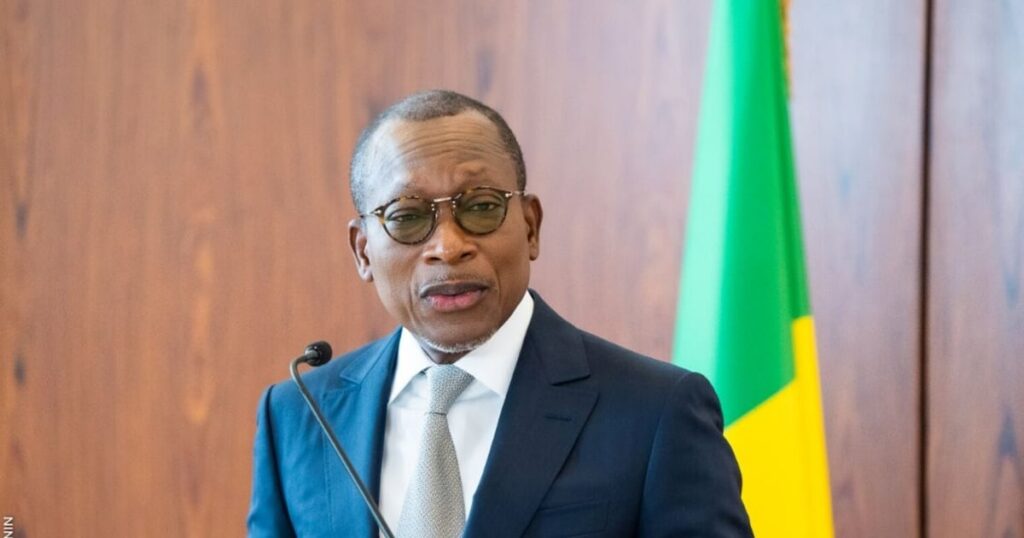
The Bénin senate: a new chapter in political regulation
Following constitutional amendments adopted in November 2025, Bénin has established a Senate to oversee the country’s political landscape. This new institution, designed to foster stability and governance, comprises 25 members who are either former heads of state or appointed by the President.
Patrice Talon’s election and vision for the Senate
Patrice Talon, who served two terms as President from 2016 to 2026—the maximum allowed by the Constitution—was elected unanimously to lead the Senate. With 24 votes in favor and one blank ballot, his leadership underscores the institution’s unity. Addressing senators in Porto-Novo, the capital, Talon pledged to uphold national cohesion, democratic values, and political stability.
«I want to assure you of my full commitment to ensuring this Senate functions as a unified family,» he stated, emphasizing the body’s role in strengthening democracy.
Notable members shaping Bénin’s political future
The Senate includes prominent figures from Bénin’s political history:
- Thomas Boni Yayi, who led the country from 2006 to 2016;
- Nicéphore Soglo, President from 1991 to 1996;
- Paul Hounkpè, the sole opposition candidate in the most recent presidential election.
These members reflect the Senate’s diverse representation, blending experience from different eras of governance.
A transition of power and continuity
The April presidential election saw Romuald Wadagni, a former Economy Minister and Talon’s designated successor, ascend to the presidency. His victory marks the first peaceful transition under the new constitutional framework, reinforcing Bénin’s commitment to democratic processes.


More Stories
Can Senegal’s local elections be Bassirou Diomaye Faye’s make-or-break moment?
Senegal’s parliament: What power does Ousmane Sonko hold to derail the 2026 budget?
Senegal’s December 2 dilemma: can Diomaye Faye’s gamble reshape the nation’s future?