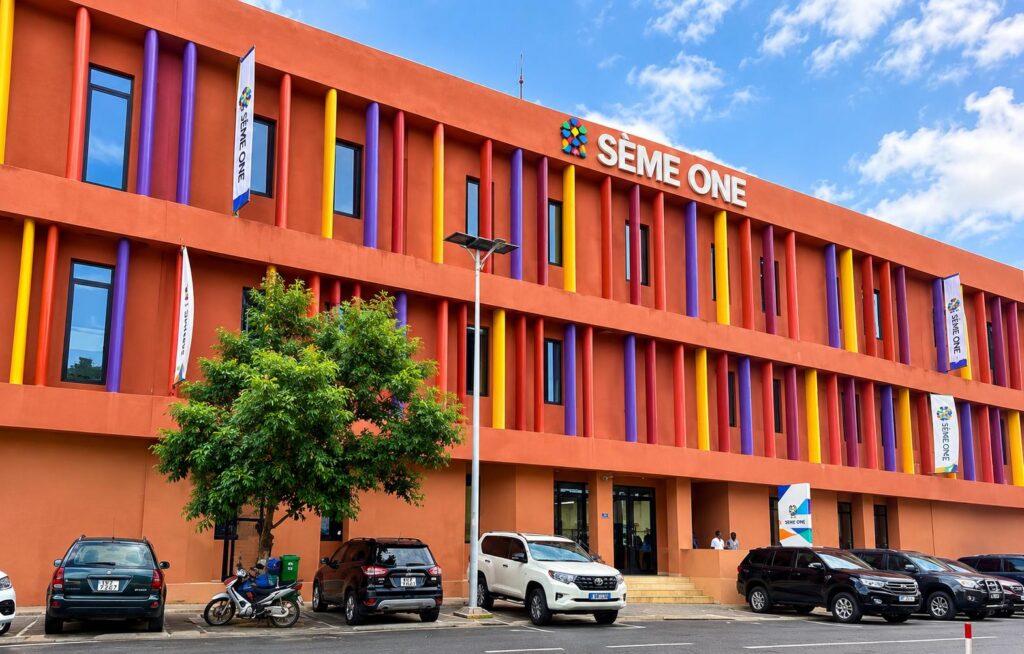
Benin is writing a new chapter in higher education and industrial innovation. A landmark agreement signed in September 2026 between Sèmè City Institute of Technology (SCITI) and the University of Reims Champagne-Ardenne (URCA) marks the launch of Africa’s first Master’s program dedicated to sustainable engineering design—a decisive moment for the nation’s technical education landscape.
Breaking ground: Benin’s first graduate-level engineering pathway
The newly established Master « Engineering Design – Sustainable Engineering Track » represents a historic milestone for SCITI, the engineering school embedded within Benin’s national innovation hub, Sèmè City. Through a strategic partnership with the French university, the program offers an internationally recognized degree designed to cultivate locally rooted engineering expertise and reduce the country’s reliance on foreign technical skills.
Unlike conventional engineering curricula that focus on execution, this curriculum prepares students to become design thinkers—engineers capable of creating solutions from the ground up, with sustainability at the core of every decision.
Designing the future: From concept to sustainable infrastructure
The program curriculum spans the entire lifecycle of products and infrastructure, teaching students to embed environmental, economic, and performance criteria into the earliest stages of design. Through rigorous theoretical modeling and hands-on project work, graduates will emerge equipped to develop technologies and systems that align with Benin’s development priorities and environmental imperatives.
This approach isn’t just academic—it’s a response to urgent national needs. Benin has long depended on imported technologies and expertise to fuel major infrastructure projects. The Master’s initiative is set to reverse that trend by building a skilled local workforce capable of designing and implementing solutions tailored to domestic challenges.
From vision to industry: Building Benin’s next engineering leaders
This partnership is more than an educational milestone—it’s a strategic investment in Benin’s industrial future. The government’s broader economic agenda includes the expansion of industrial zones like the Glo-Djigbé Special Economic Zone (GDIZ), a key driver of job creation and economic diversification.
By training a new generation of engineers who understand local contexts and global sustainability standards, Benin is positioning itself to become a leading hub for innovation in West Africa. The Master’s program aligns with this vision, aiming to supply the technical talent needed to support infrastructure development, enhance industrial competitiveness, and foster homegrown technological solutions.
What sets this master’s apart?
- First of its kind: Benin’s first graduate-level engineering program focused exclusively on sustainable design
- Dual expertise: Combines international academic standards with local relevance and real-world applicability
- Future-proof skills: Graduates gain competencies in circular economy, renewable energy integration, and eco-efficient construction
- Industry integration: Curriculum co-developed with industrial partners to ensure alignment with labor market needs
A new era for engineering education in West Africa
The launch of this Master’s program signals a turning point—not just for Benin, but for the entire subregion. It demonstrates how strategic international partnerships and curriculum innovation can accelerate the transition toward sustainable, locally driven industrialization. As the first cohort of students enters the program in 2027, Benin is not only investing in engineers—it’s investing in a sustainable future.




More Stories
Sevilla vs Barcelona: the momentum shift that could redefine the title race
Major general Moussa Salaou Barmou: the turning point in Niger’s special forces strategy
Togo: how a journalist’s sanction resonates far beyond newsrooms