
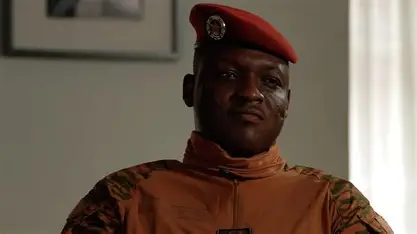
The paradox of power: when rhetoric replaces reality
History has shown that military leaders who seize power often fall into a well-known trap: mistaking the strength of their speeches for tangible achievements on the ground, and misreading the silence of a population—often born of fear or uncertainty—as absolute support.
In Burkina Faso, this pattern appears to be taking hold. Behind carefully staged public appearances, immaculate military uniforms, and fiery denunciations of the « treacherous West, » another narrative is unfolding. What once seemed like an assured leadership now reveals a regime grappling with deepening internal fractures.
Critics argue that Captain Ibrahim Traoré’s authority is increasingly isolated, with trust eroding within the corridors of power. This perception is fueled by persistent rumors of coup attempts, high-level military reshuffles, and repeated overhauls of the security apparatus.
« When a government begins to fear its own guards, it is no longer protecting the nation—it is guarding its own shadow. »
The erosion of loyalty within the ranks
A recurring theme in African political transitions is the fate of those who helped bring a leader to power—only to be pushed aside once stability is achieved. Since assuming leadership in September 2022, Ibrahim Traoré has systematically reshaped Burkina Faso’s military and security hierarchy. Influential officers from the early days have been sidelined, transferred, or removed, raising questions about the cohesion of the armed forces.
The dismissal of the intelligence services director—long regarded as a linchpin of the security framework—has drawn particular scrutiny. Analysts warn that when a head of state begins to dismantle the very structures tasked with safeguarding their rule, it signals not just a security concern, but a crisis of political confidence.
Once united by the urgency of combating armed groups, the Burkinabè military now appears paralyzed by suspicion. Successive promotions and replacements suggest a shift from merit-based leadership to one driven by personal allegiance, further destabilizing an already fragile institution.
Observers summarize the trajectory as follows:
- 2022: A promise of unity in the face of adversity
- Present: Persistent insecurity, escalating distrust, and a leadership trapped in a cycle of reorganizations
Governance through fear
Faced with unrelenting security challenges, the regime has adopted an increasingly authoritarian approach.
Detractors highlight several troubling developments:
- Arrests of prominent figures critical of the government;
- Allegations of enforced disappearances and abductions, as reported by human rights organizations;
- Curtailment of press freedoms, including media suspensions and restrictions on journalists;
- Mobilization or intimidation of civil society actors, perceived by supporters as retaliatory measures.
These patterns have been documented in international human rights reports, which warn of a troubling erosion of civil liberties in Burkina Faso.
Concurrently, official narratives have become heavily centered on the figure of the head of state. State-controlled media and pro-government communication channels amplify Ibrahim Traoré’s public engagements, speeches, and initiatives—leading opponents to argue that this reflects not strength, but a desperate attempt to mask systemic vulnerabilities.
The security crisis remains unaddressed
Yet the most pressing issue lies elsewhere.
Nearly four years after the change in leadership, the original justifications for the coup persist. Large parts of the country remain under the sway of armed groups, while millions of civilians face displacement and humanitarian hardship. Attacks targeting civilians, security forces, and local defense volunteers continue unabated. Critics contend that political consolidation is increasingly overshadowing the urgent need to address security and humanitarian needs.
Data from the United Nations, humanitarian agencies, and research institutions confirm that the security crisis remains severe, despite military efforts. Jihadist attacks continue to destabilize multiple regions, and internal displacement rates remain among the highest in the region.
The peril of isolation
Rhetorical defiance, no matter how rousing, cannot substitute for tangible security gains. Slogans cannot restore stability, rebuild institutions, or rebuild trust between citizens and the state.
For regime critics, the gravest risk now is the growing isolation of its leader. By alienating former allies, engineering constant security overhauls, and governing in an atmosphere of perpetual suspicion, Ibrahim Traoré risks undermining the very foundations of his authority.
African political history offers cautionary examples of military regimes that concentrated power in increasingly narrow circles—only to collapse under the weight of internal distrust rather than external opposition.
The true challenge for Burkina Faso remains unchanged: to restore lasting security, rebuild institutional trust, and meet the needs of a population still bearing the human cost of instability. When a government expends more energy on preventing imagined conspiracies than on solving the crises that brought it to power, its survival may come at the expense of the nation’s future.


More Stories
Niger : ce que les remaniements militaires disent des tensions au sommet du pouvoir
Togo’s enduring power question: Faure Gnassingbé and the shifting architecture of rule
Civilian massacre in Bandiagara: CNDH urges Mali to fulfill its sovereign duties