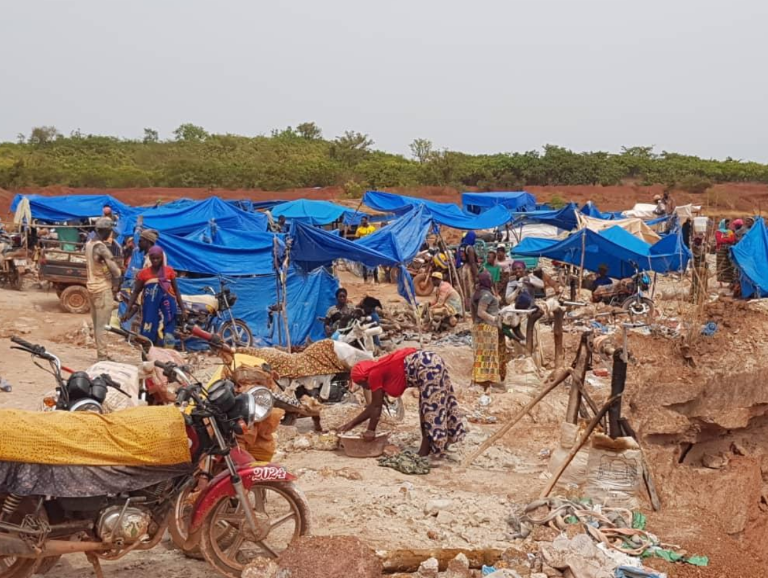
Crackdown in Guinea exposes the human cost of Burkina Faso’s economic struggles
The massive crackdown on illegal gold mining in Guinea has shone a harsh spotlight on a growing exodus of Burkinabè migrants risking everything for survival in neighboring goldfields. With 1,412 arrests announced in recent operations, the crisis reveals how regional economic disparities are pushing desperate workers across borders—and why conventional security measures are failing to address the root causes.
From Burkina Faso’s unemployed to Guinea’s goldfields: a migration driven by necessity
Guinea’s gold mining regions have become a magnet for foreign laborers, including thousands of Burkinabè fleeing economic hardship. The arrests, including 149 in Kérouané and Siguiri, underscore a trend that has accelerated in recent years: as Burkina Faso grapples with unemployment, rural poverty, and insecurity, its citizens are increasingly turning to artisanal mining in Guinea as a last resort.
The phenomenon is not isolated. For many, the choice is stark: risk dangerous, unregulated conditions in Guinea or face stagnant wages, shrinking opportunities, and mounting financial pressure at home. The promise of quick earnings in gold panning—despite the health risks and exploitative labor conditions—outweighs the bleak alternatives.
Ibrahim Traoré’s economic vision put to the test by mass migration
Since taking power in 2022, Burkina Faso’s transitional leader Ibrahim Traoré has positioned economic sovereignty as a cornerstone of his administration. The state has pushed for greater control over natural resource extraction, renegotiated mining contracts, and prioritized national revenue from gold. Yet the mass migration of Burkinabè miners to Guinea exposes a critical gap between policy and reality.
Why are citizens of a country with significant gold reserves—among West Africa’s top producers—leaving to work in illegal mines elsewhere? The answer lies in the uneven distribution of wealth and opportunity. While the state benefits from mineral wealth, many rural communities face persistent joblessness, inadequate infrastructure, and a lack of access to capital or stable income.
The exodus is not just a failure of economic policy—it is a symptom of deeper systemic issues: post-coup instability, climate-induced agricultural decline, and a widening urban-rural divide. Traoré’s emphasis on resource control has not yet translated into tangible improvements for the average citizen.
Guinea’s crackdown: a security fix with no long-term solution
Conakry’s response has been swift. Authorities have dismantled illegal mining sites, arrested over 1,412 individuals, and announced prosecutions in Kankan. The crackdown aims to protect Guinean natural resources from degradation, pollution, and unregulated exploitation. But arrests alone cannot dismantle the engine driving this migration.
Illegal mining in Guinea causes severe environmental damage—soil erosion, water contamination, and loss of farmland—posing long-term risks to local communities. While the government’s firm stance sends a message, it does little to address the economic desperation that pushes miners across borders. Without addressing the root causes—jobs, income stability, and regional cooperation—the cycle of clandestine migration will continue.
What the arrests reveal about West Africa’s shifting economic landscape
This migration is more than a cross-border issue; it is a regional economic barometer. The 1,412 arrests are not just statistics—they represent thousands of families, livelihoods, and unfulfilled hopes. For Guinea, the challenge is balancing resource protection with humanitarian concerns. For Burkina Faso, the question is urgent: how can economic sovereignty translate into real security and prosperity for its people?
True sovereignty isn’t measured in gold exports or state revenues—it’s measured in the ability of citizens to live with dignity, work safely, and build futures without being forced into dangerous migrations. Until both nations address the structural inequalities that drive this exodus, the goldfields of Guinea will continue to attract those who have no other choice.
Key takeaways: why this migration matters
- The human cost: Thousands of Burkinabè are leaving home not by choice, but by economic necessity, risking arrest, exploitation, and hazardous conditions.
- Policy disconnect: Burkina Faso’s focus on resource control has not translated into jobs or stable incomes for rural populations.
- A regional crisis: The problem spans borders—Guinea’s crackdown highlights the need for coordinated solutions across West Africa.
- Beyond arrests: Prosecutions won’t solve the crisis; sustainable change requires economic opportunities and regional cooperation.