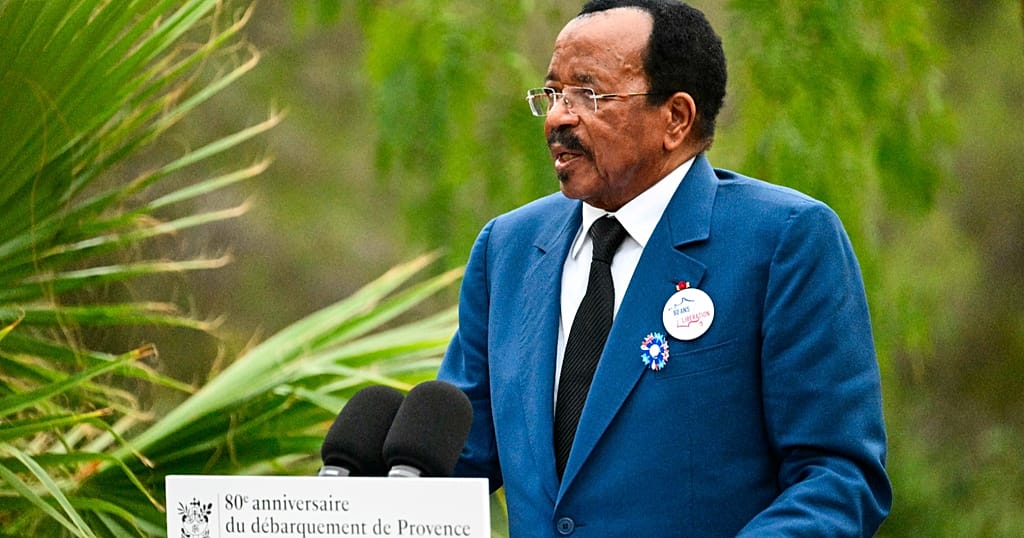
Cameroon’s president Paul Biya asserts authority through frequent decrees amid extended absence
As concerns mount over a potential power vacuum, Cameroon’s 93-year-old president Paul Biya has intensified his use of presidential decrees to demonstrate ongoing governance despite his prolonged absence from the country.
The head of state departed Cameroon with his wife on June 7, initially described as a “brief private visit to Europe”. However, nearly two months later, President Biya remains out of public view, fueling speculation about his health and whereabouts.
Decrees as a tool to counter governance doubts
In response to mounting questions about his ability to lead, the Cameroonian leader has adopted a more visible approach through a series of executive actions. These measures aim to reinforce perceptions of continuity in governance while addressing criticisms of institutional stagnation.
On July 28, President Biya issued a decree authorizing the Minister of Economy to finalize a financing agreement with the Islamic Development Bank, amounting to approximately 28 billion Central African CFA francs. This move underscores his ongoing engagement in economic policy despite his physical absence.
Early this month, he reshaped the military hierarchy by promoting five colonels to the rank of brigadier general. Additionally, General Ebaka Hypolite was appointed as the new Chief of the General Staff, a position critical to national security. These strategic appointments not only maintain his influence over state affairs but also strengthen control over the security apparatus.
Institutional concerns amid prolonged absence
Government officials have dismissed reports questioning the president’s health and assured the public of his imminent return. However, opposition figures argue that Cameroon is effectively operating in “autopilot mode”, citing the prolonged delay in forming a new government and appointing a vice president—both pending for several months.
Critics describe the situation as a “governance void”, with no clear leadership visibly managing the nation’s day-to-day affairs. The extended absence has intensified debates about succession and stability in one of Central Africa’s most influential states.
More Stories
Cameroon’s leadership gap: economic paralysis and rising public frustration
Gabon shifts trade focus toward African markets under Oligui Nguema
While the president is in Switzerland, his son’s political ambitions stir in Cameroon