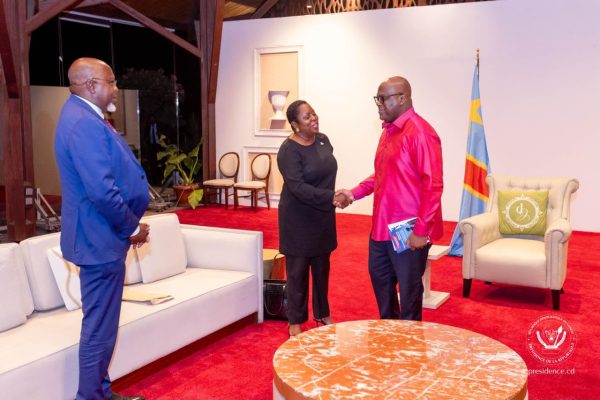
The Democratic Republic of the Congo is launching a major diplomatic offensive in France to secure international recognition of the Genocide against Congolese (GENOCOST) starting with the next parliamentary session. This initiative was announced by the Collective of French Deputies of Congolese Origin (CEFOCK) following a meeting with President Félix Tshisekedi on August 4, 2026, at the Cité de l’Union Africaine in Kinshasa. The campaign aims to place the GENOCOST at the center of public and political debates across France and beyond.
From awareness campaigns to institutional advocacy in France
The CEFOCK plans to deploy a series of memory-building initiatives, including conferences and targeted advocacy efforts aimed at French local governments, national institutions, and the Congolese diaspora. The goal is twofold: to break the silence surrounding the massacres in the Democratic Republic of the Congo and to elevate the GENOCOST from an NGO-driven issue to a matter of public policy.
A strategic alliance to strengthen legal and historical recognition
To bolster its efforts, the CEFOCK will collaborate closely with the Inter-institutional Commission for Victim Support and Reform Assistance (CIA-VAR), a Congolese government body responsible for documenting atrocities, facilitating reparations, and preserving the memory of victims. This partnership seeks to achieve two critical objectives:
- Promote the duty of remembrance so that the stories of victims are never forgotten.
- Secure official recognition of the GENOCOST to pave the way for justice mechanisms and reparations.
President Tshisekedi praised the initiative, stating it reinforces the country’s “memorial diplomacy” on the global stage.
The Congolese diaspora as a driving force for change
The push for recognition comes at a pivotal moment, as the DRC intensifies its campaign to convince the international community to classify the crimes committed since 1996 as a genocide. The Congolese diaspora, now represented in French municipal, departmental, and regional councils, is playing a pivotal role in amplifying the message. Through the CEFOCK, the diaspora is shifting from passive testimony to active political engagement, targeting French lawmakers to advocate for parliamentary recognition of the GENOCOST—similar to past efforts for other recognized genocides.
This grassroots mobilization mirrors groundwork laid within the DRC itself. On August 2, during the national GENOCOST Day, President Tshisekedi led a ceremony honoring victims and announced the construction of the National GENOCOST Museum and a dedicated memorial site in Kinshasa. These projects signal the government’s commitment to institutionalizing remembrance and ensuring the atrocities are never erased from history.
By aligning domestic initiatives with international advocacy, Kinshasa is positioning itself to secure the recognition it seeks—one that acknowledges the genocide tied to the exploitation of natural resources in the DRC.

More Stories
What price did Niger’s junta pay for survival after the August mutiny?
Will Benin’s 6.6 billion FCFA CCI budget for 2027 actually deliver for small businesses?
Can Ousmane Sonko and Sadio Mané’s Bambali agro park truly transform Sédhiou?