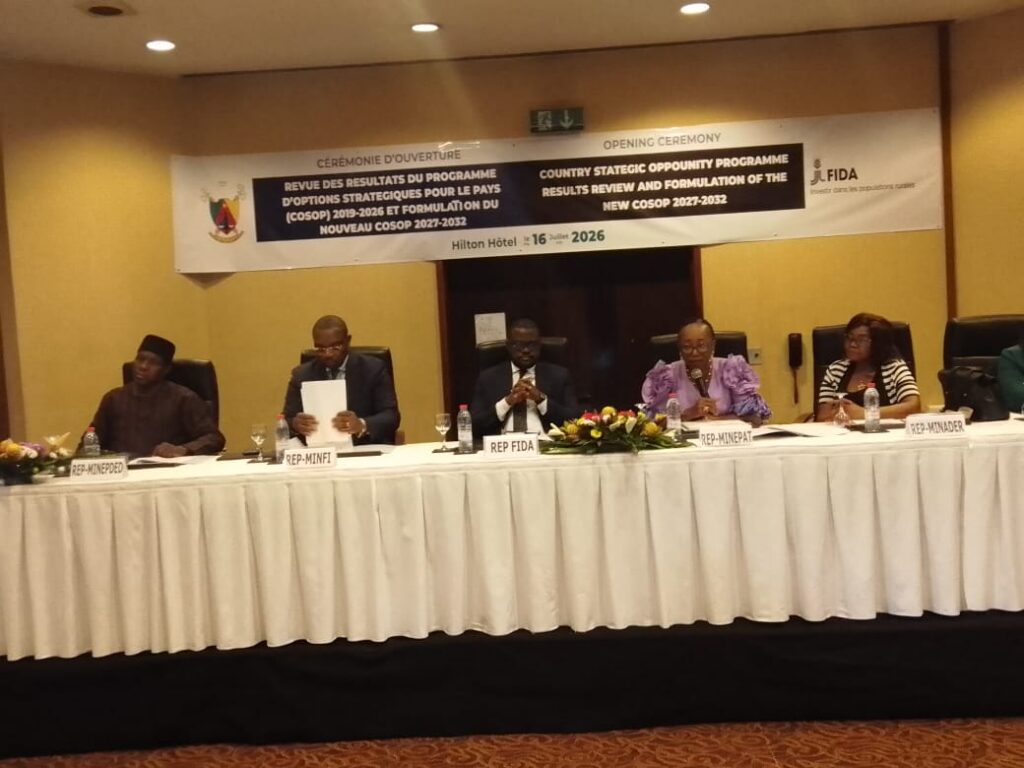
The Cameroun government and the International Fund for Agricultural Development (FIDA) have jointly unveiled progress reports on a landmark agricultural development initiative. The findings highlight significant gains in farm productivity, particularly in rice and onion production, as part of the 2019-2026 Country Strategic Options Programme (COSOP).
On July 16, 2026, a high-level review workshop was convened in Yaoundé to assess the outcomes of the COSOP programme and lay the groundwork for its successor initiative for 2027-2032. The event brought together policymakers, agricultural experts, and rural development stakeholders to evaluate programme effectiveness and align future interventions with national priorities under the 2020-2030 National Development Strategy (SND30) and the UN Sustainable Development Cooperation Framework for Cameroun.
Key achievements in agricultural productivity
The programme’s primary focus was to sustainably increase productivity and output from smallholder farms and rural enterprises. Remarkably, 98% of the set targets were met in this area, with 139 cooperatives across the rice and onion value chains now fully operational—supporting 10,505 producers, of which 39% are women and 49% are young farmers. The initiative had originally aimed to enroll at least 10,000 members by 2024, with women and youth leading at least half of the cooperative boards.
All supported projects were equipped with environmental and social management plans. In the Youth Agropastoral Entrepreneurship Promotion Programme (PEA-Jeunes), 99% of targeted young people adopted the training techniques provided, exceeding the expected 50% adoption rate. However, hydro-agricultural land development for rice and onion production reached only 43% of its target—649 hectares were developed against a goal of 1,600 hectares.
Rice and onion production: mixed progress
Under the Second Agricultural Sector Development Support Programme (PADFA II), beneficiaries reported a 50% increase in lowland rice yields, rising from 2.5 to 3.7 tonnes per hectare—a 74% achievement of the 5-tonne target. Rainfed rice production also improved to 2.5 tonnes per hectare, reaching 63% of the 4-tonne goal. Onion production posted an 86% realization rate, with 18 tonnes produced per hectare against a 21-tonne target.
In cumulative terms, PADFA II delivered 52,996 tonnes of paddy rice against a target of 74,750 tonnes (70.38% realization), and 45,000 tonnes of onion bulbs against a forecast of 85,562 tonnes (52.47% realization). These figures reflect steady progress, though some targets remain partially unmet.
Climate-resilient agriculture gains momentum
The initiative also prioritized climate-smart agricultural practices. A 100% success rate was recorded in adopting ecosystem-based adaptation and climate-resilient farming guidelines, as part of the national climate action plan. This milestone includes the development of a strategic plan for 17 reforms, an initial draft of the agropastoral sector orientation law, and the establishment of three strategies to support national bamboo restoration policies.
The original COSOP agreement was signed in 2019 for a 2019-2024 period, later extended to December 31, 2026, following a mid-term review in July 2021 that confirmed the programme’s relevance amid evolving national priorities.