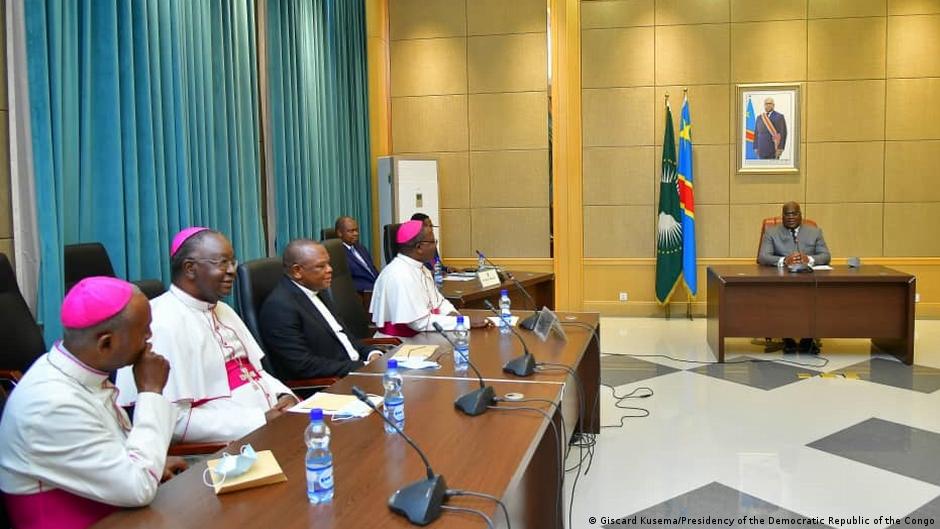
The debate over modifying the 2006 Constitution in the Democratic Republic of Congo has taken a significant turn. While the opposition has been the primary voice of dissent, the National Episcopal Conference of Congo (Cenco) has now joined the fray, lending its influential voice to the movement against these reforms.
Abbé Donatien Nshole, the Secretary General of Cenco, has voiced the institution’s firm stance, stating that the proposed constitutional overhaul is neither timely nor essential for the nation. He has called on religious leaders and pastoral workers to educate the public and resist any efforts to manipulate the foundational law of the land, hinting at future concrete actions to be announced.
The Catholic Church says no to changing the Constitution
The clergy’s intervention aims to prevent further fragility in a nation already grappling with violent conflict in the East and widespread social unrest. By taking this position, the prelates seek to weigh in on a political debate that they believe could destabilize the country further.
In the streets of Kinshasa, however, the public remains divided. Each citizen offers a unique perspective on the Church’s stance. “Many focus on the President potentially seeking another term, but we should look at the general interest and the work being done for the people,” one young woman remarked.
Another resident expressed skepticism regarding the timing: “The country is in a state of war and under siege in the East. How can we justify changing the Constitution under such dire circumstances?” Meanwhile, a young man argued for modernization, suggesting that the legal framework must be adapted to ensure the state remains a sovereign and capable player on the international stage.
The strategic weight of Cenco
While Cenco lacks formal institutional power to block legislation, its social and diplomatic reach is unparalleled. Political scientist Christian Moleka highlights that the Catholic Church possesses a unique ability to mobilize citizens across the entire country, a feat other religious groups cannot easily replicate. Furthermore, its voice carries significant weight in international diplomatic circles, making it a formidable opponent to the government’s plans.
As the political temperature rises, the opposition has already scheduled a major street protest for July 8, calling for the resignation of President Félix Tshisekedi. In response, the leadership of the ruling UDPS party has accused its rivals of attempting to incite a popular uprising and create chaos within the DRC.