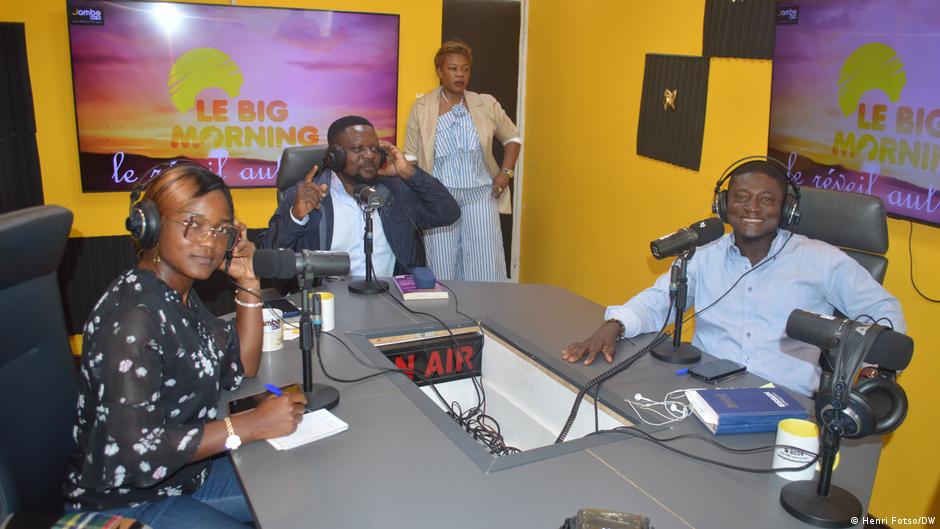
In the heart of Douala, the radio station Jambo FM has made a bold move by entrusting its most critical broadcasting slots to a new generation of media professionals. These young reporters are currently navigating a landscape of intimidation as they strive to maintain their editorial autonomy.
Situated in the bustling Deido neighborhood, specifically at the Entrée de la gare, the studios of Jambo FM are alive with a unique spirit. The station’s Director General, Antoine Landry Lemogo—widely recognized as President Tchop Tchop—has intentionally shifted the dynamic by placing the microphone in the hands of the youth.
“To progress in today’s world, we have no choice but to rely on the vitality and fearlessness of the younger generation,” he explains. He notes that the nation is currently led by an aging elite primarily concerned with self-preservation. For him, it is impossible to criticize this stagnation without offering young people a platform within his own organization to help shape the future.
Regarding the challenges faced by women in high-stakes broadcasting, the team emphasizes that gender is not a barrier. Success in intense debates depends on rigorous preparation, deep knowledge, and broad cultural awareness. With these tools, a moderator can effectively guide guests and manage listener contributions.
Civic education amidst the threat of censorship
On the popular “Big Morning” program, listener participation is a core element. However, broadcasting live remains a high-stakes endeavor, balancing the need for civic education with the risk of controversial outbursts.
Jordan Sorel Timba, another member of the station’s youthful reporting team, advocates for a style based on constructive critique.
“Our goal isn’t to dismantle the current administration; we are here to highlight the challenges facing our society,” Timba clarifies. He adds that they also acknowledge government successes, such as the recent life-saving efforts at Laquintinie Hospital. If a caller’s behavior becomes inappropriate, the team is prepared to cut the feed to maintain professional standards.
The shadow of violence against media workers, particularly the tragic killing of Martinez Zogo, serves as a constant reminder of the risks involved. For Tamo Tabe, the host of the interactive show “Laissez parler les gens,” which airs from 9 a.m. to 11 a.m., Jambo FM’s phone lines have become a vital outlet for a restricted population.
“Because many Cameroonians are afraid to voice their grievances in the streets for fear of being branded as terrorists, they turn to the radio,” Tabe observes. The airwaves provide a necessary space for citizens to express the frustrations they carry within.
By seeking to tell the truth without malice or sycophancy, Jambo FM continues to carve out a space for democratic expression in Cameroon. This ongoing struggle for press freedom persists decades after the La Baule summit, which famously linked international development assistance to the progress of democracy on the continent.