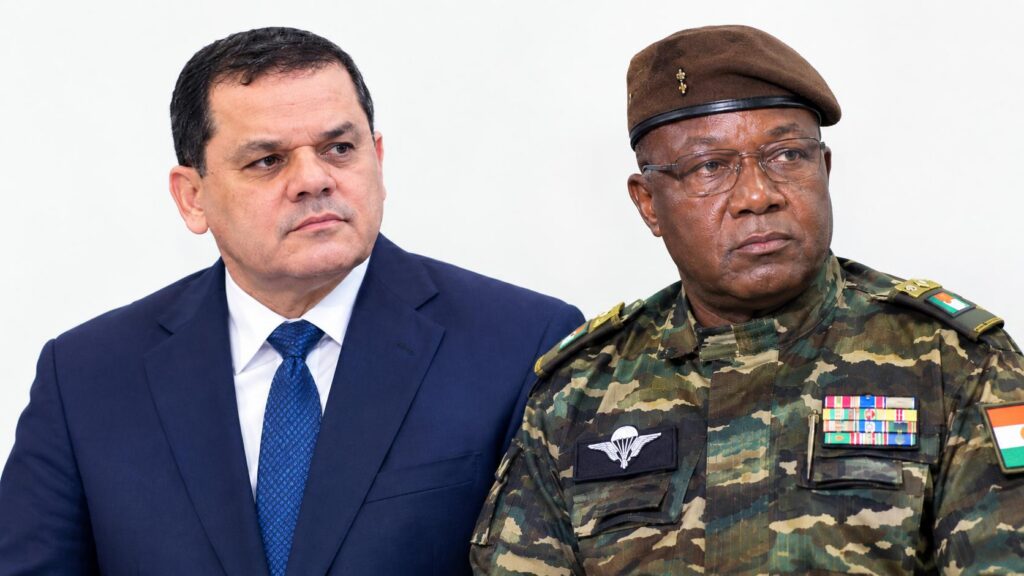
A quiet gamble in the Sahara: what is Niamey really after?
For years, General Abdourahamane Tiani rarely looked beyond the walls of his own palace in Niamey. Now, his gaze is drifting north, into the Libyan Sahara, where a former Haftar loyalist named Mohamed Wardougou is turning the Fezzan into a new arena of confrontation. The question is no longer whether Niger is involved, but how far Tiani is willing to go — and what it could cost him.
The fault lines that ignore national borders
In the Sahara, state frontiers are little more than lines on a map. They cut through communities, trade routes and armed networks that stretch from Niger to Libya and Chad. It is inside this fluid space that Niamey now appears to be positioning itself in the power struggles shaking Khalifa Haftar’s camp.
The signs are still subtle, but they are adding up: warming ties between Niamey and Tripoli, armed groups moving along the frontier, and above all the rise of Mohamed Wardougou as a direct challenger to the Haftar clan.
Wardougou: from Haftar’s man to his fiercest foe
Mohamed Wardougou is no newcomer to this equation. A Toubou warlord, he once worked inside Khalifa Haftar’s security architecture, helping monitor Libya’s southern borders. But in early 2026 he broke with Benghazi and founded the Southern Liberation Operations Chamber (COLS). Since then his fighters have been harassing positions held by the Libyan National Army (LNA), the force commanded by Haftar.
Wardougou accuses the Haftar clan of monopolising Fezzan’s resources at the expense of local populations. He also denounces the taxes imposed in LNA-controlled areas and the political and military dominance exercised by the marshal’s family. In June he announced he would target fuel-smuggling convoys and communication lines belonging to the Haftar clan.
That rebellion is a particular threat to Benghazi. The Fezzan is not just empty desert: it is strategic depth linking Libya to Niger, Chad and the wider Sahel. For Haftar, controlling it is essential. For his enemies, planting a hostile force there is a way to crack his system open.
Is Niger becoming a rear base for Tripoli’s proxy?
This is where Niamey’s role becomes especially interesting. Wardougou’s forces are reported to have set up rear bases on Nigerien territory. Researcher Wolfram Lacher also considers it likely that the COLS receives support and weapons from Tripoli, notably through security officials tied to Abdelhamid Dbeibah’s government.
More recently, Tripoli has reportedly been negotiating with Niamey over a corridor that would make it easier to move military equipment to Wardougou’s group. Since the borderlands between Niger and Libya are where his fighters launch attacks on Haftar-controlled positions and installations, such a corridor would be a game-changer.
This matters because it comes after months of rapprochement between Tripoli and Niamey. In other words, Niger may no longer be just a neighbour of the Libyan theatre. It could gradually become a logistics space in the confrontation pitting Tripoli against the Haftar camp.
Caution is still needed: the available evidence does not prove that Tiani personally ordered support for Wardougou or that a formal alliance exists between the two men. What is documented is a convergence between Nigerien authorities and the Tripoli camp — a convergence from which Wardougou could benefit.
Why would Tiani take an interest in Haftar?
The first stake is security. Niger shares a long, hard-to-control desert border with Libya. Movements of fighters and trafficking in weapons, fuel and migrants have crossed this region for years.
But the stake is also geopolitical. Since seizing power in a July 2023 coup, Tiani has deeply reshaped Niger’s foreign partnerships. The military regime has drifted away from Western partners and moved closer to Russia, while seeking new regional interlocutors. Libya is a strategic neighbour in this context.
The rivalry between Tripoli and Benghazi gives Niamey a chance to build a closer relationship with western Libyan authorities. The meeting between Nigerien Prime Minister Ali Lamine Zeine and Abdelhamid Dbeibah in Tripoli in June 2026 illustrates this rapprochement. The relationship is now considered important enough to speak of a “new front” against the Haftar clan.
Haftar’s house is cracking
The broader context is unfavourable to the marshal. After consolidating control over eastern Libya, Haftar had managed to extend his influence into the Fezzan. That southern foothold was one of the main pillars of his military system.
But the architecture is starting to show cracks. In 2025, Hassan Al-Zadma, commander of the 128th Brigade, drifted away from Haftar before moving closer to Tripoli. In 2026, it was Wardougou’s turn — a Toubou figure and former player in Haftar’s security apparatus — to take up arms against the LNA.
For Haftar’s opponents, this string of defections is an opportunity. Above all, it shows that the clan’s authority in the south rests on fragile local alliances that can be renegotiated when tribal, economic or military interests shift. The problem is all the more serious because southern Libya concentrates major trafficking networks and sits at the crossroads of several crisis zones.
Is Tiani playing with fire?
Niger’s growing involvement in Libyan dynamics could come at a cost. Tiani’s regime faces its own internal difficulties. On 29 August 2026, a coup attempt targeted power in Niamey. The regime survived, notably thanks to the intervention of Russian Africa Corps troops. Since then, Tiani has restructured the chain of command and carried out numerous arrests within the army.
Against that backdrop, opening a new strategic theatre around Libya could look like a risk. Any involvement in the Libyan conflict can quickly spill beyond diplomacy. The Sahara’s armed networks are cross-border, tribal alliances are shifting, and rebel groups are numerous. Logistical support for a group like Wardougou’s could therefore have consequences that are hard to control.
A new proxy war in the making?
That may be the real issue. The confrontation between Tripoli and Haftar could gradually turn into indirect competition over border territories. Niger would provide geographic depth, Tripoli political and potentially material support, while Wardougou would bring a military network embedded in the south.
Such a configuration would make the Fezzan one of the new epicentres of Libyan rivalry. But it would also put Tiani in a delicate position. By moving closer to the Tripoli camp and allowing a dynamic favourable to Wardougou to take root, Niamey risks being seen as an actor in the Libyan conflict rather than a simple neighbour.
The question is no longer only who controls southern Libya. It is how far Niamey is prepared to go in the battle between Libya’s competing power centres.
For now, no public evidence proves that Tiani directly directs Wardougou’s operations. But the available elements sketch a clear trajectory: Niger is edging closer to one of the camps challenging Haftar’s grip, while the Niger-Libya border could become a strategic depth for that confrontation.
In the Sahara, rivalries never stop exactly where borders do. And for both Haftar and Tiani, southern Libya could become the next ground where their interests are measured.
More Stories
Can Benin and Spain turn cultural diplomacy into a lasting strategic advantage?
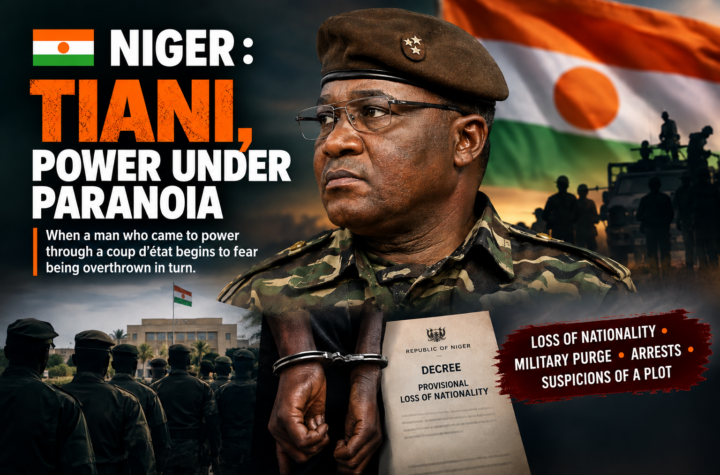
Can a leader who seized power by force ever feel secure in Niger?
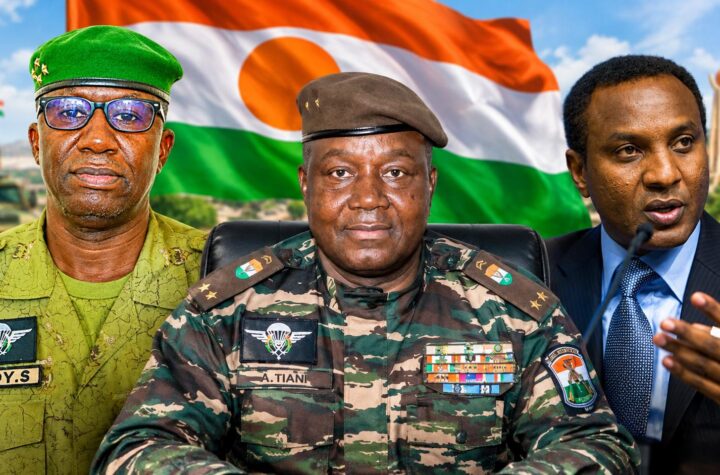
Who will ultimately control Niger’s 1.8 billion FCFA monthly security fund?