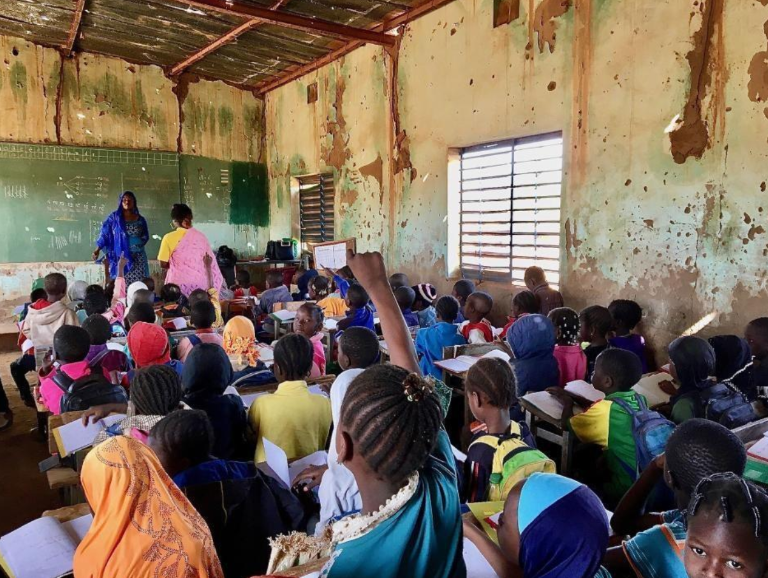
The Alliance of Sahel States (AES) confronts a harsh educational crisis as armed violence, teacher shortages, and mass displacements force children out of classrooms and communities into uncertainty. In Niamey, ministers from Niger, Mali, and Burkina Faso gathered to chart a path forward—but the cost of inaction is already visible in missing desks, empty chairs, and a generation at risk of falling behind.
Niamey’s high-stakes summit: addressing the collapse of education across the Sahel
Niamey is hosting the inaugural AES education summit as schools across the region face unprecedented strain. The opening ceremony saw Niger’s Prime Minister, Ali Mahamane Lamine Zeine, joined by national leaders and delegations from Mali and Burkina Faso. Together, they are tasked with designing an integrated, resilient educational system—but the road ahead is paved with real-world consequences for students, teachers, and families.
Behind the diplomatic rhetoric lies a crisis that strikes at the heart of national sovereignty: how can a state claim true independence when its children are denied the right to learn?
Teacher shortages: the silent crisis undermining classroom quality
Even before the current wave of instability, the AES region struggled with a critical shortage of qualified educators. Niger’s latest data reveals a stark imbalance: 69,636 teachers for over 3 million primary students—a ratio of one teacher for every 43 children. The situation is compounded by widespread reliance on underprepared contract teachers, many of whom enter classrooms without formal pedagogical training.
This is not just a numbers issue. The lack of trained educators directly impacts learning outcomes, leaving students without the guidance they need to thrive. As one teacher in Tillabéri noted, “We do our best, but how can we teach effectively when our training and tools are insufficient?”
A regional teacher deficit underpinned by insecurity and displacement
Mali and Burkina Faso face similar challenges. In Mali, entire villages have seen teachers flee due to violence, while in Burkina Faso, over 5,300 schools were closed in early 2024, displacing 820,000 students and 24,000 educators. These absences are not temporary—they represent a structural failure that threatens to entrench inequality for years to come.
School closures: the education gap that fuels desperation
Violence isn’t just displacing teachers—it’s shutting down schools. In Niger, 1,097 schools were inactive by late 2025, leaving 93,676 children without a classroom, 48% of them girls. In Tillabéri alone, 1,032 schools were affected. Across the border, Mali reported 2,444 non-functional schools in mid-2026, impacting 733,200 children and 14,600 teachers. In Burkina Faso, 5,336 schools were shuttered earlier this year, with no signs of rapid reopening.
These closures do more than interrupt lessons—they erase hope. Families forced to flee often abandon homes, livelihoods, and schools in the process. The result? Children who miss weeks, months, or even years of education, their futures suspended in limbo.
Mass displacement: when fleeing violence leads to lost learning
The Sahel is experiencing one of the fastest-growing displacement crises in Africa. By 2026, over 2 million people were internally displaced in Burkina Faso, 548,386 in Niger, and 414,524 in Mali. These movements strain local school systems, as displaced families flood into safer regions with few resources to absorb them.
Overcrowding, underfunding, and lack of infrastructure become the norm in host communities. Children who manage to enroll often share desks, study in shifts, or attend classes in makeshift tents. Many drop out entirely, their education sacrificed to survival.
From ambition to action: building a resilient education system
The Niamey summit is more than a symbolic gathering—it’s a call to action. Its priorities include:
- Harmonizing curricula across AES member states to ensure consistency and mutual recognition of qualifications.
- Training and deploying qualified teachers to underserved and high-risk areas.
- Restoring access to closed schools through community protection and infrastructure repair.
- Developing alternative learning models—including radio, digital, and mobile classrooms—for excluded children.
- Prioritizing displaced children through accelerated enrollment programs and psychosocial support.
The stakes couldn’t be clearer: without urgent intervention, an entire generation risks being left behind—unprepared for the workforce, disconnected from society, and vulnerable to extremism.
Education as a pillar of sovereignty: can the Sahel afford to fail?
Education is the foundation of state resilience. A sovereign education system doesn’t just teach children to read and write—it cultivates critical thinking, fosters national identity, and equips young people to lead their countries into the future. Yet across the Sahel, that foundation is crumbling.
With nearly five million children out of school in Niger alone, the scale of the challenge is daunting. The Niamey summit must move beyond declarations and deliver concrete commitments: budgets, timelines, and accountability. The future of the Sahel depends not just on military or economic strategies, but on whether its leaders can restore the right to learn—for every child, in every community, regardless of danger or displacement.
The classrooms of today will shape the leaders, workers, and citizens of tomorrow. In Niamey, the world is watching to see if those classrooms will be rebuilt—or abandoned to the shadows of crisis.