Washington’s warning: a risky model from the Sahel reaches the Indian Ocean
American officials are raising alarms about the military cooperation unfolding between Madagascar and Russia, warning that the Sahel’s troubled security model could destabilize the Indian Ocean. General John Brennan, Deputy Commander of U.S. Africa Command (AFRICOM), explicitly cautioned Antananarivo that replicating Moscow’s approach in Africa’s southern regions could exacerbate instability rather than resolve it.
Why the Sahel experience raises red flags for Madagascar and Mozambique
At the heart of Washington’s concerns lies the Sahel, where Russia’s military partnerships with Mali, Burkina Faso, and Niger have coincided with persistent jihadist violence. U.S. officials argue that the Africa Corps—a Russian military structure that replaced Wagner’s footprint—has failed to curb insecurity despite expanded troop presence and training programs. Brennan described this model as largely ineffective, stressing that its adoption elsewhere could undermine rather than improve security outcomes.
Consequences for Malagasy and Mozambican communities
The Sahel’s security struggles underscore real-world risks for Indian Ocean nations like Madagascar. A failed security partnership could leave coastal towns vulnerable to insurgent threats, disrupt maritime trade, and strain fragile economies still recovering from pandemic fallout. Washington’s unease reflects broader concerns that unproven security models may trade short-term stability for long-term chaos.
Antananarivo’s deepening bond with Moscow: a strategic gamble
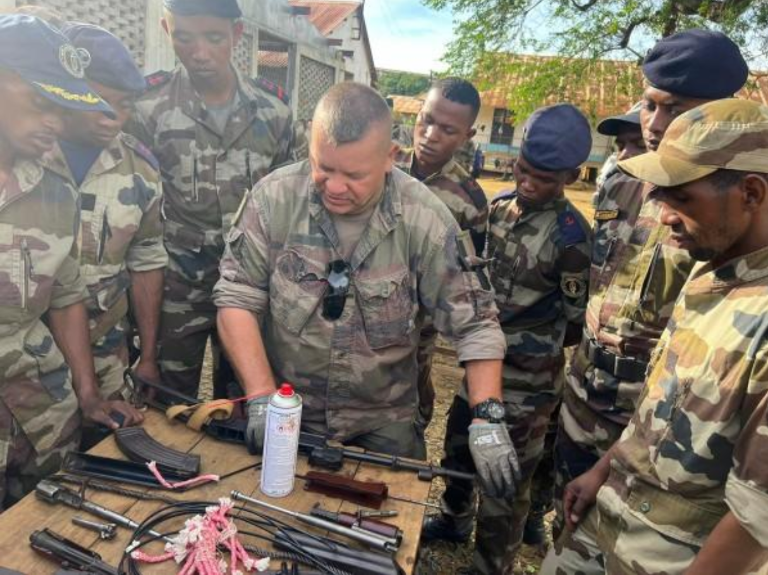
Since Madagascar’s political transition in 2025, military and political ties with Russia have intensified. The country has received Russian military hardware—including drones and small arms—and hosted Moscow’s instructors for army training. In early 2026, Madagascar’s President made an official visit to Moscow, finalizing defense and economic agreements at the Russia-Africa summit, signaling a new phase in bilateral relations.
This alignment has intensified geopolitical attention on Madagascar’s eastern coast, a critical corridor for global shipping between Asia, Europe, and southern Africa. The island’s position makes it a linchpin in Indian Ocean security dynamics, where any instability could ripple across international supply chains.
Mozambique: the next front in Africa Corps’ expansion
Mozambique’s northern province of Cabo Delgado has faced a growing insurgency linked to Islamic State affiliates. U.S. officials warn these groups are adapting tactics and could pose an escalating threat to maritime traffic. Brennan highlighted Cabo Delgado’s instability as a direct challenge to regional security, urging prevention rather than reaction to emerging crises.
Madagascar caught between Moscow and Washington’s competing agendas
Despite its warnings, the U.S. has stopped short of threatening sanctions, emphasizing instead diplomatic persuasion. Brennan acknowledged Madagascar’s sovereign right to choose partners but urged careful evaluation of long-term costs tied to military cooperation with Russia. The message is clear: Washington seeks to maintain influence in the Indian Ocean while discouraging a Sahel-style partnership.
The balancing act: sovereignty against strategic dependence
Madagascar now faces a delicate equilibrium. Diversifying military and trade partners could enhance national autonomy, but leaning too far toward any single power risks compromising long-term interests. Local analysts suggest Antananarivo must weigh immediate security gains against potential economic and diplomatic isolation if broader alliances shift.
An ocean at the center of global competition
The U.S.-Russia rivalry over Madagascar reflects a deeper contest for influence in the Indian Ocean, where maritime trade, energy routes, and coastal stability intersect. With Moscow expanding its African footprint and Washington reinforcing presence in the region, the stakes go beyond bilateral relations—they shape the future of Indian Ocean security and economic connectivity.
What comes next for Madagascar’s defense strategy?
Antananarivo’s choice could either stabilize its shores or deepen insecurity across the Mozambique Channel. The coming months will reveal whether Madagascar can pursue military cooperation with Russia without importing the Sahel’s instability—or whether Washington’s warnings reflect a preventable future.