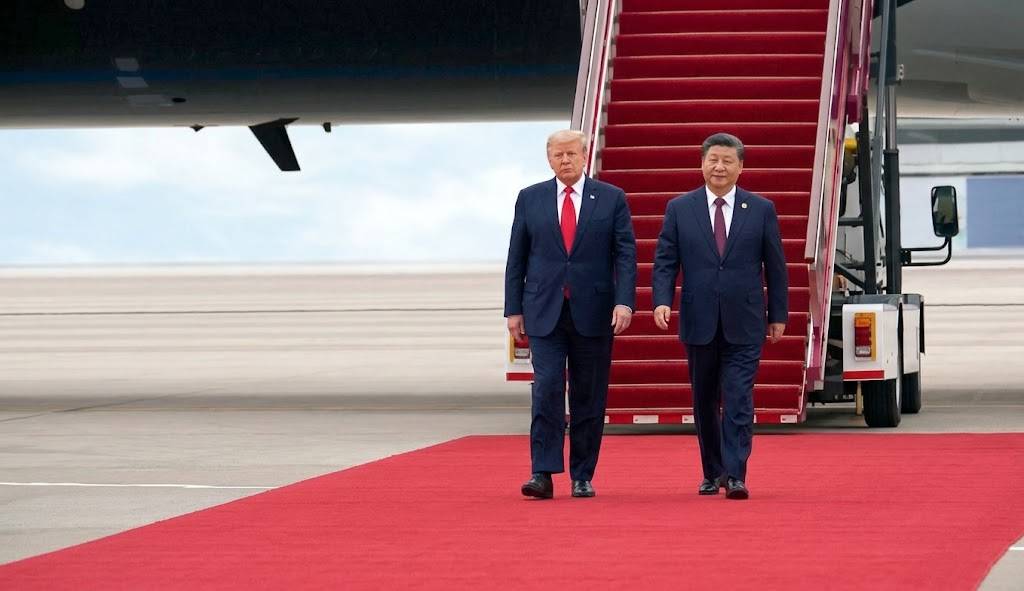
Shenzhen summit sparks economic and geopolitical tremors across three continents
In a historic convergence of power rarely seen on the world stage, Donald Trump, Xi Jinping, and Vladimir Poutine convene in Shenzhen this week for an unprecedented trilateral summit. The meeting, slated for November 19, 2026, within the backdrop of the APEC summit, is already being framed as a potential turning point in global relations, with far-reaching consequences for businesses, markets, and everyday citizens worldwide.
From diplomatic symbolism to real-world impact
The gathering carries profound symbolic weight. Shenzhen, China’s tech hub and a symbol of economic transformation, becomes the unlikely stage for three of the world’s most consequential leaders. Each arrives with distinct priorities, but the stakes transcend individual agendas: the choices made in these closed-door negotiations could reshape trade flows, energy markets, and technological access for billions.
For Donald Trump, the summit represents a crucial opportunity to reset strained U.S.-China relations and push for concessions on technology exports and intellectual property protections. His agenda includes securing commitments on semiconductor supply chains, a sector where Washington has imposed strict export controls that Beijing views as hostile.
Xi Jinping sees the meeting as a chance to assert China’s centrality in global governance, leveraging its role as both a manufacturing powerhouse and a growing diplomatic player. With Russia as a key partner in the Eurasian market, Beijing aims to strengthen cooperation on infrastructure projects while addressing Western sanctions that threaten both Moscow and Beijing’s economic expansion.
Vladimir Poutine arrives under immense pressure. With Western sanctions crippling Russia’s economy and the war in Ukraine demanding costly resources, this summit offers a lifeline to re-engage with global powers. Poutine’s objectives include easing trade restrictions, securing energy partnerships, and ensuring Russia remains a key player in the new global order without conceding to Western demands.
Critical issues on the negotiation table
Nuclear disarmament: a fragile gamble with global stakes
The most pressing agenda item remains nuclear security. Trump has signaled interest in reviving stalled disarmament talks, a move fraught with risk given the current geopolitical climate. Any agreement would require concessions from all three powers, particularly Russia, which has recently expanded its nuclear arsenal in response to NATO expansion near its borders. Failure to reach consensus could escalate global tensions and renew arms races.
Ukraine and Iran: simmering conflicts poised for escalation
The war in Ukraine dominates discussions. While the U.S. pushes for a negotiated settlement, Moscow insists on territorial concessions from Kyiv. Russia’s survival in this conflict hinges on securing Chinese support—both economically and diplomatically. Meanwhile, the Middle East’s volatile dynamics, especially Iran’s nuclear program, loom large. The three leaders may seek a common stance, but historical rivalries make consensus unlikely.
Technology and trade: the invisible battle shaping the future
Underneath the geopolitical posturing lies an invisible war over technological dominance. Semiconductors, 5G infrastructure, and quantum computing are the new battlegrounds. The U.S. has weaponized export controls, China aims to achieve self-sufficiency, and Russia seeks to bypass sanctions through technological partnerships. The Shenzhen summit could either freeze these divisions in place or thaw a pathway toward cooperation—or at least coexistence.
What happens if the summit fails?
A breakdown in negotiations would have immediate consequences. Financial markets could plummet as investors react to heightened risks of a new Cold War. Countries reliant on Chinese trade or Russian energy would face economic instability. Meanwhile, smaller nations caught in the crossfire—particularly in Africa and Southeast Asia—could see their leverage diminish further, squeezed between competing global powers.
The summit’s timing is critical. With inflation ravaging economies, supply chains still fragile post-pandemic, and climate change demanding urgent action, the world cannot afford further fragmentation. Yet, the absence of key players like the EU, India, or African nations underscores a troubling reality: the future may be decided by three capitals, leaving the rest of the world to adapt—or suffer the fallout.
A world watching, waiting, and wary
The world’s eyes are fixed on Shenzhen. The images of these three leaders shaking hands or sharing a stage may dominate headlines, but their true impact will be measured in boardrooms, war rooms, and living rooms from Berlin to Bangkok. Will this summit bridge divides or entrench them? Will it bring stability or accelerate fragmentation? One thing is certain: the decisions made in a few short days in Shenzhen will echo for decades, determining whether the 21st century becomes an era of cooperation or confrontation.
As curtains close on the APEC summit, all eyes turn to what comes next. For now, the only certainty is uncertainty—and the high price of failure.