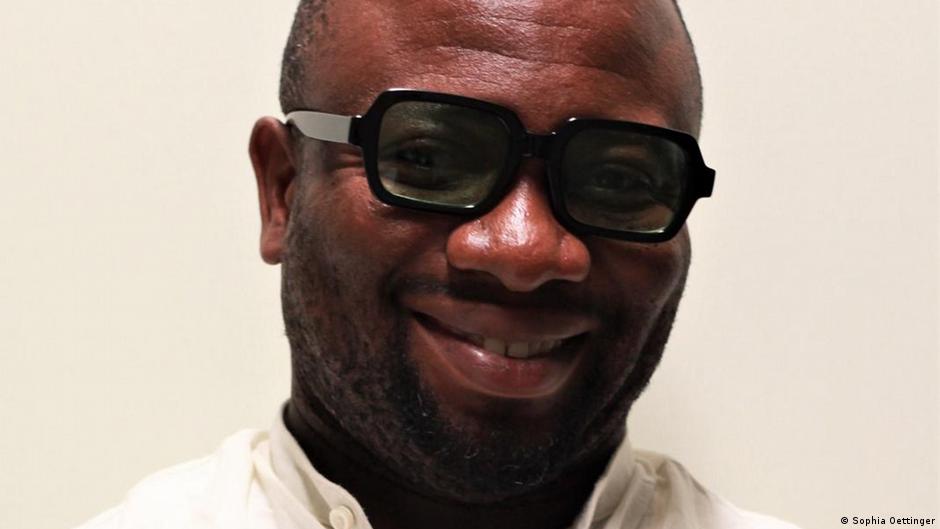
“Eastern Congo’s security turmoil: a geopolitical project?”
The government of the Democratic Republic of Congo recently announced a signed protocol with the Forces Démocratiques de Libération du Rwanda (FDLR) for their disarmament, demobilization, and cantonment within eastern DRC. However, neighboring Rwanda has swiftly dismissed this initiative as a “dilatory maneuver.” For decades, the DRC and Rwanda have been locked in a bitter dispute over the FDLR, a group whose members are accused of involvement in the 1994 Rwandan genocide. Kigali maintains that the FDLR poses an ongoing threat, an assertion it uses to justify the deployment of its own military forces in eastern DRC, operating alongside the AFC-M23 rebels.
Last year, the Washington accords saw Rwanda commit to withdrawing its troops, while Kinshasa pledged to neutralize the FDLR. Yet, the current contrasting actions between these two nations demand an explanation.
Researcher Josaphat Musamba offers insights
Josaphat Musamba, a doctoral candidate at Ghent University in Belgium, provided his perspective:
“Kigali has rejected the process of sensitization; it has just rejected the formula of persuasion. I believe Kigali is acting in bad faith. What does it ultimately want? Despite its presence in the operational theaters, I think this status quo in eastern Congo suits Kigali, and it intends to consolidate it. Kigali’s geostrategic ambitions in eastern Congo remain unclear.”
What is the true reality of the FDLR’s presence in eastern DRC, and what motivations lie behind their continued presence on Congolese territory?
Musamba responded: “If Kigali and the AFC/M23 claim that the FDLR are an integral part of the FARDC, empirically, this is untrue. I believe that the allies, AFC/M23 and RDF (Rwanda’s official army), are surprisingly incapable of completely neutralizing these FDLR who are operating within their zones. For me, this security chaos they have orchestrated in eastern Congo facilitates a broader geopolitical project for Kigali. By contributing to the disarticulation of Congolese administrative entities in the East, Kigali is establishing its influence over this part of the country.”
Kigali argues that the protocol between Kinshasa and the FDLR fails to meet the Washington accord’s requirements for dismantling and neutralizing the FDLR. Do you believe the FDLR will ever disappear, paving the way for peace between Rwanda and the DRC?
Musamba asserted: “I contend that Rwanda’s argument is not factual. The DRC has opted for persuasion rather than military confrontation with the FDLR, adapting its approach to the specific context. In my opinion, this strategy is contextual. While continuing to contain the RDF and M23, the DRC cannot afford to open a second or third front with the FDLR. If dialogue can persuade this group, then the FDLR, as an armed entity, could eventually disappear. However, as an ideology of resistance against the Kigali regime — not a genocidal one, as Rwanda and the M23 claim — it may persist.”
More Stories
Can Senegal’s local elections be Bassirou Diomaye Faye’s make-or-break moment?
Senegal’s parliament: What power does Ousmane Sonko hold to derail the 2026 budget?
Senegal’s December 2 dilemma: can Diomaye Faye’s gamble reshape the nation’s future?