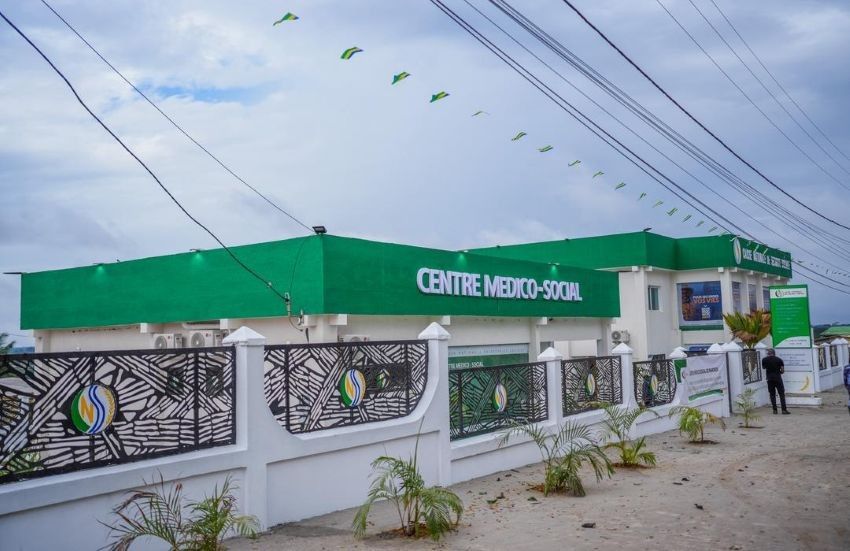
Gabon : Makokou, le service public se rapproche
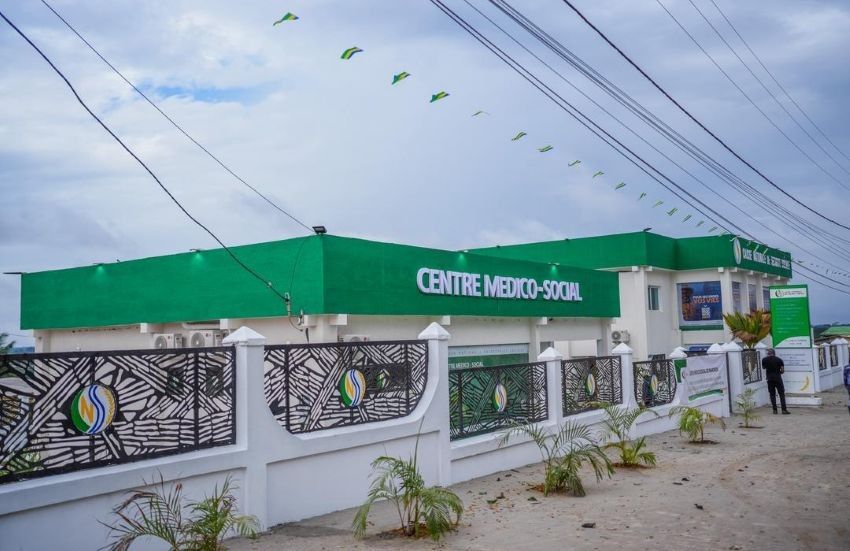
Libreville, Saturday, August 29, 2026 – In Makokou, the Ogooué-Ivindo province is experiencing a significant transformation, particularly in public services that directly impact its citizens. On Saturday, August 29, President Brice Clotaire Oligui Nguema, accompanied by First Lady Zita Oligui Nguema, officially opened the new agency of the National Social Security Fund (CNSS) and launched the modernized services of La Poste SA.
These two achievements extend far beyond their physical structures, addressing a fundamental challenge in territorial development: bridging the gap between residents and essential services.
For social security beneficiaries, including retirees, workers, and their dependents, the new CNSS agency will enable a greater number of procedures to be processed directly within Makokou. This is crucial for a province where travel to major administrative hubs can be time-consuming, costly, and particularly difficult for elderly individuals or families residing far from the provincial capital.
Bringing the CNSS closer to its users effectively means bringing citizens closer to their rights. Truly accessible social protection isn’t solely about the availability of benefits, but also about the institution’s capacity to welcome beneficiaries, process their applications, and address their concerns within reasonable timeframes.
This commitment to proximity is also evident in the modernization of La Poste SA. The postal service now aims to integrate territorial presence, digitalization, and service diversification. In Makokou, this evolution is marked by the inauguration of the first automated teller machine (ATM) within its postal network, providing a new avenue for residents to access financial services.
While an ATM might seem commonplace in a major city, its significance in an interior town like Makokou is profound. Local access to cash withdrawals and other banking operations reduces the need for travel, simplifies daily transactions, and enhances financial security. For local merchants, artisans, employees, and small entrepreneurs, consistent access to financial services is vital for managing income and fostering business growth.
La Poste SA’s national enrollment campaign complements these efforts by offering free account openings and complimentary post office boxes. The expansion of these services can help formalize various economic activities and bolster financial inclusion, provided their accessibility and continuity are consistently maintained.
This development is part of a broader transformation within the postal sector. African postal services are increasingly adopting hybrid models that combine traditional services with finance, digital solutions, and administrative functions. For Gabon, the objective is to leverage its existing territorial network as a local infrastructure capable of serving populations that traditional banking or administrative networks often struggle to reach.
The importance of the Makokou initiative lies precisely in the complementary nature of these two investments. The CNSS establishes a social and administrative presence, while La Poste offers a crucial financial and digital access point. Together, these services contribute to creating a more functional environment for both residents and the local economy.
A challenge extending beyond the provincial capital
Ogooué-Ivindo is currently experiencing an exceptional concentration of public and private projects. Roads, markets, housing, educational facilities, health infrastructure, administrative equipment, and mining-related investments are all contributing to the rapid transformation of Makokou and several other localities within the province.
However, this transformation brings a new imperative. As a territory develops, it requires more robust services to support its growing population and new economic flows. A new road opens up a region, but effective administration is needed to manage it. Mining activities attract investment, but strong financial inclusion ensures that a portion of the population can seize these opportunities.
Therefore, territorial development cannot be reduced solely to construction policies. It must integrate the services that make growth tangible and usable in daily life.
This is why the modernization efforts undertaken in Makokou must be evaluated based on simple, measurable criteria. How many CNSS procedures can now be completed locally? How many users are served more quickly? What is the utilization rate of the ATM? How many accounts have been opened? What progress has been made in digital services? These results will determine if the investment genuinely transforms daily life.
The imperative of continuity
The launch of these services is an initial step, but it creates an ongoing obligation for permanence. A modern public service is only valuable if it remains consistently operational, staffed by competent personnel, and maintained over time. Similarly, digitalization will only be effective if networks are reliable and if the population receives support in adopting new tools.
This issue is particularly significant for Ogooué-Ivindo. The province must avoid a situation where modernization is concentrated solely in Makokou while other departments remain distant from essential services. The approach initiated in the provincial capital must progressively extend to Mékambo, Booué, Ovan, and other localities.
The new CNSS agency and the modernized La Poste can serve as reproducible models. Their expansion across the province would strengthen territorial cohesion and gradually reduce the service disparity between Libreville and the interior regions.
In Makokou, on August 29, 2026, the state didn’t merely inaugurate a social agency and modernize a postal network. It began shifting the center of gravity for public services closer to the citizens themselves. The true success of this policy, however, will be measured long after the ceremonies, when a retiree can manage their affairs without leaving their province, when a merchant can conduct banking transactions nearby, and when an entrepreneur can access the financial tools vital for their business.
Territorial development gains credibility when infrastructure ceases to be mere symbols and becomes practical, everyday utilities. Makokou has taken a significant step forward. The challenge now is to establish this proximity as a standard across all of Ogooué-Ivindo.