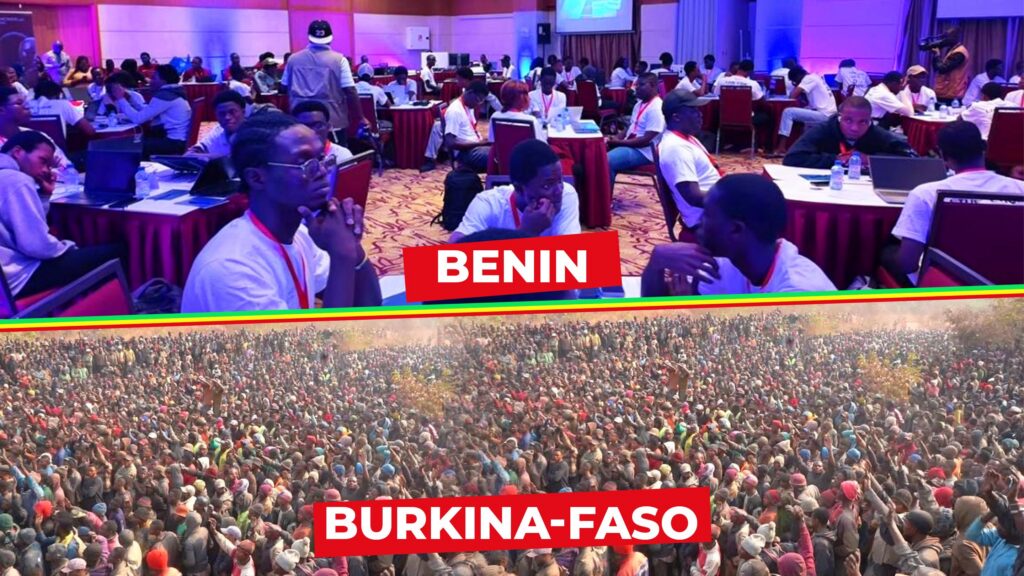
The divergent paths taken by Benin and Burkina Faso in addressing their most pressing socio-economic challenges reveal a fundamental question about governance: how do nations balance immediate crises with long-term strategic investments?
When innovation meets urgency: the case of Benin’s digital talent strategy
While some African nations grapple with pressing social issues, others are making deliberate investments in human capital to secure their future. Benin’s approach to nurturing digital talent serves as a compelling example of how long-term planning can shape economic resilience. The recent Cyber Africa Forum, held on November 16 and 17, highlighted the country’s commitment to fostering a new generation of tech-savvy innovators capable of addressing the continent’s most pressing digital challenges.
The event was not merely an isolated competition but the culmination of a rigorous, two-month selection process. Participating teams had undergone weeks of preparatory challenges, with only the top 20 advancing to the final round. This meticulous approach underscores a broader national strategy: identifying and cultivating talent, stimulating intellectual competition, and providing a platform for young professionals to demonstrate their potential.
The implications of such initiatives extend far beyond the competition itself. By prioritizing digital skills development, Benin is laying the groundwork for a robust digital economy one that could drive technological sovereignty, attract foreign investment, and create high-value employment opportunities for its youth. In an era where national competitiveness hinges on technological advancement, such foresight in talent development is no longer optional but essential.
Burkina Faso’s social crisis: the human cost of instability
Meanwhile, Burkina Faso faces a starkly different set of challenges, one that underscores the immediate and tangible consequences of policy missteps. The recent repatriation of thousands of artisanal miners expelled from neighboring Guinea has precipitated a humanitarian and economic crisis, leaving families without livelihoods and communities in disarray.
The impact of this exodus is not confined to the political sphere it is felt directly in households where breadwinners have lost their primary source of income. The absence of clear reintegration or economic transition programs has exacerbated the situation, leaving affected individuals stranded between the collapse of their previous livelihoods and an uncertain future. The crisis has exposed a critical gap in public policy: while political narratives and security measures dominate national discourse, the pressing needs of citizens remain unaddressed.
The dilemma facing Burkina Faso is not unique, but its resolution demands immediate, pragmatic action. Without robust social safety nets, vocational retraining initiatives, or economic diversification strategies, the repatriated miners face little prospect of reclaiming their economic stability. The stark contrast between their plight and Benin’s digital ambitions illustrates a fundamental truth about governance: while political posturing may dominate headlines, it is tangible, people-centered solutions that determine a nation’s stability and progress.
Beyond headlines: the long-term cost of short-term priorities
The juxtaposition of Benin’s forward-looking digital strategy and Burkina Faso’s immediate social crisis offers a sobering reflection on governance priorities across West Africa. It is not a question of one nation’s success or another’s failure, but rather a reminder that sustainable development requires a delicate balance between addressing present challenges and investing in future opportunities.
The Cyber Africa Forum’s success lies in its recognition that talent is not developed overnight it requires sustained investment, mentorship, and opportunity. Similarly, Burkina Faso’s crisis highlights the dangers of neglecting social and economic fundamentals in favor of political grandstanding. Both scenarios serve as cautionary tales: one illustrates the rewards of strategic foresight, while the other underscores the steep price of complacency.
As African nations navigate an increasingly complex global landscape, the choices they make today will define their trajectories for decades to come. Will they continue to prioritize short-term political narratives at the expense of long-term stability, or will they embrace the kind of strategic investments whether in education, innovation, or social protection that lay the foundation for a prosperous future?
The answer to these questions will determine not only the fate of individual nations but the collective potential of the continent as a whole.
By Marguerite Ndongo — Journalist