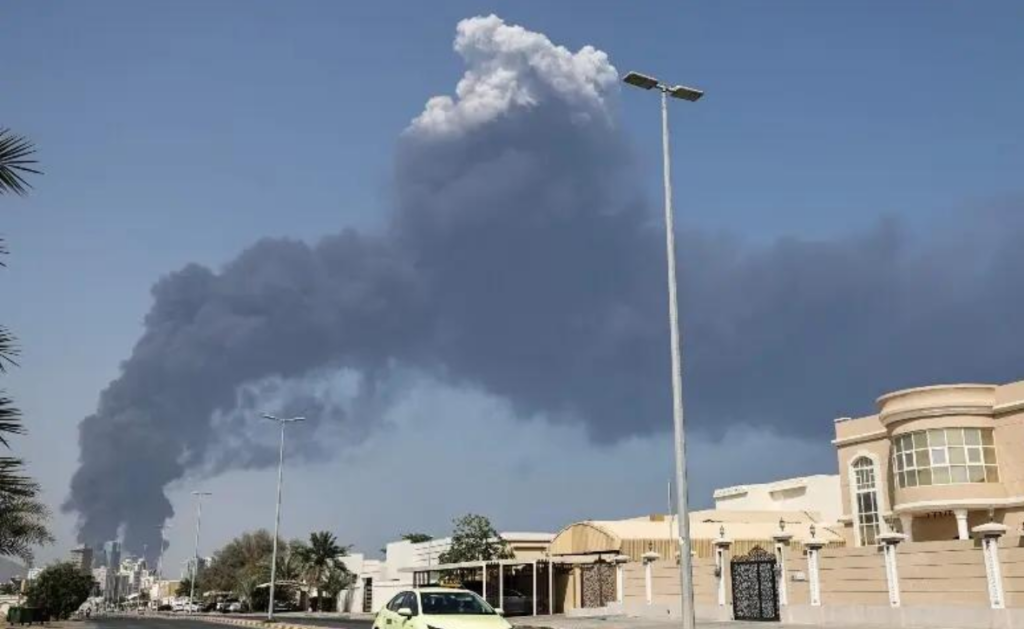
The latest military confrontation between Iran and the United States has taken a dangerous turn, with direct strikes on key American installations in Bahrain and Kuwait. These attacks are not just a regional flashpoint—they could reshape the security landscape of the entire Gulf, with consequences reverberating through global energy markets and geopolitical alliances.
How Iran’s strikes are reshaping the military balance in the Gulf
The Iranian strikes on November 18, 2026, targeted critical infrastructure in two of the Gulf’s most strategically vital nations: Bahrain and Kuwait. The attacks were not random—they were calculated to disrupt American operations while avoiding full-scale retaliation. Yet the ripple effects are already being felt far beyond the immediate conflict zone.
In Kuwait, the Ali Al Salem airbase—a cornerstone of U.S. military logistics in the region—came under fire. The assault involved a barrage of ballistic missiles and drones, forcing Kuwaiti air defenses to scramble interceptors. While official reports downplay the damage, the message is clear: Iran is demonstrating its ability to project power deep into Gulf territories hosting American forces.
Bahreïn’s fragile security dilemma in Iran’s crosshairs
Bahreïn remains the most critical U.S. military hub in the Gulf, home to the U.S. Fifth Fleet. The recent strikes have exposed the kingdom’s vulnerabilities, with radar systems and logistical hubs targeted in coordinated attacks. Despite claims on social media suggesting a direct hit on Fifth Fleet headquarters, Pentagon sources confirm only partial damage to secondary installations.
The question now is whether Bahrain can maintain its role as a stable ally without being dragged deeper into the U.S.-Iran conflict. The Bahraini government has vowed to strengthen its defenses, but the risk of miscalculation looms large.
The economic fallout: How the strikes threaten global supply chains
The Gulf’s strategic importance isn’t limited to military power—it’s the backbone of the world’s energy supply. The Strait of Hormuz, a chokepoint for nearly 20% of global oil exports, now faces unprecedented disruption risks. Oil traders are bracing for volatility, with shipping costs already rising as insurers hike premiums for vessels transiting the region.
If tensions escalate further, the economic shock could dwarf the regional conflict. Factories in Europe and Asia, dependent on Gulf oil, may see production slowdowns, while consumers could face higher fuel prices in the coming months.
Could diplomacy pull the Gulf back from the brink?
With both sides locked in a cycle of retaliatory strikes, the window for dialogue is narrowing. Oman and Qatar have historically mediated between Washington and Tehran, but their influence is fading as each attack deepens mistrust. The U.S. insists its military presence is defensive, while Iran frames its strikes as legitimate countermeasures.
The coming days will reveal whether cooler heads can prevail—or if the Gulf is heading toward a wider conflagration. One thing is certain: the stakes couldn’t be higher.