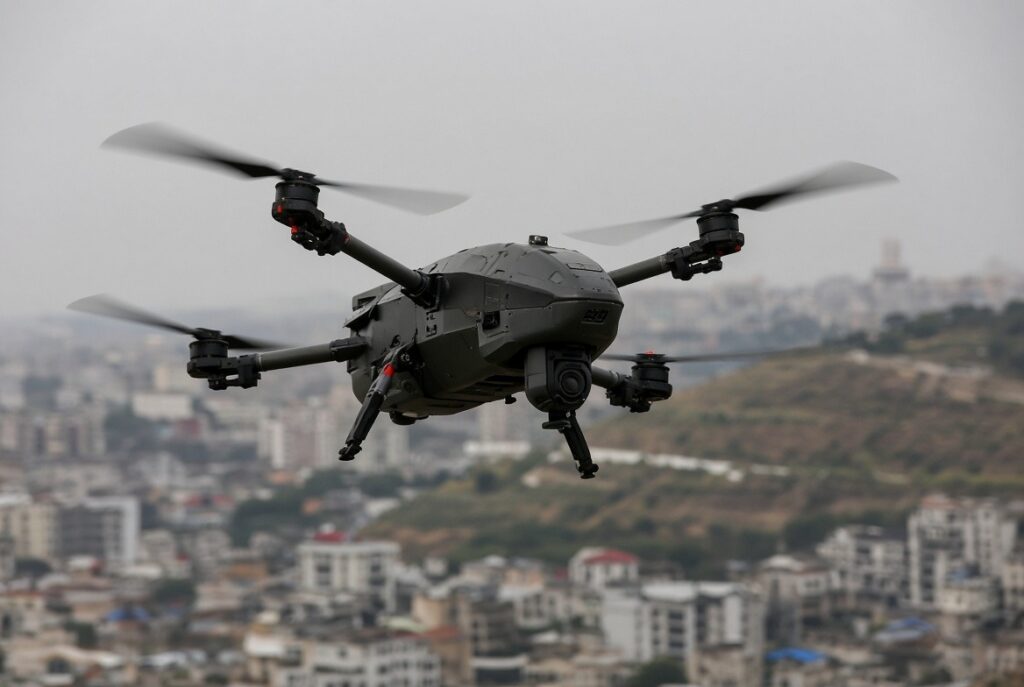
In just ten months, drone strikes have transformed Sudan into one of the world’s most dangerous places for civilians. A United Nations report details a horrifying toll: over 1,630 civilians killed between January and October 2026, accounting for nearly 75% of all civilian deaths recorded nationwide during the period.
Civilians Targeted: The Human Cost of Drone Warfare
These strikes are not isolated incidents but part of a deliberate strategy to cripple Sudan’s daily life. U.N. investigators cataloged dozens of attacks on critical civilian infrastructure, including:
- Marketplaces — bustling hubs of commerce where families gather, now reduced to battlegrounds.
- Healthcare facilities and schools — facilities essential for survival, struck without warning.
- Fuel depots, power grids, and water stations — the lifelines of modern society, systematically disabled. >
- Private vehicles — civilian transport targeted in indiscriminate strikes, turning roads into death traps.
Each attack doesn’t just claim lives—it strips communities of hope, access to clean water, and medical care. In Khartoum, Darfur, and Kordofan, families face an impossible choice: flee or face annihilation.
Kordofan and Darfur: Ground Zero of a Drone War
Two regions bear the brunt of this aerial onslaught: Kordofan, where over two-thirds of all recorded deaths have occurred, and Darfur, a land already scarred by decades of conflict. This war has moved beyond traditional battlefields. Drones now hover over homes, hospitals, and farms—turning entire towns into potential kill zones.
In Darfur, where ethnic violence has festered for years, drone strikes have become the latest weapon of terror. In Kordofan, cities like Kadugli and El-Obeid live under constant threat, their residents trapped between two warring factions vying for control.
The Roots of Sudan’s Drone War: Broken Promises and Unbridled Ambition
To understand how Sudan arrived at this bleak reality, we must trace the path of political collapse:
2019: A Revolution Betrayed
After 30 years of brutal dictatorship under Omar al-Bashir, a popular uprising finally toppled the regime. A transitional government emerged, led by a mixed civilian-military council. At its head stood two future adversaries: General Abdel Fattah al-Burhan, commander of the regular army, and General Mohamed Hamdan Daglo, aka Hemetti, leader of the paramilitary Rapid Support Forces (RSF). Hemetti, a former Janjaweed militia commander, had built a powerful parallel army and economic empire—funded largely by gold mining.
October 2021: A Coup Against Democracy
The fragile alliance between the two generals shattered Sudan’s democratic transition. In a swift and coordinated move, they seized power, sidelining civilian leaders and burying hopes for a free Sudan.
15 April 2023: War Ignites in Khartoum
The final break came over the integration of RSF forces into the regular army. Clashes erupted in Khartoum and rapidly spread across Darfur and Kordofan. What was meant to be a brief power struggle spiraled into total war.
2024–2026: The Descent into Drone Terror
After years of ethnic cleansing in Darfur and the fall of strategic cities like El-Fasher in late 2025, both sides invested heavily in drones. Backed by foreign arms supplies, they outsourced destruction, turning urban and rural areas alike into combat zones. Today, over 25 million Sudanese face starvation and displacement—the human cost of this high-tech war.
War Crimes in the Skies: The International Response
The U.N. has labeled these attacks as potential war crimes, citing blatant disregard for international humanitarian law. Volker Türk, the U.N. High Commissioner for Human Rights, has condemned the targeting of civilians as a flagrant violation of the Geneva Conventions.
Yet despite global outrage, the flow of weapons continues. Foreign suppliers profit from Sudan’s suffering, empowering both warring factions to escalate their drone campaigns with impunity.
What Lies Ahead for Sudan?
With no end in sight, Sudan’s future hangs in the balance. The humanitarian crisis deepens daily: millions displaced, famine spreading, and cities in ruins. The drone war has not only killed—it has rewritten the rules of conflict. Civilians now live under constant surveillance and sudden death from above. Will the international community act, or will Sudan become a graveyard of unchecked technological warfare?
The question is no longer whether more lives will be lost—but how many more will be erased before someone stops the drones.