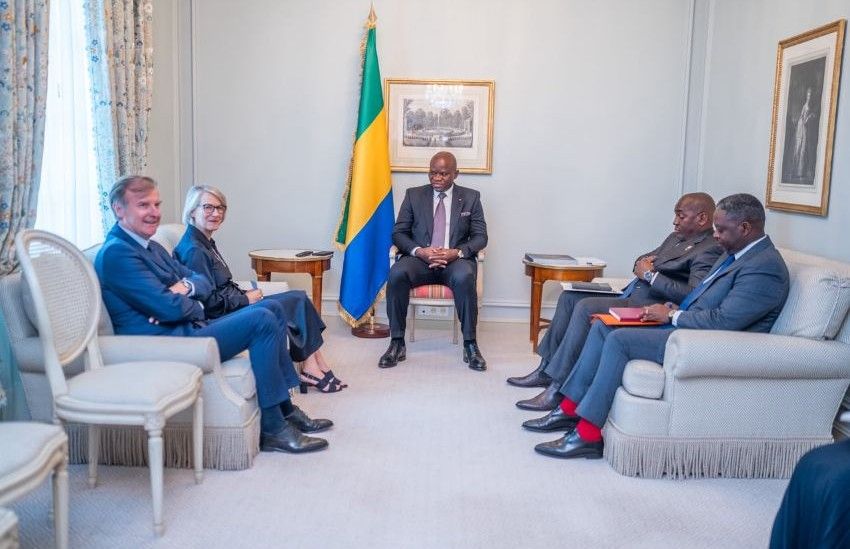
Gabon’s economic ambitions hinge on Paris visit outcomes
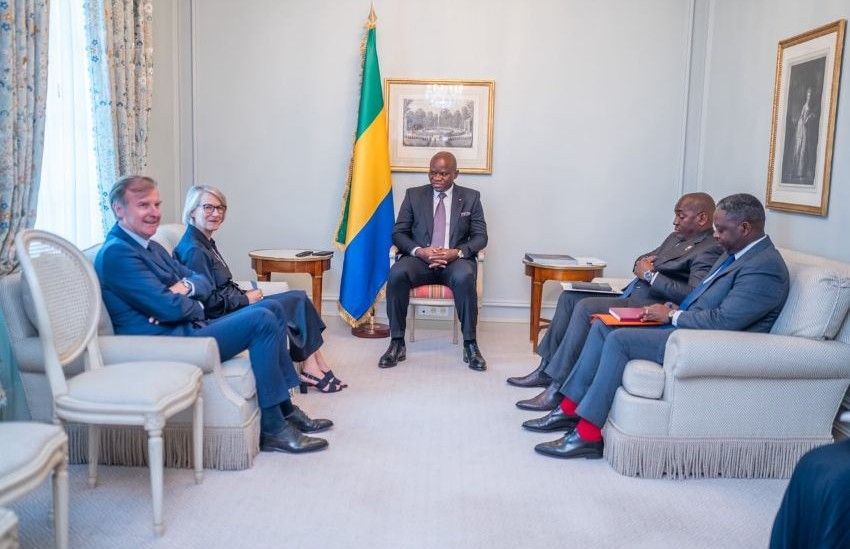
Libreville, August 4, 2026 – President Brice Clotaire Oligui Nguema’s state visit to Paris from July 19 to 22 was more than a diplomatic showcase. Beyond the ceremonial welcome at Les Invalides, the visit to the Palace of Versailles, the state dinner at the Élysée Palace, and the packed official agenda, Libreville had a clear economic objective: securing commitments that would translate into tangible benefits for Gabonese citizens.
The delegation numbered over 80 participants, including key figures from Gabon’s private sector. While the identities of French corporate leaders received by the President were previously undisclosed, details now reveal the scale of engagement and the sectors under discussion.
Air connectivity and manganese transformation: key economic deals
On arrival in Paris, President Oligui Nguema met with Anne Rigail, CEO of Air France. The air transport sector was a priority, with discussions focusing on a potential code-sharing agreement between Air France and Fly Gabon. Expected by year-end, such an accord would allow Fly Gabon to sell tickets to Paris under its own branding, enhancing commercial ties and passenger mobility.
No final agreement was signed during the meeting, but the timeline set for the deal remains closely watched. For Gabon, the stakes are high: improved air connectivity facilitates business travel, tourism, investment flows, and talent movement—all critical for economic growth.
The following day, mining took center stage at the Élysée Palace. Eramet and its subsidiary Comilog discussed a protocol with Gabonese authorities on local manganese processing. Led by Chairwoman Christel Bories, the group presented a co-developed roadmap aimed at adding value to Gabon’s mineral wealth.
The plan aims to process up to 700,000 tons of manganese locally by the end of 2031. While this target is ambitious, several implementation scenarios are still under review. The strategy includes establishing a “Made in Gabon” fund and developing a biocharcoal sector—though these remain proposals until financing and infrastructure are secured.
It’s important to distinguish between framework agreements and actual investments. For Gabonese citizens, the difference is stark: manganese transformation will only become an economic reality once studies, funding, and infrastructure align with policy commitments.
Energy and infrastructure: powering Gabon’s future
The energy sector saw progress with an agreement on the Booué hydroelectric project on the Ogooué River. Spearheaded by Gabonese authorities, EDF Power Solutions, and Gabon Power Company, the project targets a 400-megawatt capacity installation.
Gabon possesses vast hydroelectric potential but currently exploits only a fraction of it. With national production hovering around 700 megawatts against a demand exceeding 1,000 megawatts, the Booué project could help close this gap. However, the agreement signed in Paris is not the final step—partners have until October 31 to finalize development terms, with monthly meetings to advance negotiations.
The visit also included discussions with Omega Consortium, a specialist in water and electricity infrastructure, to address access improvements—a pressing need highlighted by Libreville.
While the presidential communiqué cited progress in mining, energy, water, security, and investments, no specific figures or detailed commitments were released. This opacity fuels public anticipation for concrete outcomes.
From diplomacy to daily life: what Gabonese citizens expect
The Paris visit identified partners, set deadlines, and launched initiatives across aviation, mining, energy, and infrastructure. Yet the true test lies ahead. For Gabonese citizens, the names of CEOs and signed protocols are secondary to tangible improvements: jobs, reliable electricity, efficient water networks, better mobility, and increased local value addition.
The October 31 deadline for Booué, the anticipated air transport agreement by year-end, and the evolution of the manganese processing roadmap will be scrutinized. Economic diplomacy must now be measured not by the number of meetings or signed papers, but by the real-world impact on Gabonese lives.

More Stories
Mali’s information war: can the public still trust the news when Maliweb.net amplifies the army’s narrative?
Will West Africa’s sleeping savings finally become its financial lifeline?
Can Benin and Spain turn cultural diplomacy into a lasting strategic advantage?