
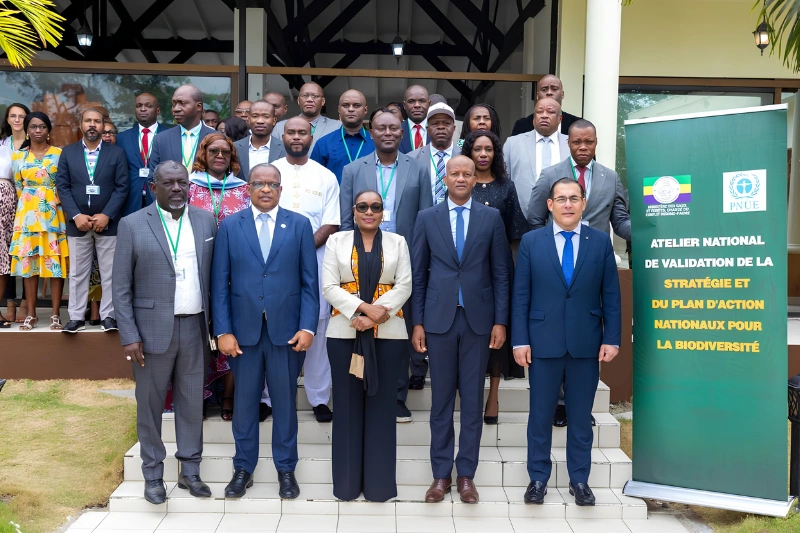
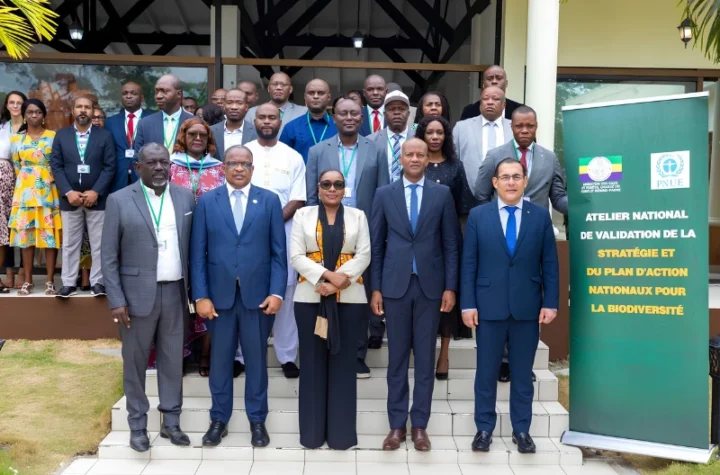
Gabon has initiated a pivotal chapter for the future of its forests, coastlines, and diverse wildlife. Following several days of dedicated work, the national validation workshop for the National Biodiversity Strategy and Action Plan (SPANB) 2022-2030 successfully concluded this Tuesday in Libreville.
This comprehensive new document is designed as a guiding framework for the nation, setting the direction for public policies, strengthening the protection of vital ecosystems, and ensuring the sustainable management of Gabon’s extraordinary biological wealth. A key ambition of this roadmap is the conservation of 30% of the country’s territory.
The primary objective is to translate the commitments made by 196 nations during the landmark Kunming-Montréal agreement into concrete national actions. Specifically, Gabon is committing to four critical priorities to be achieved by 2030: preserving at least 30% of its terrestrial, coastal, and marine zones; actively restoring degraded ecosystems; significantly reducing threats to biodiversity such as poaching, deforestation, and pollution; and securing sustainable funding mechanisms for conservation efforts.
Once finalized, incorporating the latest recommendations from various stakeholders, the consolidated SPANB will be presented to the Government for its ultimate approval. Subsequently, it will be formally submitted to the Executive Secretariat of the Convention on Biological Diversity (CBD), solidifying Gabon’s commitment on the international stage.
However, for Mme Tsayi Mouvagha, the strategy’s coordinator, the true challenge now begins. She emphasized, “The immediate next phase will focus on disseminating this strategy across government administrations, the private sector, local communities, and civil society. This widespread engagement is crucial to ensure its effective operational deployment across the entire national territory.”
This initiative marks a significant shift for Gabon, a country renowned for its high biodiversity, boasting 88% forest cover and 13 national parks. The SPANB 2022-2030 is intended to serve as a vital compass, guiding the nation in balancing economic development, resource utilization, and essential conservation imperatives.
The crucial question remains regarding the necessary resources. Without a dedicated budget and the genuine involvement of local authorities, businesses, and riparian communities, the ambitious strategy risks remaining an aspiration rather than a transformative force.
More Stories
Ongoing violations of international humanitarian law in eastern DRC
Olympique de Marseille prepares for Ligue 1 kickoff with Atlético Madrid clash
Burkina Faso: the digital battleground for independent journalism