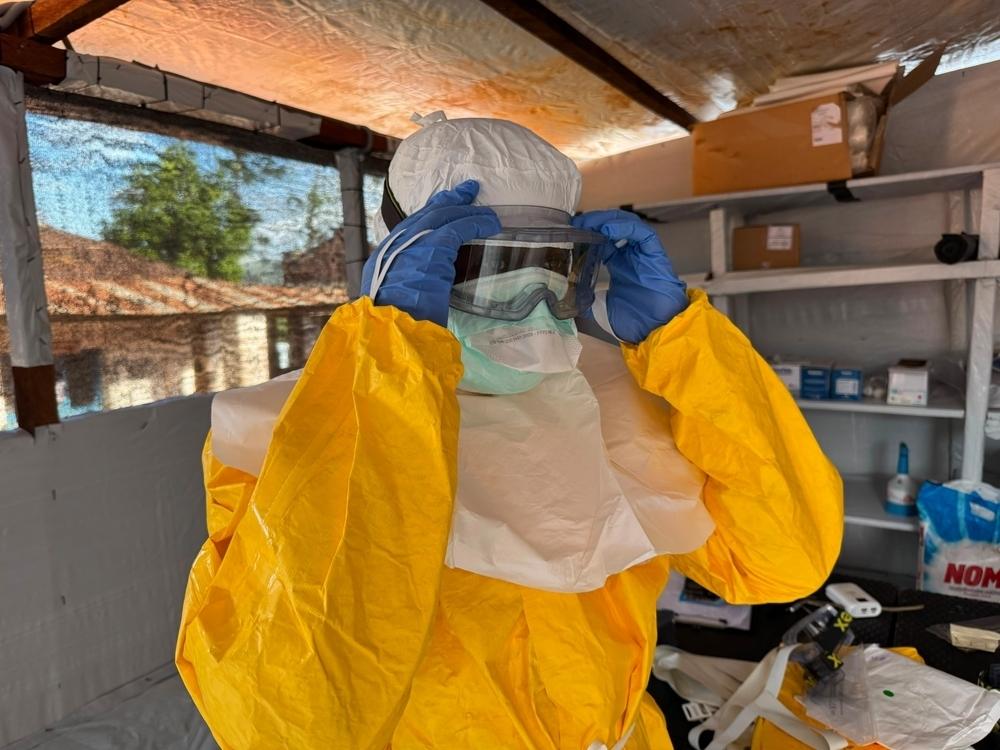
Weeks into the latest Ebola surge across the Democratic Republic of Congo and Uganda, medical teams are drastically scaling up operations to halt the virus. I have been observing the intense mobilization in Goma and Bunia, the heart of the Ituri province, where healthcare workers are grappling with this 17th recorded outbreak.
Rising case numbers and the epidemiological toll
Following an expansion of testing capabilities in late May, health officials have provided updated figures. As of June 4, 2026, the official count in the République Démocratique du Congo has reached:
- 381 confirmed infections;
- 64 confirmed fatalities;
- 233 suspected cases currently held in isolation facilities.
Meanwhile, in Ouganda, the situation remains under tight surveillance with 19 reported cases and one death recorded as of June 5.
Expanding and restoring specialized treatment units
To disrupt the transmission of the Bundibugyo virus, emergency teams are rapidly modifying their infrastructure in the most impacted regions.
Bunia: Scaling up to meet patient demand
The facility in Bunia is currently stretched to its limits. On June 5, the center was managing 37 suspected cases and 7 confirmed patients. To prevent further spread, the site is being significantly enlarged. Anthony Kergosien, an emergency coordinator in Bunia, explains that they are developing a new plot of land to double capacity to 70 beds within days. If the situation worsens, the center is prepared to expand to 100 beds.
Goma: Revitalizing a key isolation center
In Goma, a dedicated treatment center has been brought back into service to isolate and care for patients, with the first admissions occurring on May 28. Tathy Modjaka Nzoko, who oversees medical activities in Goma, notes that this facility has played a crucial role in previous outbreaks. The priority for the staff is to communicate clearly with patients, explaining the care process, the expected length of stay, and the necessity of diagnostic testing to help reduce anxiety.
The dual challenge: Staff safety and community trust
Protecting those on the front lines
Medical professionals must wear full protective gear to remain safe from the Bundibugyo virus. This specific strain is highly contagious; only a few viral particles entering through the eyes or mouth are enough to cause infection. The primary goal of the gear is to keep the virus off the skin. Armand Sprecher, an emergency physician and epidemiologist, points out that because there are currently no approved vaccines or specific treatments for this strain, waterproof protection against bodily fluids is the only defense available.
Establishing a bond with local residents
Encouraging symptomatic individuals to seek isolation quickly depends entirely on effective community outreach. Trust is the cornerstone of this response. Families naturally want to care for their loved ones at home, but immediate professional treatment is vital. Armand Sprecher acknowledges that the protective suits can make staff look like visitors from another planet, which can be intimidating. Teams spend significant time explaining that the people inside those suits are often members of the same community, working to keep everyone safe.
Mentorship and expert training
To maintain a high-standard response, experienced personnel are mentoring newer staff. Specialized training sessions are held even before teams arrive on the ground. Sharing expertise is a fundamental part of managing Ebola outbreaks. By deploying veterans who understand the complexities of the virus, the organization ensures that knowledge is transferred effectively to those managing the daily operations in the field.
Understanding the Bundibugyo strain
This particular outbreak differs from many previous ones in the République Démocratique du Congo because it is fueled by the Bundibugyo species of the Ebola virus. While its fatality rate—estimated between 25% and 40%—is lower than the Zaire strain, the medical challenge is steeper because no validated vaccine or therapeutic treatment exists for it yet.
Continued humanitarian efforts across the region
Hundreds of professionals remain active in Ituri and Nord-Kivu, while new treatment capacities are being established in Sud-Kivu. To sustain this massive intervention, several tons of medical supplies and logistical equipment are arriving in the République Démocratique du Congo every week from international supply hubs.