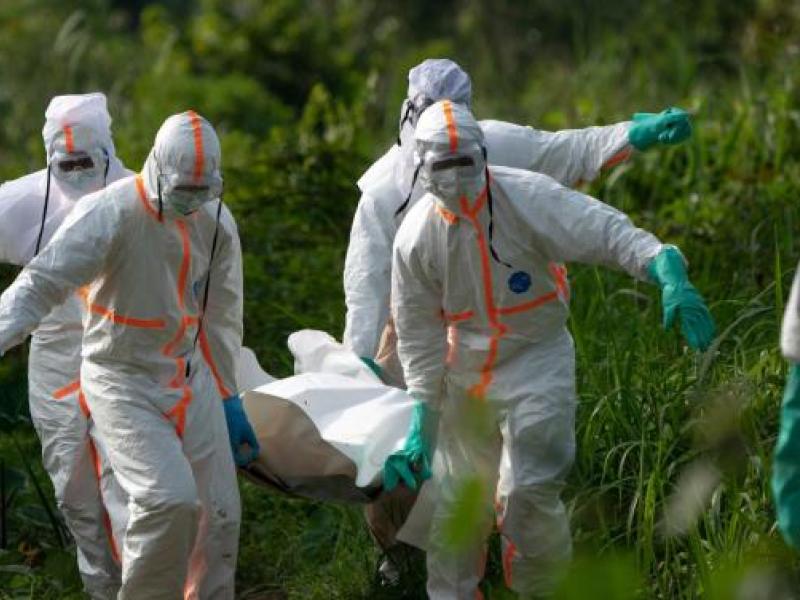
The government of Japan has announced an emergency aid package of 3 million US dollars for the Democratic Republic of Congo. This funding is designated to bolster the response to the Ebola virus disease outbreak affecting the eastern provinces of North Kivu and South Kivu.
A statement from the Japanese Embassy in the DRC confirmed that this financial support will be channeled through three key international organizations involved in the humanitarian effort. The International Federation of Red Cross and Red Crescent Societies (IFRC) is set to receive 1.5 million USD, the World Food Programme (WFP) will be allocated 1 million USD, and the United Nations Children’s Fund (UNICEF) will manage 500,000 USD.
This assistance is earmarked for critical interventions, focusing on health services, access to safe drinking water, and improving sanitation and hygiene. Japanese officials believe this support will be instrumental in containing the spread of the Ebola virus, not just within the DRC but also across the borders into neighboring countries at risk.
The embassy’s communiqué highlighted that this contribution underscores Japan’s dedication to the principle of human security. This core philosophy, according to the diplomatic mission, was the primary driver for Tokyo’s positive response to requests from international agencies on the ground in the DRC.
Amid a series of international funding pledges since the resurgence of Ebola, the DRC’s Minister of Public Health, Hygiene, and Prevention, Samuel Roger Kamba, has urged partners for greater coordination and transparency. He specifically addressed the management of funds intended for health interventions, particularly for the Ebola response in the east.
During a joint briefing in Bunia, Ituri province, on June 18, 2026, alongside Minister of Communication and Media Patrick Muyaya, the health minister emphasized the need for a unified strategy between the government and its technical and financial partners. He pointed out that a significant portion of this aid is managed directly by humanitarian organizations, bypassing the government. This, he explained, creates confusion among the public, many of whom believe these funds are under the direct control of the Congolese state.
On May 17, 2026, just two days after the outbreak was officially declared in the DRC, the World Health Organization (WHO) classified the Ebola epidemic caused by the Bundibugyo virus, which had spread to Uganda, as a Public Health Emergency of International Concern (PHEIC).
The WHO noted that the epidemic has expanded significantly in its geographical reach, and its true scale may be underestimated. The crisis is compounded by high population mobility, fragile healthcare systems, inadequate health infrastructure, and difficult access to some conflict-ridden areas.
Adding to these challenges is the current lack of a licensed vaccine or specific treatment for the Bundibugyo strain of the virus. Despite this concerning landscape, Congolese authorities remain optimistic, drawing on the valuable experience gained from successfully controlling sixteen previous Ebola outbreaks in the country.
More Stories
Can Mali’s double-edged strategy of war and dialogue against jihadists truly work?
AirBadminton gold for Benin: does the 3-0 win over Mauritius change the game?
Arsenal vs Chelsea: premier grand duel de la saison en Premier League