

Major restructuring at Primature after Ousmane Sonko’s departure
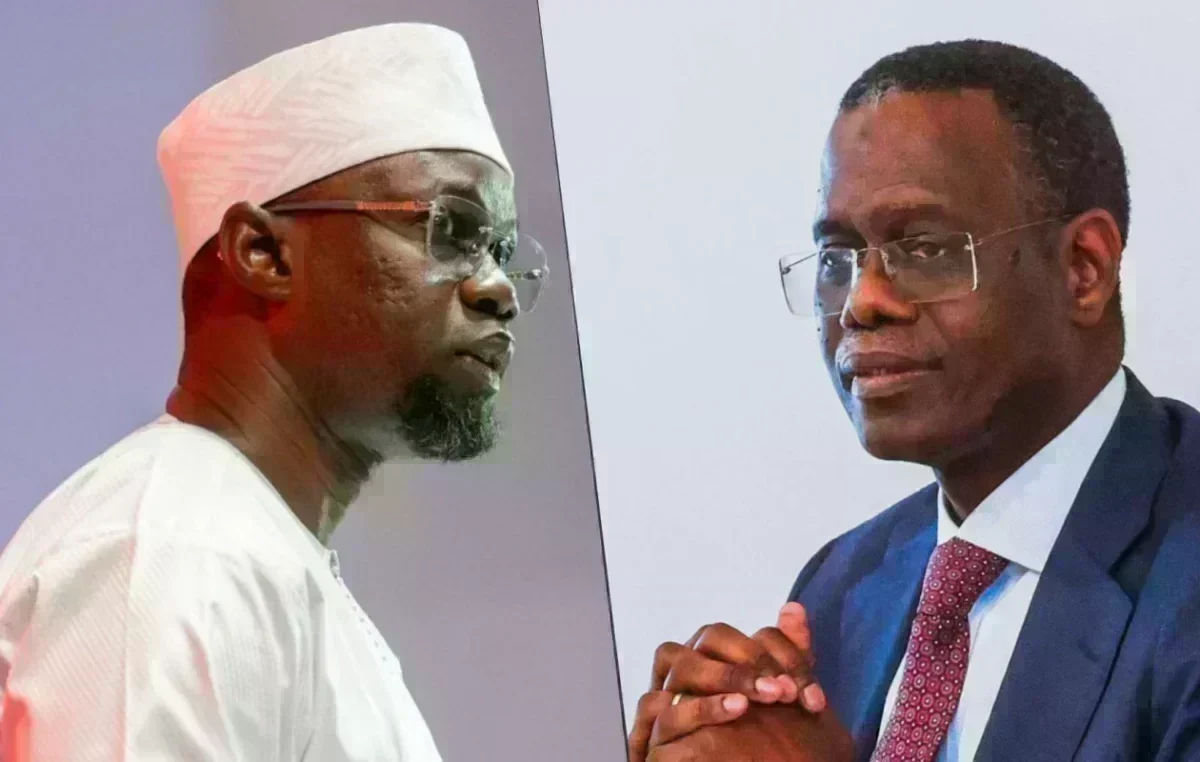
Government operations under Prime Minister Al Aminou Lô have undergone significant reorganization, with key responsibilities reallocated and cabinet structures strengthened following decree n° 2025-1431.
Since Ousmane Sonko stepped down as Prime Minister on May 22, 2026, the structure of government services under the head of government has undergone a complete overhaul.
Under his successor, Al Aminou Lô, the administrative framework has shifted once again. The Prime Minister’s office has seen its responsibilities redefined through decree n° 2025-1431, which outlines the distribution of state services and oversight of public establishments, national companies, and state-owned enterprises among the Presidency, the Prime Minister’s office, and ministries. This legal text, issued following the latest government reshuffle, formalizes a redistribution of powers and significantly alters the organizational structure of the Prime Minister’s office.
The first major changes, however, were introduced during Ousmane Sonko’s tenure. Decree n° 2025-1929, issued on November 27, 2025, substantially expanded the Prime Minister’s cabinet by establishing several new entities. Among these were the Reform Monitoring and Orientation Unit, the Inspectorate of Services, the Committee for Monitoring and Promoting Asset Valorization and Recycling Initiatives (created under decree n° 2025-1605 on October 2, 2025), and the Procurement Commission. The General Secretariat of the Government was also reinforced with the creation of a Ministerial Council Preparation Unit and a tracking system for institutional dossiers, in addition to the establishment of the National Commission for Access to Information.
With Al Aminou Lô at the helm, the administrative landscape has evolved further. The Prime Minister’s office has been bolstered by the transfer of the Technical Secretariat of the National Local Content Monitoring Committee, previously under the Ministry of Petroleum and Mines. Meanwhile, the General Secretariat of the Government has shed several units, now under the authority of other ministries. The Directorate-General for National Civic Service and Volunteering has been placed under the Ministry of Youth and Sports, while the Government Information and Communication Bureau (BIC-Gouv), formerly led by journalist Mame Gor Ngom, is now under the Ministry of Communication and Institutional Relations. The National Observatory of Detention Facilities has also been transferred to the Ministry of Justice.
Another notable shift is the elimination of the position of Secretary of State for Institutional Relations and Government Spokesperson within the Prime Minister’s office. The Head of State has chosen to entrust these duties to a full-fledged minister in charge of Communication and Institutional Relations, who now serves as the official Government Spokesperson. This reform reflects an effort to rebalance responsibilities between the Prime Minister’s office and ministries while aligning the government’s structure with its new strategic priorities.


More Stories
Adama Bictogo lance une tournée politique à Yopougon avant la Fête de l’Indépendance
Cameroon election schedule joshua osih urges opposition unity
Opposition camerounaise unites for timely elections