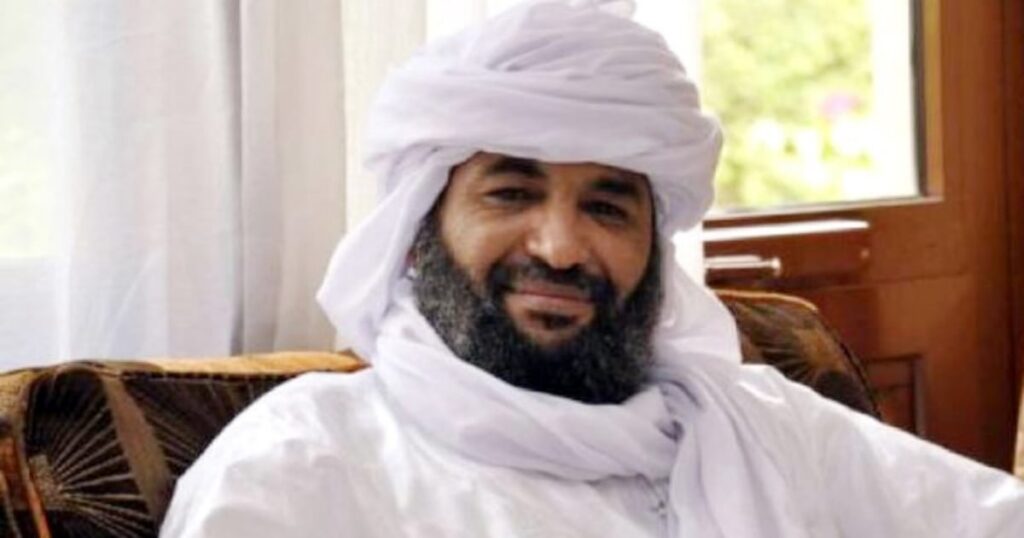
Mali intensifies hunt for jihadist and rebel leaders with substantial bounties
The Malian government has escalated its efforts to combat terrorism by announcing substantial financial rewards for the capture or elimination of high-profile leaders linked to recent deadly attacks across the country. The move comes as Mali grapples with its most severe security crisis in years, marked by coordinated assaults that have claimed lives and destabilized key regions.
Iyad Ag Ghaly: the Sahel’s most wanted jihadist leader
Iyad Ag Ghaly, a former Tuareg rebel and seasoned Malian diplomat, stands at the top of the government’s most-wanted list. As the head of the Jama’at Nasr al-Islam wal Muslimin (JNIM)—a coalition of Islamist groups formed in 2017—he has become the most sought-after figure in the Sahel. His name features prominently on international sanctions lists, including those of the United Nations and the United States, which classify him as a terrorist. The International Criminal Court (ICC) has also issued an arrest warrant against him, accusing him of war crimes and crimes against humanity.
Recent attacks reveal the depth of Mali’s security challenges
The government’s announcement follows a wave of coordinated violence on April 25–26, when jihadists from the JNIM joined forces with the Front de Libération de l’Azawad (FLA), a predominantly Tuareg rebel movement. The attacks targeted critical military positions in multiple regions, including Bamako, sending shockwaves through the country. Among the casualties was Defense Minister Sadio Camara, a key figure in Mali’s ruling junta, who was killed in a suicide bombing. The assaults underscored the growing boldness and coordination of armed groups operating in the region.
Rewards offered for six key figures linked to terrorism and rebellion
In a televised statement, the Malian government revealed that it is offering financial incentives for information leading to the arrest or neutralization of six individuals, including:
- Amadou Kouffa (€2.2 million), a senior commander within the JNIM;
- Alghabass Ag Intalla, a prominent leader of the FLA;
- Bilal Ag Cherif, another high-ranking FLA figure.
The government emphasized that these individuals are actively sought for their alleged roles in planning and executing terrorist acts that have endangered civilians and destabilized the nation. The statement read on national television declared: «The Ministry of Security and Civil Protection is offering financial rewards for reliable and actionable intelligence that will lead to the arrest or elimination of these individuals. Their actions have directly threatened the safety of our people and the integrity of our nation.»
Mali’s decade-long struggle against terrorism and insurgency
The current crisis is part of a decade-long conflict that has plagued Mali since 2012, fueled by the activities of groups such as the JNIM, the Islamic State, and various community-based criminal factions. The escalation of violence in recent months has raised concerns about the government’s ability to regain control and restore stability across the country.
What’s next for Mali’s security strategy?
With these new measures, the Malian authorities are signaling a determination to intensify their fight against terrorism. The bounties reflect a broader strategy to weaken armed groups by targeting their leadership, disrupting their operations, and encouraging defections. However, the effectiveness of these efforts will depend on the response from local communities, the capabilities of security forces, and the broader geopolitical dynamics in the region.