The Mali military’s costly misstep: relying on firepower over training
Mali has poured vast resources into high-tech weaponry, from surveillance drones to precision-guided munitions, yet the conflict around Kidal remains deadlocked. The issue isn’t firepower—it’s the inability of the Malian command to wield it effectively. Sophisticated arms, no matter how advanced, become liabilities when deployed by a leadership grappling with deep-seated strategic deficiencies.
Aerial dominance, tactical paralysis
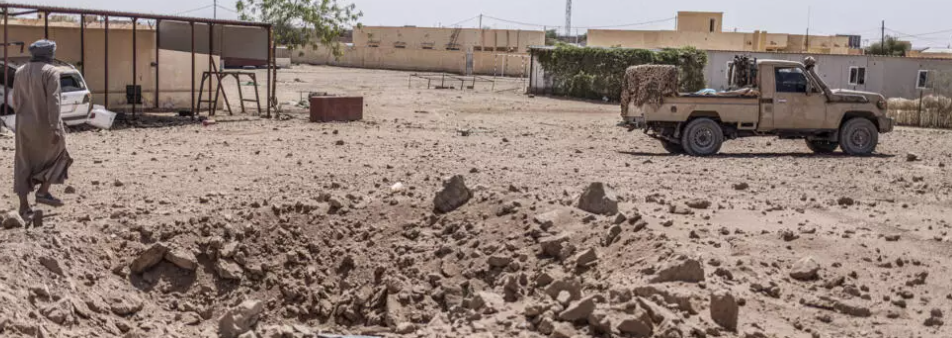
The Malian military’s reliance on air power in Kidal has been relentless: drone strikes, tactical bombers, and heavy artillery barrages dominate the skies. Yet, despite overwhelming aerial superiority, rebel forces—particularly those linked to the Front de Libération de l’Azawad (FLA)—continue to hold ground. The pattern is clear: overwhelming firepower fails to translate into battlefield success when coordination, intelligence, and adaptability are absent.
The problem isn’t just hardware—it’s the doctrine behind it. Without a well-trained command structure capable of integrating air, ground, and intelligence operations, Mali’s arsenal becomes little more than a costly display of force. Bombing runs without immediate ground follow-up, rigid attack patterns, and a failure to exploit terrain leave rebel forces unchallenged despite air superiority.
The illusion of brute force in asymmetric warfare
Asymmetric warfare in Mali’s desert landscape demands more than firepower—it requires intellectual agility. A poorly educated military leadership often defaults to rigid, repetitive tactics, unable to adapt to fluid battlefield conditions. Instead of leveraging local geography, exploiting gaps in enemy defenses, or capitalizing on real-time intelligence, Malian command structures default to brute-force solutions that yield no lasting results.
Rebel forces, by contrast, demonstrate far greater operational creativity. They disperse quickly, use the terrain as cover, and exploit psychological resilience to outmaneuver a rigid command structure. The contrast is stark: one side relies on overwhelming firepower, while the other thrives on adaptability and local knowledge.
Why Mali’s military keeps repeating the same mistakes
The Malian command’s failure extends beyond execution—it’s a systemic issue rooted in education and experience. A leadership that lacks foundational strategic training struggles to analyze past operations, refine tactics, or adjust strategies based on battlefield feedback. When the same flawed attack patterns are repeated week after week, the result isn’t just stagnation—it’s the squandering of vital resources and the erosion of public trust in the military’s competence.
For Mali, the lesson is clear: advanced weaponry is only as effective as the minds wielding it. Without a command structure capable of strategic thinking, tactical innovation, and adaptive planning, Mali’s military will remain bogged down in a conflict it cannot resolve through sheer firepower alone.
The hard truth for Mali’s defense strategy
The events unfolding around Kidal serve as a stark reminder: Mali’s military investments are failing not because of a lack of weapons, but because of a lack of wisdom. The laws of warfare are unforgiving—firepower without strategy is not power; it’s a liability. Until Bamako addresses the root cause of its military shortcomings—the education and training of its command—the frontlines will remain frozen, and the cost of war will continue to rise without yielding results.