
The political landscape in Morocco is heating up as the Party of Justice and Development (PJD) and the Justice and Spirituality Movement (Al Adl Wal Ihsane) renew their long-standing debate over the relevance of elections in shaping the nation’s future. The exchange, unfolding in public statements and media appearances, underscores deep ideological divides that continue to shape Moroccan politics.
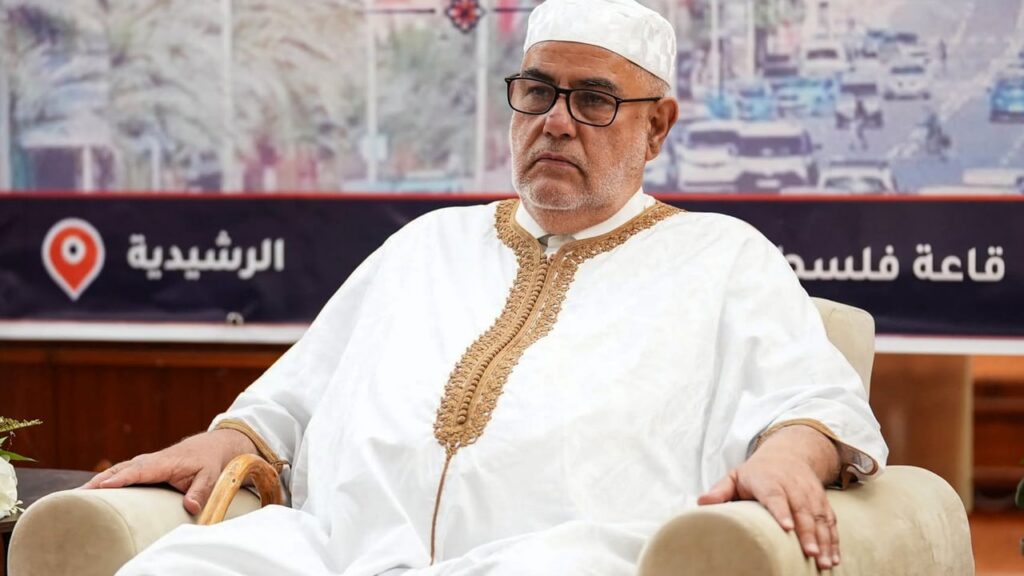
At the center of the controversy is Abdelilah Benkirane, former head of government and a prominent figure within the PJD. His recent remarks, widely circulated in local press, question the effectiveness of electoral processes in bringing meaningful change to Morocco. Benkirane argues that elections, while constitutionally mandated, often fail to address systemic issues or empower citizens to influence key decisions.
The Justice and Spirituality Movement, led by Sheikh Abdessalam Yassine’s successor, has echoed similar sentiments. The movement’s leadership contends that Morocco’s political system, despite periodic elections, remains dominated by entrenched interests that stifle genuine reform. Their position aligns with a broader critique of the monarchy’s role in governance, which they view as overly centralized and resistant to democratic evolution.
Clashing visions for Morocco’s political future
Both the PJD and Al Adl Wal Ihsane advocate for a more participatory political system, but their methods and objectives diverge sharply. The PJD, rooted in moderate Islamist ideology, has historically sought to work within the existing constitutional framework to achieve reform. Benkirane’s skepticism about elections reflects frustration with the slow pace of change and the constraints imposed by Morocco’s political establishment.
Al Adl Wal Ihsane, on the other hand, has long been a vocal critic of Morocco’s electoral process, viewing it as a tool of the elite rather than a mechanism for popular empowerment. The movement’s leadership has repeatedly called for a boycott of elections, arguing that participation legitimizes a system they believe is fundamentally flawed. Their stance has resonated with segments of the population disillusioned with traditional politics.
Public reactions and political implications
The renewed debate has sparked extensive discussion across Moroccan media and social platforms. Supporters of the PJD argue that participation in elections, despite its limitations, offers the best pathway to incremental reform. They point to the PJD’s past electoral successes as evidence of its ability to influence policy from within the system.
Critics, particularly among Al Adl Wal Ihsane’s base, dismiss these claims, insisting that elections are merely a facade for maintaining the status quo. They highlight the monarchy’s unchecked authority and the lack of real opposition representation as proof of the system’s inherent flaws. The debate has reignited long-standing tensions between pragmatic reformists and those advocating for a more radical transformation of Morocco’s political landscape.
As Morocco navigates its evolving political climate, the clash between these two influential groups highlights the broader struggle between tradition and modernity, centralization and decentralization, and reform and resistance. The outcome of this debate could have far-reaching consequences for the country’s democratic aspirations and its role on the regional stage.