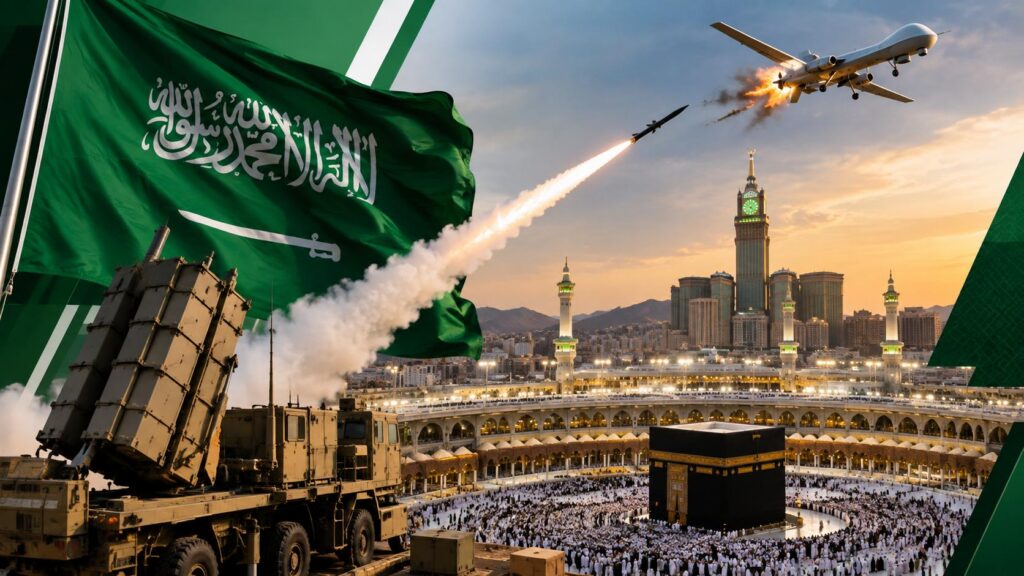
Saudi Arabia’s air defenses intercepted a Houthi drone targeting the Mecca region on September 15, preventing what could have been a devastating blow to one of Islam’s holiest cities. The thwarted strike underscores not just a security breach attempt, but tangible consequences for local residents, global pilgrims, and the broader Saudi economy—already strained by years of regional conflict.
Direct threat to mecca’s civilian and religious heart
The armed drone was neutralized south of Mecca before it could enter the city’s strictly protected airspace. While no casualties or physical damage were reported, the implications run deep. Mecca hosts millions of worshippers annually at the Grand Mosque, and any disruption threatens both human safety and the spiritual rhythm central to Islamic life. Local businesses—from hospitality to transportation—that depend on steady pilgrimage traffic face renewed uncertainty with each such incident.
Saudi leadership condemns deliberate endangerment of civilians
Coalition spokesperson General Turki Al-Maliki condemned the attack as a calculated effort by Yemen’s Houthi rebels and their allies to “destabilize security and endanger lives” in the Kingdom. He emphasized that targeting Mecca crosses a moral and strategic red line, given its sacred status and dense population of residents and visitors alike. Riyadh reaffirmed its commitment to defending civilian populations and religious sites through all necessary means.
Economic ripple effects of persistent asymmetric warfare
This latest drone interception is more than a tactical win—it highlights the ongoing economic toll of Yemen’s protracted war. Frequent missile and drone attacks along Saudi Arabia’s southern border have already disrupted oil infrastructure, aviation, and cross-border trade. Now, with threats extending toward Mecca, investor confidence and tourism revenues—key pillars of Saudi Vision 2030—are increasingly at risk. Small enterprises near holy sites report cancellations and declining foot traffic after each security alert.
Why political resolution remains urgent
Despite past UN-brokered truces, Houthi capabilities persist, demonstrating the limits of military deterrence alone. While Saudi air defenses have improved significantly, the recurring nature of these attacks reveals a deeper instability that no shield can fully contain. International observers warn that without a durable political settlement in Yemen, the entire Arabian Peninsula remains vulnerable—not just to explosions, but to eroded trust, lost livelihoods, and weakened regional cooperation.

More Stories
Morocco’s quiet diplomacy secures french agent’s pardon in Mali
Canada establishes its first embassy in Benin
US reaffirms strategic partnership with Morocco at throne celebration