
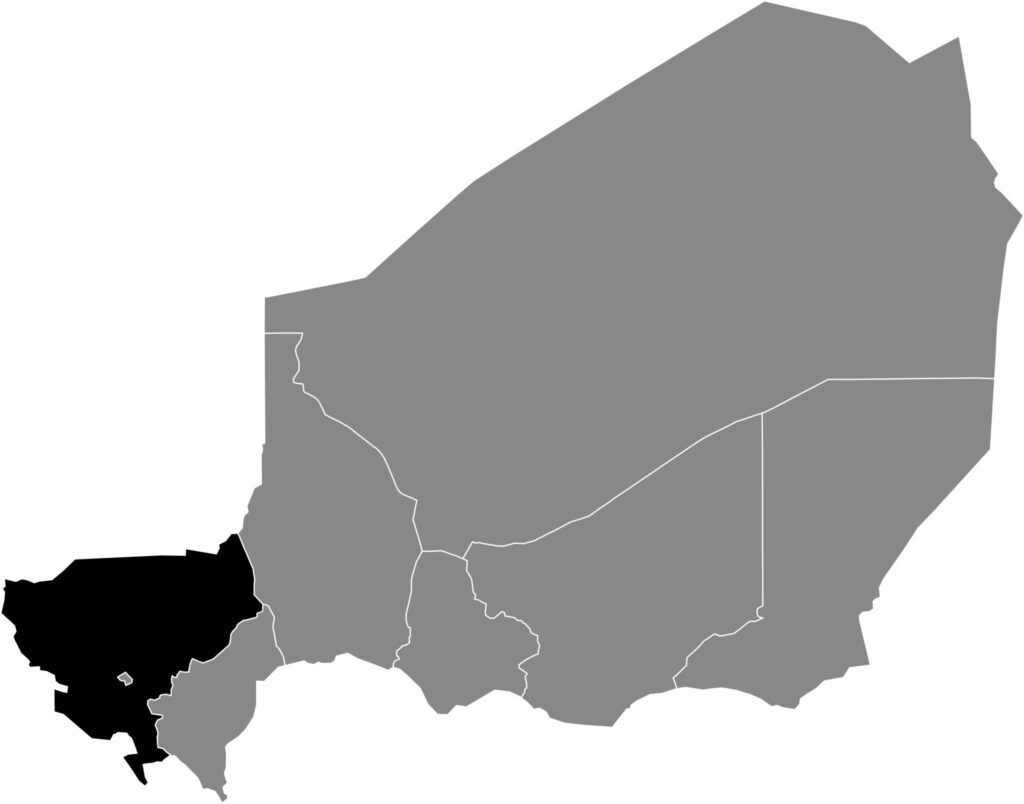
Black highlighted location map of the Nigerien Tillabéri region inside gray map of the Republic of Niger
The peaceful gathering of mourners turned into a scene of horror on July 24 in the village of Chinagodrar, located in the northern part of the Tillabéri region. What was meant to be a moment of solidarity for a grieving family ended in tragedy when two military drone strikes tore through the crowd, killing at least seven people and injuring many others.
Unbearable loss in a region under siege
The Tillabéri region, which borders both Mali and Burkina Faso, has long been a hotspot for violence in Niger. Known as the “three-border zone,” it has become a battleground for clashes between security forces and armed jihadist groups. The persistent insecurity has forced the government to intensify military operations, relying heavily on surveillance and combat drones to target suspected militants quickly.
However, the use of such technology in areas where civilians remain ever-present raises serious concerns about intelligence accuracy and target verification. Funerals, markets, and religious gatherings often draw large crowds, increasing the risk of unintended casualties when information is incomplete or unverified.
A second strike deepens the tragedy
Witnesses describe a harrowing sequence of events. The first explosion shattered the funeral ceremony, sending people into a frenzied panic. As relatives and villagers rushed to help the wounded, a second strike hit just moments later, further devastating the scene. The chaos that followed was overwhelming—families scattered in terror, survivors struggled to assist the injured, and nearby homes suffered damage.
The provisional death toll stands at seven, but local sources warn the number could rise as some victims remain in critical condition. The victims included mourners who had come simply to pay their respects, deepening the community’s sense of shock and disbelief.
Humanitarian concerns and unanswered questions
Beyond the immediate loss of life, the attack has left families shattered and a population traumatized. In an area already gripped by fear of both jihadist violence and military operations, this incident has only amplified anxieties about being caught in the crossfire.
The tragedy has reignited debates over the rules governing drone strikes in counterinsurgency efforts. International humanitarian law demands strict adherence to distinguishing between combatants and civilians, as well as taking every precaution to avoid harm to non-combatants. Human rights advocates emphasize that aerial operations in densely populated zones require flawless intelligence to prevent civilian casualties.
As of now, Nigerian authorities have not released a detailed account of the operation or officially confirmed the circumstances that led to the strikes. The lack of transparency has only fueled speculation among locals, who demand clarity on the intended target, the operation’s execution, and any accountability measures if civilian harm is confirmed.
Eroding trust in a fragile security landscape
The fallout from this tragedy extends beyond the human toll. It risks further straining the already fragile relationship between rural communities and security forces. In regions plagued by chronic insecurity, public trust is a vital asset—essential for gathering intelligence and fostering cooperation with authorities.
Each incident involving civilian casualties threatens to deepen mistrust, complicate future military operations, and reinforce feelings of abandonment among already beleaguered rural populations. The consequences of such distrust could undermine long-term efforts to stabilize the area and combat extremist threats.


More Stories
Mali trump considers military strikes against jihadist group jnim
Public reaction to Senegal’s president bassirou diomaye faye’s political move
Senegal’s president launches new party amid political shift