
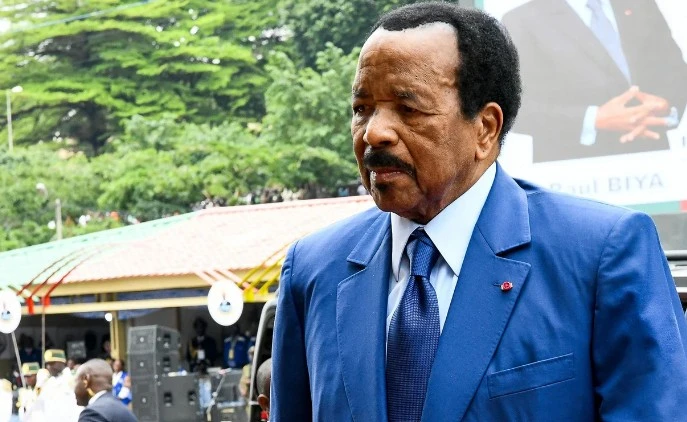
For 49 consecutive days, Cameroon’s President Paul Biya has remained outside the country, a duration matching his longest absence in 2024. Departing on June 7 for what was initially described as a private trip to Europe, the 93-year-old leader has not made any public appearances since. In newsrooms across Yaoundé, the silence is deafening—and the questions are growing louder.
Echoes of a familiar pattern
Reports suggest President Biya is currently staying at a Geneva hotel, mirroring his situation from last year. Government officials moved quickly to dismiss rumors, with Communications Minister René Emmanuel Sadi denying on June 18 that the president was hospitalized in a Geneva clinic.
Yet, no recent images or official footage have surfaced to support these claims. The absence of visual proof only deepens the uncertainty, leaving many unconvinced.
On Sunday, during a television appearance on Droit de Réponse (Equinoxe TV), RDPC party activist Lucien Bidima insisted he had personally visited the InterContinental Geneva Hotel, where he claimed to have seen the president in good health and fully active. However, no photographs or videos accompanied his statement—raising doubts about whether this was merely another attempt at damage control.
The First Lady’s rising influence—and a constitutional dilemma
What sets this absence apart is the prominent role of First Lady Chantal Biya. Multiple reports indicate she is increasingly involved in state affairs, with her name even circulating in discussions about key government appointments. Her consistent presence alongside the president during his trips to Switzerland has fueled speculation that access to the head of state is now mediated through her.
Adding to the unease is Cameroon’s lack of a vice president. Should the presidency become vacant, the constitution mandates that the Senate President, Aboubakary Abdoulaye, assume interim leadership. Yet this constitutional process has never been tested in such a scenario, leaving political observers deeply concerned. Whether this prolonged absence signals a turning point or merely another chapter in President Biya’s extended tenure remains unclear—but the atmosphere in the country is undeniably tense.
More Stories
Burkina Faso court blocks gold streaming deal in landmark ruling
Burkina Faso sees over 1.3 million displaced citizens return home
Rennes beats Bruges in friendly, Monaco suffers defeat in Lisbon