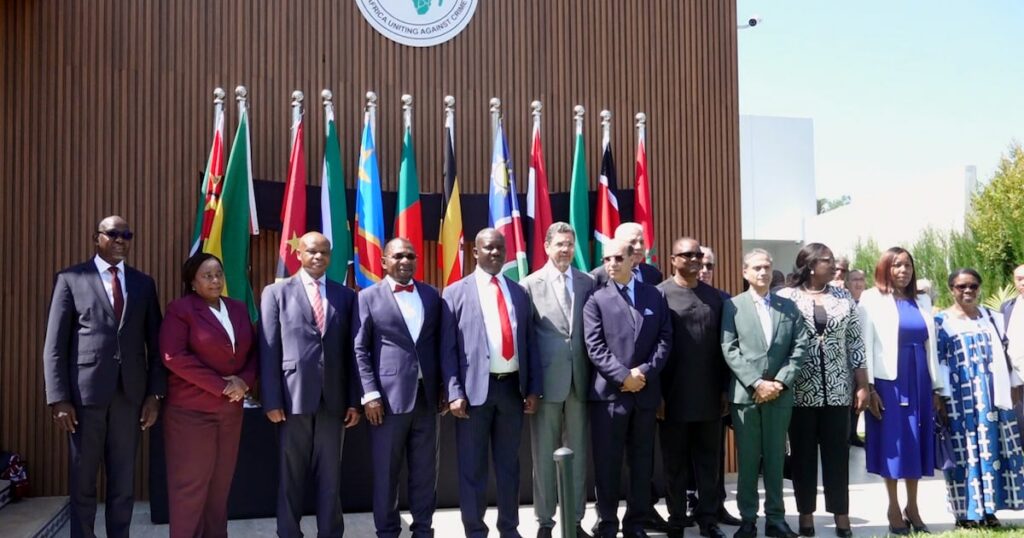
This Tuesday in Rabat, Hicham Balaoui, Prosecutor General of the King near the Court of Cassation and President of the Public Prosecutor’s Office, presided over the unveiling of the African Prosecutors Association’s permanent headquarters.
Accompanied by Renson Ingonga, Kenyan President of the Association, Balaoui also serves as its Secretary-General. Together, they formalized the handover of the Association’s headquarters from Mozambique to Morocco through a signed agreement during the ceremony.

The event drew praise for Morocco’s strategic position on the continent, particularly under the leadership of King Mohammed VI. Attendees highlighted “the trust placed in its judicial institutions by African legal and professional bodies”. Key figures present included Mohamed Abdennabaoui, Vice-President of the Supreme Council of the Judiciary, and Abdelatif Amrani, Morocco’s Treasurer General, alongside other high-ranking judicial officials.
Strengthening judicial ties across Africa
The move underscores Morocco’s commitment to deepening judicial cooperation and fostering coordination among African prosecutors. During the gathering, the Association’s Executive Committee finalized the annual work agenda, reviewed proposed amendments to its statutes, and addressed membership dues.
Combating cross-border crime through unity
In his opening address, Balaoui emphasized the need for stronger collaboration between African police services and prosecutors. He stressed the urgency of sharing best practices to tackle transnational organized crime, corruption, human trafficking, and cybercrime.
The participants lauded the Association’s pivotal role in uniting prosecutors across Africa. They recognized it as a vital platform for dialogue, coordination, and collective action to address challenges in criminal justice across the continent.
With Rabat now hosting the Association’s permanent seat, Morocco reinforces its influence in continental judicial affairs. The inauguration marks a new institutional chapter for African prosecutors, aligning with the growing threat of transnational crime.