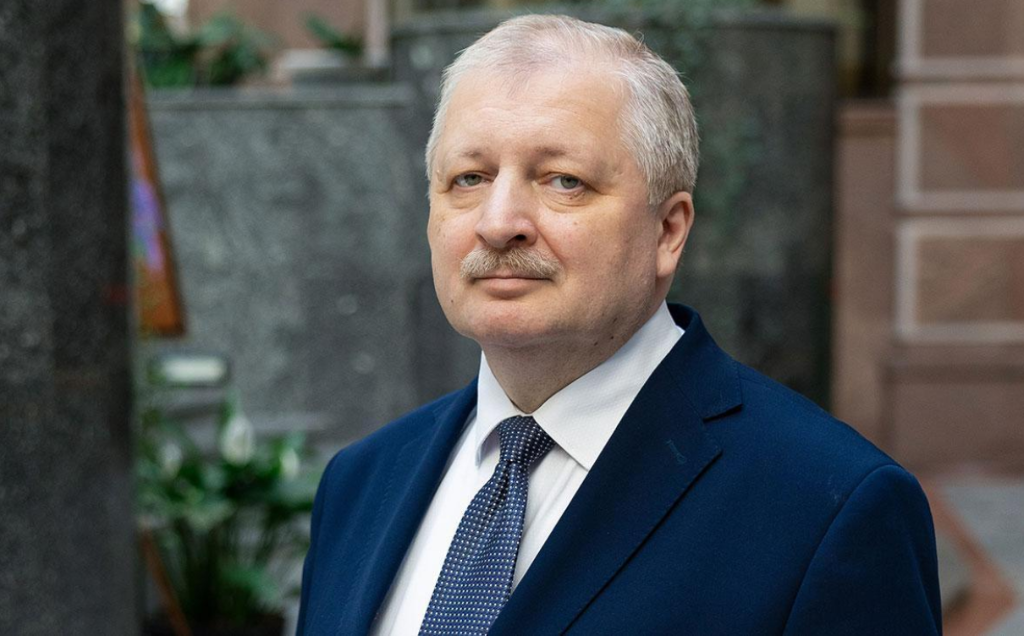
The sudden death of Russia’s top diplomat in Washington has sent ripples through fragile diplomatic channels between Moscow and the United States, raising immediate concerns about the future of strained bilateral relations. At 66, Ambassador Aleksandr Dartschiev — a seasoned diplomat with deep ties to North American affairs — passed away unexpectedly on November 11, leaving a void at a critical juncture in international diplomacy.
Chronicle of a missing figure in us-Russia geopolitics
Aleksandr Dartschiev, who had served as Russia’s ambassador to the United States since March 2025, died in Moscow after a long battle with a chronic illness, according to official statements. His death comes at a time when Washington and Moscow are navigating one of the most volatile periods in recent diplomatic history, marked by ongoing conflicts, economic sanctions, and strategic rivalries.
With no prior warning and minimal disclosure about his condition, the announcement stunned political observers and foreign policy analysts alike. His final months in office were spent navigating a complex web of U.S.-Russia relations — a landscape increasingly defined by confrontation and uncertainty.
From Ottawa to Washington: a diplomat’s journey through north american diplomacy
Dartschiev was no stranger to the intricacies of American politics. His career was built on decades of engagement with North American affairs, beginning with roles within Russia’s Ministry of Foreign Affairs focused on U.S. and Canadian relations.
From 2014 to 2021, he served as Ambassador to Canada, earning a reputation as a pragmatic and disciplined negotiator. His appointment to Washington in early 2025 was widely seen as a strategic move by the Kremlin to restore — or at least stabilize — communication channels with the U.S. administration, especially in the aftermath of shifting geopolitical alignments.
Why Dartschiev mattered: the weight of a single diplomat in global dialogues
In an era where tension between Russia and the West often overshadows diplomacy, ambassadors serve as lifelines for dialogue. Dartschiev’s role went beyond symbolic representation; he was a linchpin in maintaining institutional contact during periods of intense political friction.
His deep understanding of American political systems and diplomatic protocols allowed Moscow to advocate its positions with precision. Whether on Ukraine, arms control, or economic sanctions, he was positioned to channel Kremlin interests directly into Washington’s corridors of power.
Even in the absence of formal summits, the presence of a trusted envoy like Dartschiev ensured that negotiations — no matter how strained — could continue behind the scenes.
Empty chair in Washington: what happens next for russian diplomacy?
The sudden loss of Dartschiev throws both embassy operations and ongoing bilateral discussions into uncertainty. While diplomatic continuity is expected through interim leadership, the absence of a permanent replacement raises questions about Moscow’s immediate priorities in the United States.
Will the Kremlin prioritize continuity or signal a shift in strategy? The answer may become clearer with the announcement of a successor — a move that could reveal whether dialogue or confrontation remains the preferred path forward.
Chronic illness ends a career: what we know and don’t know
Official statements confirmed Dartschiev died in Moscow due to an unspecified chronic illness. While this explanation has been accepted by the diplomatic community, the lack of medical transparency has fueled speculation in some circles.
No evidence has emerged linking his death to political circumstances or external threats. Until further disclosures are made, the public remains dependent on Russia’s Foreign Ministry for accurate information regarding the final chapter of his distinguished career.Legacy of a negotiator in a fractured world
At 66, Dartschiev was at the peak of his professional life when he was called to serve in one of the world’s most watched diplomatic battlegrounds. His death is not just a personal loss for Russian diplomacy — it is a strategic moment that may influence the tone and trajectory of U.S.-Russia relations for years to come.
In a climate where every word and gesture is scrutinized, the absence of a seasoned envoy like Dartschiev leaves a quiet but significant gap — one that may echo far beyond the walls of the Russian Embassy in Washington.