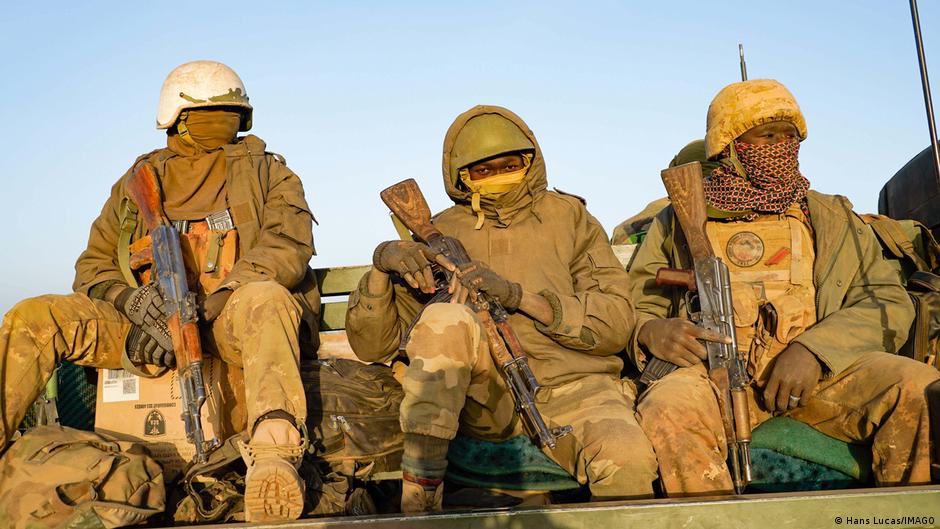
Russian mercenaries in Mali: lower casualties explained
The disparity in casualties between Russian mercenaries and Malian soldiers during recent attacks has drawn attention. While Malian troops frequently bear the brunt of jihadist offensives, the Africa Corps’ fighters appear to sustain fewer losses. Several factors contribute to this imbalance.
Numbers tell a story
The most straightforward explanation lies in the numerical difference between the two forces. Estimates suggest that fewer than 2,000 Russian paramilitaries are currently deployed in Mali, compared to over 13,000 active-duty Malian soldiers. This sheer numerical advantage means Malian troops are spread thin across the country, increasing their exposure to attacks.
Additionally, their roles differ significantly. The Africa Corps operates primarily in a support capacity, providing logistical, technical, and strategic assistance rather than frontline combat roles. Malian soldiers, however, remain the primary defenders in most operations and occupy the majority of forward positions.
“The Malians are consistently on the front lines,” explains security analyst Mamadou Mouth Bane. “They hold the most vulnerable positions, while Russian fighters focus on tasks like data analysis, drone operations, and communications. As a result, Malian casualties and kidnappings far exceed those among the Africa Corps.”
Russian fighters face risks too
Despite their lower casualty rates, Russian mercenaries are not exempt from danger. Reports confirm fatalities among their ranks in operations across northern and central Mali over the past years. However, exact numbers remain unverified due to the lack of official disclosures from either Bamako or Moscow.
Their experience sets them apart. Many Africa Corps members are battle-hardened veterans of prior conflicts abroad, bringing advanced combat skills to Mali’s terrain. They also benefit from superior equipment and protective gear, which reduces their direct exposure to attacks.
Abdoulaye Sounaye, a Sahel expert at Berlin’s Leibniz Centre for Modern Oriental Studies, highlights these advantages: “The Africa Corps isn’t a traditional army—it’s a force of seasoned mercenaries with international combat experience. Their proficiency in tactics, combined with access to advanced mobility and aerial assets, provides them with better protection than Malian troops.”
Strategic decisions also play a role. With limited personnel, Russian fighters prioritize high-risk missions and the defense of critical infrastructure, often leaving routine patrols and long-term territorial control to Malian forces.