
Moscow’s growing footprint in the Sahel
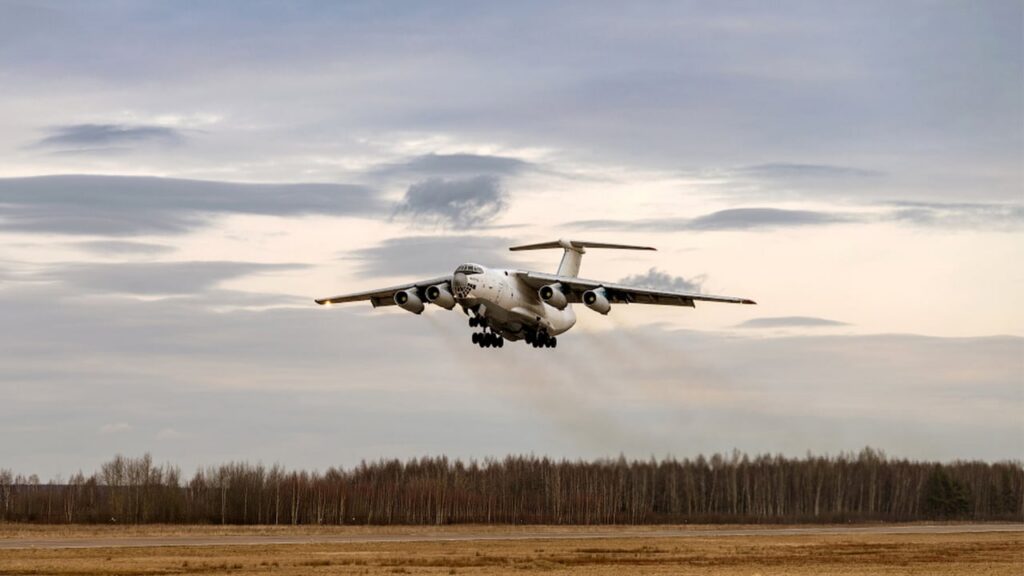
Russia has intensified its military presence across the Sahel through a discreet but highly effective airlift network. At the heart of this strategy lies the Africa Corps, a rebranded evolution of the Wagner Group, tasked with transporting troops and weaponry to bolster allied governments in the region. Recent satellite imagery and flight tracking data reveal a surge in cargo flights operated by Russian-registered carriers, including Zitotrans, using heavy-lift IL-76 aircraft.
These operations have coincided with the rise of the Alliance of Sahel States, a coalition formed by Mali, Burkina Faso, and Niger to counter regional instability. While Moscow denies direct involvement, the timing and scale of these flights suggest a coordinated effort to reinforce security partnerships under the Africa Corps banner.
Logistics behind the air bridge
The airlift system relies on a mix of civilian and military aircraft, often refueling in neutral airspaces to avoid scrutiny. Key hubs include airports in Libya and Sudan, where cargo is transferred to smaller planes before reaching remote Sahelian destinations. This layered approach minimizes detection while maximizing operational reach.
The IL-76 fleet, known for its robust payload capacity, is particularly suited to the Sahel’s challenging terrain. These aircraft regularly fly from Russian airbases to West African hotspots, carrying personnel, armored vehicles, and ammunition. Flight paths frequently intersect with those of other Russian-operated entities, creating a web of overlapping supply chains.
Strategic implications for the region
For Sahel governments, the Africa Corps’ support offers immediate tactical advantages against insurgent groups. However, it also deepens dependence on Moscow, raising concerns about long-term sovereignty and transparency. Local analysts warn that the influx of foreign fighters and equipment could exacerbate tensions with neighboring countries and Western partners.
The alliance between Russia and the Sahel states has drawn international attention, particularly from former colonial powers like France. Observers note that Moscow’s engagement aligns with President Vladimir Putin’s broader ambition to expand Russia’s influence in Africa, leveraging security vacuums left by departing Western troops.
Challenges to oversight
Tracking these flights remains difficult due to the use of shell companies and opaque registration practices. Aviation databases often list aircraft owners as front entities, obscuring their true operators. Despite these hurdles, independent investigators have documented multiple instances where Africa Corps flights align with regional military campaigns.
As the Sahel’s security landscape evolves, the role of Russian airlift operations grows increasingly pivotal. Whether this support translates into lasting stability or further militarization of the region remains a critical question for policymakers and citizens alike.
More Stories
Can Benin’s voice in Bucharest reshape the future of francophone social dialogue?
Niger’s sovereignty claim: can a UN speech hide the SOMAÏR and SONIDEP collapse?
Can South Africa halt the bloodshed after 27 lives lost in Johannesburg and Cape Town?