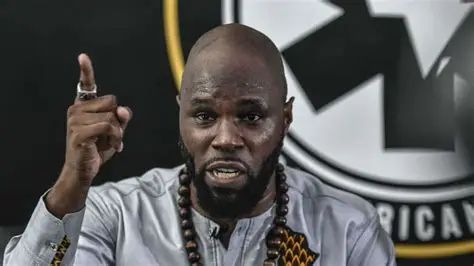
A recently surfaced audio recording has sent shockwaves through regional diplomatic circles, stripping away the public persona of Kémi Séba. In this candid and cynical exchange, the activist appears to dismantle his own carefully crafted image, revealing a deep-seated contempt for the masses and a clear alignment with Moscow’s interests shortly before his detention.
The recording offers a blunt look behind the curtain of modern African activism. It portrays a world where self-styled revolutionaries view themselves as the architects of democratic collapse while military figures are accused of hijacking popular movements for personal gain. The supposed struggle for the people is reframed as a professional service rendered to the Kremlin, rewarded with high-end privileges and a life of luxury.
Luxury in Niamey amidst national hardship
One of the most striking revelations in the audio concerns the lifestyle of the movement’s leading figures. It confirms that Kémi Séba and Nathalie Yamb have been residing in Niamey’s most prestigious hotels, with their living expenses fully covered. This news has sparked outrage, highlighting the disparity between these activists and the Nigerien population, which continues to suffer under the weight of international sanctions and persistent insecurity.
By integrating these figures into the state apparatus as “Special Advisors” or diplomatic agents, General Tiani’s administration appears to be prioritizing an aggressive propaganda strategy over genuine governance. This approach suggests a focus on purchasing influential voices to drown out the difficult realities faced by citizens on the ground.
Targeting Benin: the spread of regional instability
The audio also suggests that Séba has been directly involved with individuals like Pascal Tigri in efforts to destabilize the government of Patrice Talon in Benin. These details confirm fears that the Alliance of Sahel States (AES) has shifted toward an offensive posture.
Rather than merely managing internal crises, the coalition seems intent on undermining neighboring democracies to establish a broader zone of impunity across West Africa. The objective appears to be the export of military coups rather than regional liberation, with the destabilization of Benin presented as a deliberate strategic goal.
The Kremlin’s influence and the “proxy-troll” phenomenon
Perhaps the most damning aspect of the recording is the admission that the AES operates under significant Russian influence, despite its rhetoric of sovereignty. The manipulation of public sentiment across Africa via social media is described as a calculated science funded by Moscow.
In this light, these influencers are characterized not as grassroots leaders, but as “proxy-trolls.” They are accused of weaponizing the anger of African youth to generate digital engagement and protest fodder, all while negotiating personal benefits with military leaders seeking international legitimacy.
A critical perspective on the movement
This leaked evidence challenges the narrative of the “AES Revolution,” suggesting it may be an intellectual deception. Through his own words, Kémi Séba has invited a harsh historical judgment: rather than a modern successor to figures like Thomas Sankara, he appears more as a broker for a new form of external imperialism.
While the populations of Burkina Faso, Mali, and Niger face the grim realities of conflict, their self-appointed protectors are heard discussing the perks of diplomatic passports in climate-controlled suites. In this context, hospitality serves as a salary and sovereignty acts as a script authored in Moscow. His recent arrest in South Africa appears as the logical conclusion for a figure who may have confused a liberation struggle with a foreign intelligence operation.