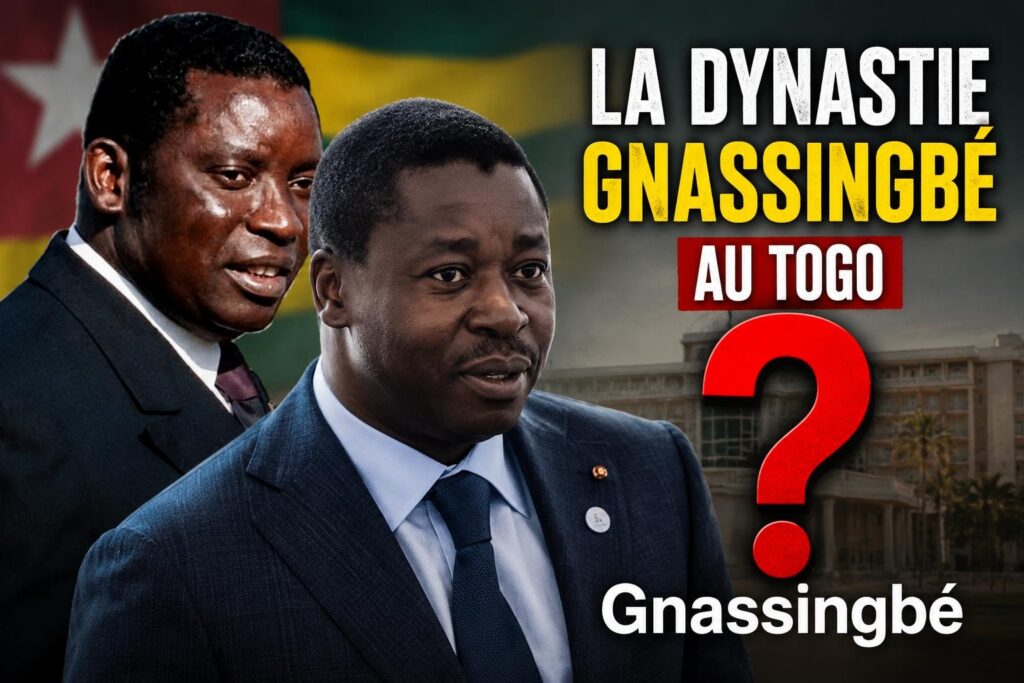
For over five decades, Togo has been ruled by a single political dynasty, making it a unique case in Africa. The late Gnassingbé Eyadéma governed the nation for 38 years, and his son, Faure Gnassingbé, has now governed for nearly 20 years himself. Through institutional control and unwavering military loyalty, the current president appears determined to follow in his father’s footsteps, seemingly paving the way for a lifelong presidency.
Why peaceful change is impossible in Togo
The essence of Togo’s political challenge lies in its regime’s structure. Far from being a standard political party in power, the system functions as a clan-based dynasty. Since 1967, the Gnassingbé family and their close allies have treated the presidency as an inherited asset, a private possession rather than a public office.
For Faure Gnassingbé, stepping down would pose an existential threat to his inner circle. Giving up power would open the door to scrutiny over financial mismanagement, systemic corruption, and the bloody legacy of his regime—including the violent repression of the 2005 transition that left hundreds dead. For this clan, holding onto power is no longer a political choice; it is a matter of survival, both physically and legally. This is the trap that forces the president to cling to power until his final days.
Parliamentary shift: the death knell for democratic hope
The recent constitutional overhaul, which shifted Togo toward a parliamentary system, has effectively buried any remaining hope for democratic transition. By assuming the role of Prime Minister, Faure Gnassingbé has evaded the constraints of presidential term limits and direct universal suffrage.
This radical constitutional change marks a definitive turning point:
- Elimination of direct elections: Citizens no longer directly elect their leader, removing the risk of an electoral backlash.
- Unlimited proxy mandate: As long as his party, Union pour la République (UNIR), wins legislative elections—orchestrated by the regime—he will remain in power indefinitely.
Faure Gnassingbé has refined the model his father used. While Eyadéma relied on brute force to bypass constitutional rules, his son has weaponized the law itself, using legal frameworks to sanctify his grip on power.
The FAT: the praetorian shield against change
The final lock on Togo’s dynastic fate lies within the Togolese Armed Forces (FAT). Designed by Gnassingbé Eyadéma on a regional and clan-based foundation, the FAT remains the regime’s backbone. Senior military officers share deep economic and security interests with the ruling family.
“In Togo, the army does not defend the state; it defends a dynasty against its own people.”
For the generals, Faure Gnassingbé’s departure would mean losing their privileges and destabilizing their network of influence. The president is a willing hostage to this system. He knows his security depends on staying in power, and the military would never tolerate a successor outside the family or established order. This incestuous alliance permanently binds his fate to that of the presidential palace.
A golden cage with no exit
Faure Gnassingbé has trapped himself in the same gilded prison as his father. Bound by a clan unwilling to relinquish its privileges, shielded by a military resistant to change, and shielded by laws he crafted himself, he has sentenced himself to political eternity.
Togolese history repeats itself: like Eyadéma before him, Faure Gnassingbé will likely rule until nature takes its course. But by refusing to offer his country a peaceful transition, he risks leaving behind an explosive legacy—one where the dynasty’s collapse could spell chaos.