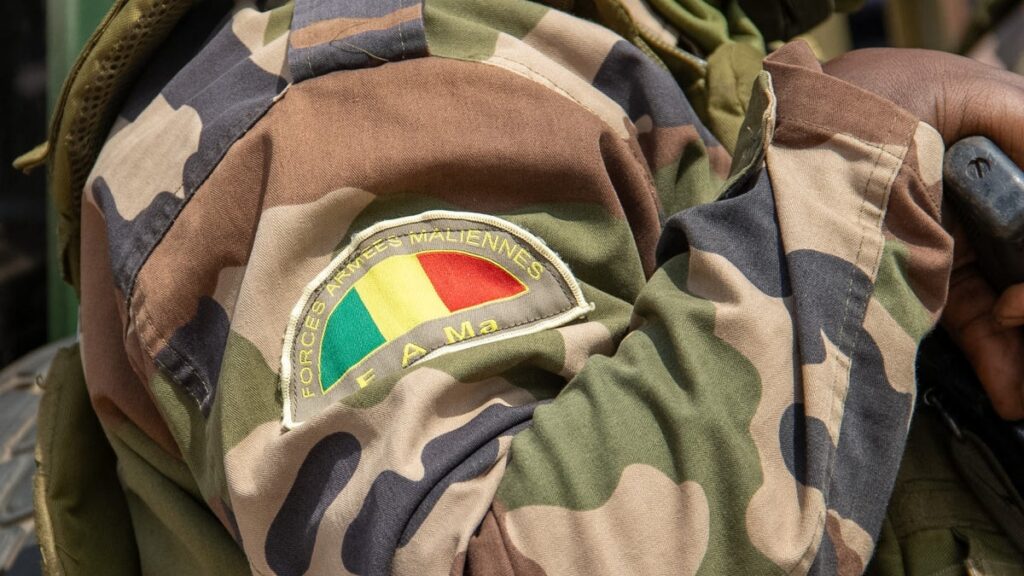
In the heart of Mali’s conflict-ridden Ségou region, Malian army troops alongside allied militias have been accused of carrying out a series of brutal attacks against civilians, leaving at least 31 dead in early October.
On October 2, soldiers accompanied by Dozos—traditional hunters primarily from the Bambara ethnic group who have joined counterinsurgency efforts for over a decade—entered the village of Kamona. Witnesses reported that at least 21 men were summarily executed, and over 10 homes were set ablaze. A decade of military operations in the area has blurred the lines between combatants and civilians, with survivors recounting how soldiers and militiamen targeted unarmed villagers under accusations of collaborating with Islamist armed groups.
«The October massacres in Ségou are yet another chapter in a grim pattern of violence linked to Malian forces and their allied militias,» said a senior researcher investigating the incidents. «Authorities must initiate transparent investigations and hold those responsible accountable through fair judicial proceedings.»
Witness testimonies, gathered through October interviews with survivors and local leaders, paint a harrowing picture. Soldiers arrived in seven pickup trucks and three armored vehicles, while Dozos on motorcycles scoured the village for men. Many residents fled after receiving warnings from Islamist militants, but those who remained were rounded up and killed.
«Those who couldn’t escape were gathered and executed,» one survivor recounted. «The attackers showed no mercy, even to the elderly or the disabled.»
By evening, villagers discovered 17 bodies beneath a tree, with four more found north of Kamona. The victims, all men aged 20 to 65, had been shot at close range, their bodies left in the open. Homes belonging to the Fulani ethnic group were torched, adding to the devastation.
«The bodies were riddled with bullets,» a 40-year-old shepherd who hid with his 9-year-old daughter recalled. «One man’s skull was completely crushed. Spent bullet casings littered the ground.»
Local residents compiled a list of the 21 confirmed victims, though some believe the toll could be higher. «We heard at least 15 others were killed in the bush, but we couldn’t verify because we feared the army’s return,» a villager admitted.
Thirteen days later, on October 13, the violence struck again in the nearby village of Balle. Soldiers in five pickup trucks and Dozos on 30 motorcycles stormed the settlement, causing panic. «I didn’t flee immediately, but when I saw soldiers kicking down doors and beating men, I ran,» a 24-year-old resident shared. «From my hiding place, I heard gunshots.»
By the time the attackers left, ten civilians—including a 55-year-old woman—lay dead. The assailants also stole over 100 cattle, leaving families destitute. A 33-year-old man recounted finding the bodies strewn in the village center. «They were piled together, shot execution-style,» he said. «Some had broken limbs.»
The victim’s 21-year-old daughter tearfully described her mother’s final moments. «She confronted the soldiers, accusing them of brutality,» she said. «They dragged her to where the men were held and shot her.»
Military officials later claimed the operation in Balle was a «successful offensive,» neutralizing «around twenty terrorists» and seizing weapons. However, locals dispute this narrative. «We’ve paid zakat to the jihadists for years,» one man explained. «They settle disputes here—there are no soldiers, only them. The army doesn’t differentiate between us and them.»
Since 2012, Mali has grappled with Islamist insurgencies, leaving thousands dead and displacing over 400,000 people. Both state forces and militant groups have been accused of war crimes, from extrajudicial killings to arson. The recent surge in violence coincides with the Group for the Support of Islam and Muslims (JNIM)—al-Qaeda’s affiliate in the Sahel—expanding its blockade around Bamako, cutting off fuel supplies and forcing the junta to shutter schools and universities.
Under international humanitarian law, all parties in the conflict are bound to protect civilians. Deliberate attacks on non-combatants, executions, and torture constitute war crimes. While Mali withdrew from the International Criminal Court (ICC) in 2025, it remains bound by the Rome Statute until 2026, with the ICC already investigating alleged atrocities since 2012.
The African Union (AU), tasked with maintaining regional peace, has faced criticism for its limited response to Mali’s escalating crisis. Despite the deteriorating security situation, the AU’s Peace and Security Council has confined itself to issuing statements of concern, failing to take concrete action.
«The AU must prioritize Mali’s conflict,» the researcher emphasized. «Regular briefings, strengthened diplomacy, and coordinated regional efforts are essential to ensure accountability for the abuses committed by all sides.»