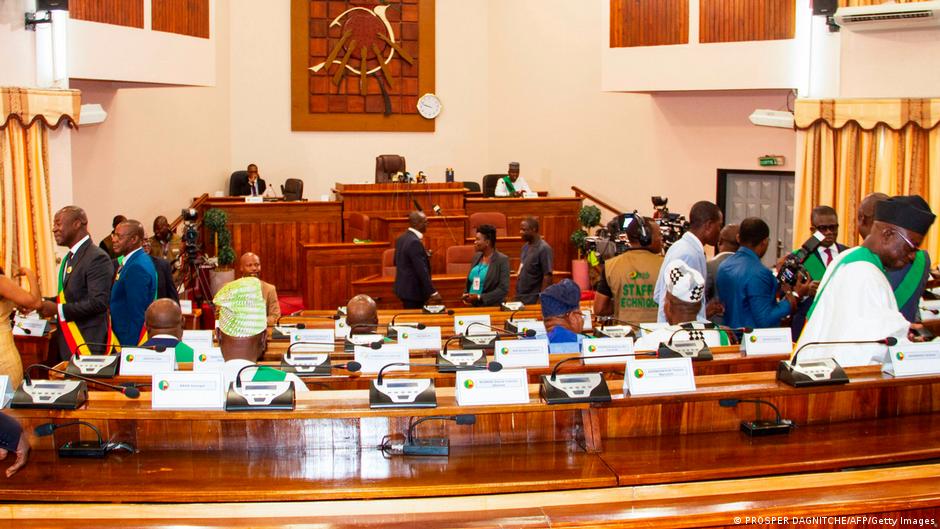
The inauguration of the Bénin Senate this Thursday marks a historic milestone in the country’s democratic evolution. The second parliamentary chamber, composed of 25 members including former heads of state, will begin operations in Porto-Novo with a consultative mandate designed to foster national cohesion.
Established following the November 2025 constitutional reform, the Senate will initially function from the National Assembly premises until its permanent facilities are completed. Its creation responds to a long-standing demand for institutional balance and a long-term vision in governance.
Assembly of distinguished figures
The Senate brings together prominent figures from across the political spectrum. Among its members are former Presidents Patrice Talon, Boni Yayi, and Nicéphore Soglo—leaders who have shaped Bénin’s modern history. Their collective experience is expected to play a stabilizing role in the country’s political climate, which has seen its share of tensions in recent years.
On Friday in Cotonou, the newly appointed senators convened in a closed session under the leadership of Maître Robert Dossou, former Constitutional Court president, to organize their legislative agenda. The event underscored the chamber’s dual purpose: serving as both a council of elders and a regulatory body to mitigate political disputes.
A chamber expected to guide national harmony
Public expectations are high. Citizens and analysts alike view the Senate as a potential anchor for social peace. “We see this institution as a pathway to stability,” remarks political analyst Eugène Allossoukpo. “After years of political strife driven by factional interests, Bénin now stands to benefit from a more regulated, calmer political ecosystem—without stifling dissent.”
Governance expert Joël Atayi-Guèdègbé shares this optimism. “Given the caliber of individuals set to serve, we can realistically expect a chamber of wisdom. The Senate holds immense potential but cannot afford to repeat past divisions. Its members carry both experience and responsibility.”
Financial considerations and democratic investment
The Senate’s establishment has sparked debate over its cost to taxpayers. The government has allocated 100 million West African CFA francs solely for the inauguration ceremony, with additional recurrent expenses anticipated.
“Any new institution increases public spending,” notes Atayi-Guèdègbé. “While the Senate is a compact body, it will generate recurring costs. We hope it will meet only the four scheduled annual sessions, minimizing extra sessions. Despite generous compensation for its members, the Senate must demonstrate that its contribution to national stability justifies the investment. Democracy, after all, comes with a price.”
As the 25 senators take office, all eyes are on the Senate presidency. Will former President Patrice Talon assume this role? One thing is certain: the chamber’s success will be measured not just in words, but in its ability to safeguard Bénin’s democratic future.



More Stories
Can Ousmane Sonko and Sadio Mané’s Bambali agro park truly transform Sédhiou?
Senegal’s palm oil gambit: can 60,000 hectares and Indonesian expertise finally end import reliance?
Can Burkina Faso’s military buildup succeed while its people keep fleeing?