Burkina Faso’s military leader declares democracy ‘irrelevant’ for the nation
Photo credit: TASS via Reuters
- Reading time: 5 minutes
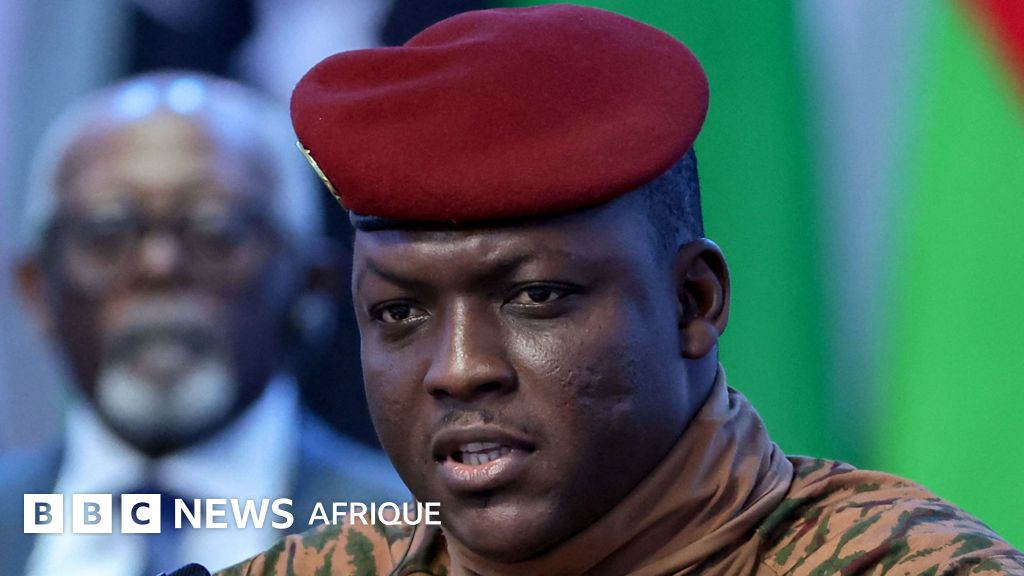
The people of Burkina Faso must abandon democracy as a political model, declared Captain Ibrahim Traoré, head of the transitional government, during a televised address to the nation. In his remarks, the 38-year-old leader dismissed democratic governance as incompatible with Burkina Faso’s revolutionary aspirations, stating emphatically: « The people must forget about democracy. Democracy is not for us. »
The statement marks a definitive break with the junta’s earlier pledge to restore civilian rule by July 2024—a deadline now abandoned as Traoré extended his mandate by five years in a controversial move announced just two months prior.
From promise to permanence: the shifting timeline of Burkina Faso’s transition
When Traoré seized power in September 2022, he vowed to restore constitutional order within two years. Yet in February 2026, with international observers warning of democratic backsliding, the military leadership announced a sweeping extension of its rule, citing security imperatives and the need for deeper institutional reforms.
This shift followed a decision in January to dissolve all political parties, consolidating state control over civil society. The move was framed as part of a broader « national reconstruction » plan, though critics argue it eliminates any remaining checks on military authority.
A revolutionary narrative: sovereignty over foreign influence
Traoré positioned himself as a panafricanist leader resisting Western hegemony. He invoked Libya as a cautionary tale: « Look at Libya—it’s a nearby example. » The country’s descent into chaos after Muammar Gaddafi’s fall, he argued, demonstrated the dangers of externally imposed democracy. Libya’s collapse into rival factions and unending violence, despite its former stability under autocratic rule, served as a powerful illustration in his critique.
The Burkinabé leader emphasized self-reliance in governance, advocating for an economic and military strategy built on patriotism and grassroots mobilisation. He dismissed traditional political elites as corrupt and ineffective, declaring: « In Africa, especially in Burkina Faso, real politicians embody every vice: liars, flatterers, and empty talkers. »
Economic ambition and authoritarian drift
Traoré’s vision includes longer working hours, extended beyond the standard eight-hour day, as necessary to accelerate development. « A six-hour workday won’t build a modern nation, » he asserted, underscoring his commitment to transformative productivity.
Yet this drive for progress has come at a cost. Since taking power in 2023, over 1,800 civilians have been killed in the conflict against Islamist militants, according to independent analysis. Human rights groups attribute two-thirds of these deaths to state forces and allied militias, with the remainder linked to extremist groups. Critics warn that dissent is being suppressed, with opponents and journalists facing intimidation, arrests, or even forced deployment to frontline combat zones.
Regional realignment and unyielding violence
Burkina Faso has joined neighboring juntas in Mali and Niger in severing military cooperation with former colonial power France, instead turning to Russia for security support. Despite this shift, violence linked to Islamist insurgencies continues unabated across the Sahel.
Traoré’s growing continental influence stems from his vocal opposition to Western interference and his promotion of anti-colonial rhetoric. His stance has resonated with segments of the African public disillusioned by decades of foreign intervention and economic inequality.
The junta’s future remains uncertain. While Traoré enjoys support among those seeking sovereignty and stronger national identity, his authoritarian methods and rejection of democratic norms risk deepening political isolation and social unrest.