Diplomatic breakthrough or just words on paper? The delicate balance of refugee returns from West Africa
The signing of three landmark tripartite agreements in Lomé marks a pivotal moment—not in ending the Burkina Faso refugee crisis, but in shaping its next chapter. While governments and international bodies celebrate the diplomatic achievement, refugees and analysts alike are asking the same critical question: will these accords translate into tangible safety for those who risked everything to flee?
The agreements, signed on September 11 by Burkina Faso, Benin, Ghana, Togo, and the UN High Commissioner for Refugees (UNHCR), establish a framework for voluntary, safe, and dignified returns—but the journey home is far from guaranteed. The documents lay out cooperation mechanisms for monitoring, consultation, and preparation ahead of any repatriation operations, yet they remain silent on the most urgent concern: whether the conditions in Burkina Faso will ever truly permit such a return.
Numbers that tell a deeper story: who these refugees are and why they cannot stay
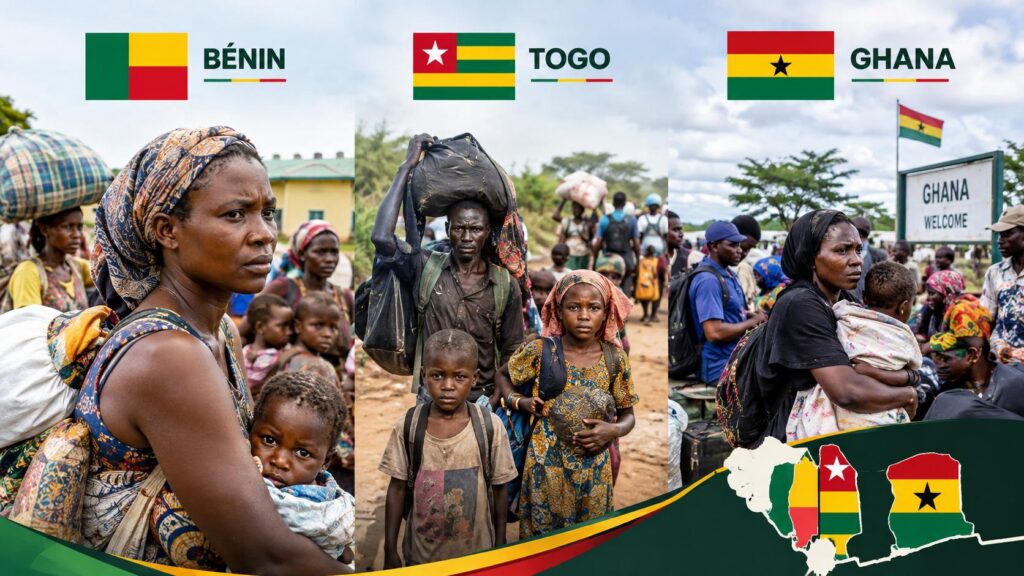
Behind the diplomatic language lie stark realities. As of mid-2026, Benin hosted over 11,000 Burkinabè refugees, Ghana accommodated nearly 13,400, and Togo sheltered an overwhelming 65,100—86% of its total refugee population. Many of these individuals fled after losing homes, livelihoods, or loved ones to violence. The numbers are not just statistics; they represent families displaced by insurgency, government counterinsurgency operations, and a climate of fear that shows no sign of abating.
After years of escalating violence and human rights abuses, the promise of a return is fraught with uncertainty. Can refugees trust that their villages will be secure? Will their land and property be restored? Will they have access to healthcare, education, civil documentation, and economic opportunities?
For the UNHCR, a durable return is only possible when the root causes of displacement are addressed. Yet with ongoing conflict and accusations of war crimes and crimes against humanity targeting both armed groups and state forces, the pathway to peace remains unclear. Human Rights Watch reported in 2025 that civilians continue to face unlawful killings, forced displacement, and severe restrictions on media, opposition, and civil society—conditions that make any hasty repatriation perilous.
The military junta’s shadow: how governance under Ibrahim Traoré colors the return equation
Since seizing power in September 2022, Burkina Faso’s transitional military government—led by Captain Ibrahim Traoré—has deepened its control, restricting political space and silencing dissent. Reports from human rights organizations point to enforced disappearances, forced conscription, and intensified crackdowns on independent media. In May 2026, censorship against critical voices reached new heights, further eroding public trust in state institutions.
This context raises a fundamental dilemma: How can refugees be expected to return to a country where violations of their rights are still being documented? The agreements in Lomé may offer legal and procedural safeguards, but they cannot alone restore trust or reverse the conditions that drove people into exile. A return cannot be considered ‘safe’ if the same forces responsible for displacement remain in power—or if accountability for past and ongoing abuses is absent.
Benin, Ghana, and Togo: from humanitarian hosts to regional stabilizers
While Burkina Faso grapples with crisis, its neighbors have stepped into a humanitarian role they never sought. Despite their own economic and security challenges, Benin, Ghana, and Togo have provided refuge to tens of thousands of Burkinabè, offering emergency shelter, legal recognition, and access to basic services. Ghana, for example, granted prima facie refugee status to Burkinabè arrivals in early 2025 and set up reception centers along border regions like Tarikom and Zini.
The Lomé agreements now redefine their role—not just as hosts, but as strategic partners in shaping a sustainable regional response. By formalizing cooperation through the UNHCR, these countries are asserting a collective responsibility: to prepare for the possibility of return—without rushing it. The framework allows them to balance immediate humanitarian obligations with long-term regional stability.
A regional strategy, not a repatriation timeline
It’s essential to remember: the Lomé accords are not a repatriation schedule. They are a roadmap—one that prioritizes voluntary participation, dignity, and long-term integration. Refugees must be able to make informed decisions, free from coercion or false promises of safety. The UNHCR has repeatedly emphasized that a return is only durable when people can rebuild lives without fear of renewed violence.
That means the success of these agreements will be measured not by the number of returnees, but by the number of people who return—and stay. Can they reclaim their homes? Rebuild farms? Send children to school without threat? Access healthcare without stigma? Without these conditions, any return risks becoming another cycle of displacement.
Can Lomé’s agreements deliver more than hope?
The path ahead is complex. Diplomacy has laid a foundation, but the real test lies in implementation—and in Burkina Faso itself. Until hostilities cease, meaningful human rights reforms are enacted, and civilian protection is prioritized, the agreements remain aspirational rather than actionable.
Still, the Lomé process offers a rare opportunity: to align regional cooperation with humanitarian principles. If executed with transparency and accountability, it could set a new standard for resolving displacement crises across the Sahel. But for the refugees waiting in Benin, Ghana, and Togo, time is not on their side. Every day without a clear, safe future is another day spent in uncertainty.
The true measure of these accords will not be in signatures on paper, but in the lives restored when—and if—people finally dare to go home.

More Stories
Niger’s spiral of distrust: how Tiani’s purges deepen the crisis hurting millions
How Benin’s Cotonou-Niamey corridor reshapes West African trade and economy
Niger hostage crisis exposes deepening security collapse and human cost