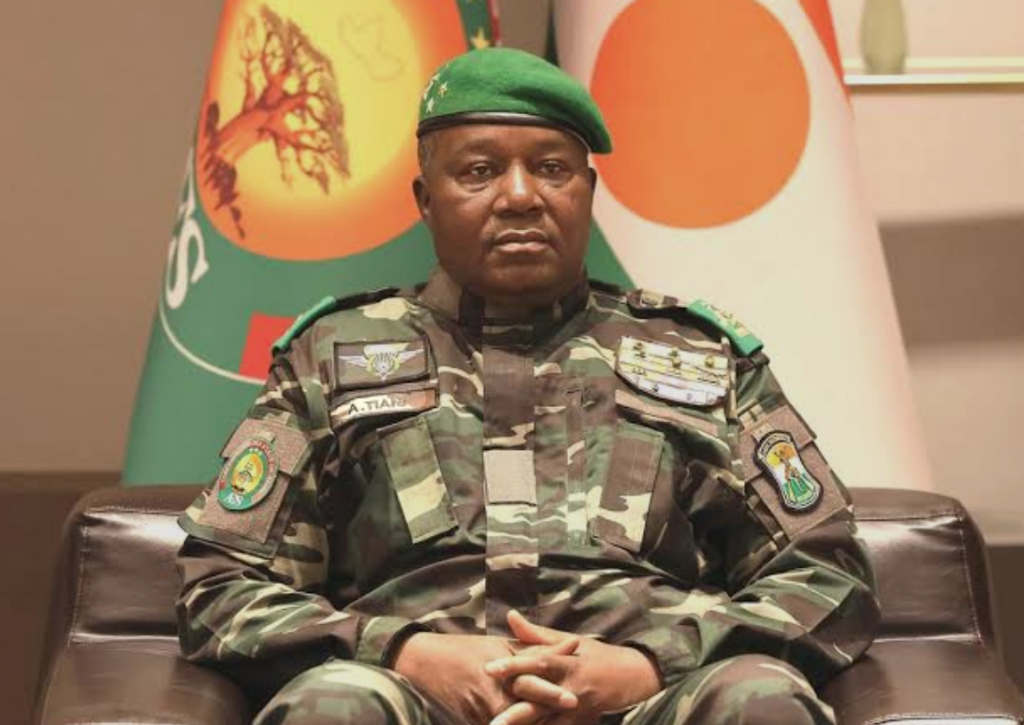
The military regime in Niger is spiraling into deeper instability after the recent failed coup attempt in late August. In a sweeping move to consolidate power, General Abdourahamane Tiani abruptly dismissed four key ministers, signaling a regime gripped by paranoia rather than governance. This purge, targeting portfolios critical to economic stability and public trust, underscores a junta that fears its own shadow more than the mounting crises facing its people.
From leader to hostage: Tiani’s fear fuels institutional collapse
The August 28–29 coup attempt exposed fractures within the junta itself, leaving General Tiani trapped in a cycle of retribution. Having seized power in July 2023 through a military takeover, he now governs under the shadow of constant threat—both real and imagined. The dismissal of Agriculture, Land Reform, Energy, and Communications ministers reflects not a strategy for recovery, but a desperate effort to eliminate perceived internal rivals.
This reaction reveals a fundamental truth: juntas that seize power by force often fall victim to the very instability they create. The reshuffling of ministries offers no long-term solutions, only temporary reassurance to a leadership more focused on survival than service.
Security vacuum: the cost of political obsession
While Tiani reshapes his cabinet to tighten control, the consequences for Niger’s citizens grow more severe. Far from improving security, the junta’s actions have exacerbated the threat landscape across the country:
- Escalating terror attacks: Border regions face intensified assaults by Al-Qaeda and ISIS-affiliated groups, claiming civilian and military lives daily.
- Broken alliances: The expulsion of foreign military partners has left vast areas without critical support, accelerating insurgent advances.
- Humanitarian emergency: Sanctions and economic paralysis have pushed millions into extreme poverty, with food insecurity and displacement rising at alarming rates.
The illusion of control: why ministerial purges fail to stabilize Niger
The latest cabinet reshuffle does little to address the root causes of Niger’s decline. By prioritizing loyalty over competence, the junta perpetuates a cycle of distrust and dysfunction. Ministries responsible for energy and communications—crucial for economic recovery and public communication—now operate under interim leadership, further eroding institutional credibility. With each purge, the regime isolates itself further from both domestic and international stakeholders, deepening the crisis it claims to fight.
The people of Niger bear the brunt of this collapse. Once hailed as a hopeful transition after years of democratic rule, the junta’s rule has instead plunged the nation into deeper insecurity and economic stagnation. For a country already struggling against extremism and poverty, the general’s obsessive reshuffling offers no relief—only more instability.
What lies ahead: a nation caught in self-destruction
The military’s fixation on internal threats has sidelined urgent national priorities. Without credible leadership, a coherent security strategy, or economic recovery plans, Niger’s future remains dire. Each new purge delays the reckoning the junta fears most: that its own methods are the cause of its undoing.
The message from Niamey is clear: in a regime built on force, fear has become the only currency—and it is bankrupting the country.


More Stories
Burkina Faso refugee crisis: Lomé agreements face test of real-world impact on returnees
How Benin’s Cotonou-Niamey corridor reshapes West African trade and economy
Niger hostage crisis exposes deepening security collapse and human cost