Burkina Faso’s military leader rejects democracy as path forward
- Temps de lecture: 5 min
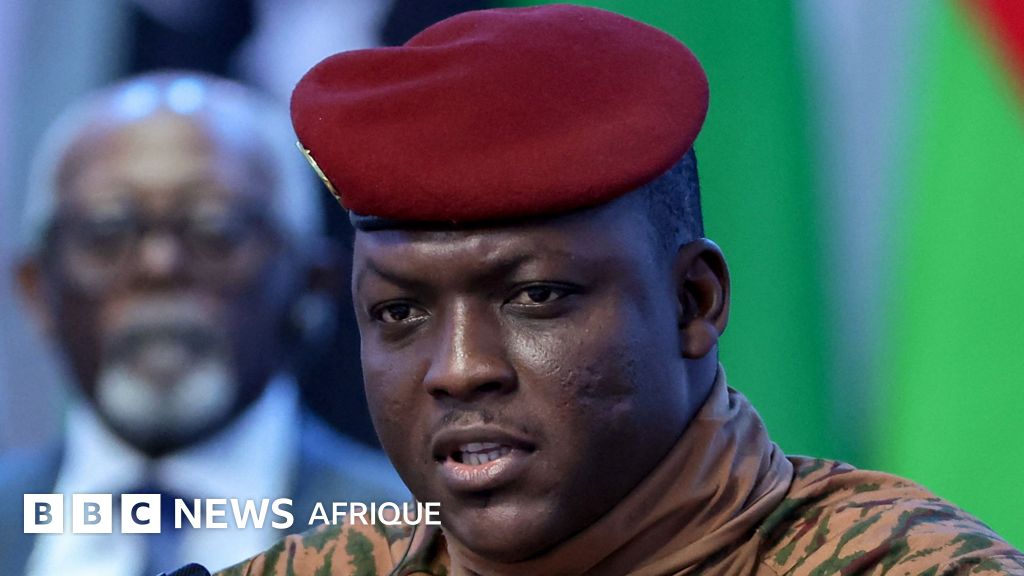
The people of Burkina Faso must “forget about democracy,” declared the country’s military leader during a televised address. Captain Ibrahim Traoré, who seized power three years ago, argued that the democratic system “kills” and does not align with the nation’s needs. He insisted that Burkina Faso must forge its own path, distinct from Western-influenced governance models.
Traoré, who styles himself as a revolutionary leader opposing Western imperialism, claimed that most Africans reject democracy. He pointed to Libya as a cautionary example, where years of autocratic rule ended in chaos after foreign intervention. The Libyan experience, he suggested, demonstrates the dangers of imposing democratic systems from abroad.
In 2023, Traoré pledged to restore democracy in Burkina Faso by July 2024. However, with just two months remaining before that deadline, the military government extended its rule by five years. This extension followed a January announcement banning all political parties as part of a broader plan to “rebuild the state.”
During the interview, Traoré dismissed political parties as divisive and incompatible with his revolutionary project. He described politicians as corrupt figures who prioritize personal gain over national progress. “In Africa—at least in Burkina Faso—true politicians are liars, flatterers, and empty talkers,” he stated.
The military leader outlined his vision for Burkina Faso, emphasizing sovereignty, patriotism, and revolutionary mobilization. He stressed the need for economic and military self-reliance, arguing that shorter workdays would not help the country catch up to wealthier nations. Traoré also highlighted the role of traditional leaders and grassroots structures in his proposed system, though he provided few concrete details about its implementation.
Since taking power, Traoré has cracked down on dissent, targeting opposition groups, media outlets, and civil society organizations. Critics accuse his government of silencing opponents by sending them to the frontlines of the fight against Islamist militants, a conflict that has ravaged the region for a decade. Despite these measures, Traoré has gained significant support across Africa for his anti-Western stance and panafricanist rhetoric.
Like neighboring juntas in Mali and Niger, Burkina Faso has distanced itself from Western allies, particularly France, in its fight against insurgents. Instead, the country has turned to Russia for military assistance, though violence in the region shows no signs of abating. A recent report by Human Rights Watch revealed that over 1,800 civilians have been killed in Burkina Faso since Traoré’s rise to power in 2023, with two-thirds of the deaths attributed to government forces and allied militias.
Traoré’s rejection of democracy and his government’s repressive tactics have sparked debate about Burkina Faso’s future. While his approach resonates with some who advocate for greater African independence from Western influence, others warn of the risks of prolonged military rule and the erosion of democratic freedoms.