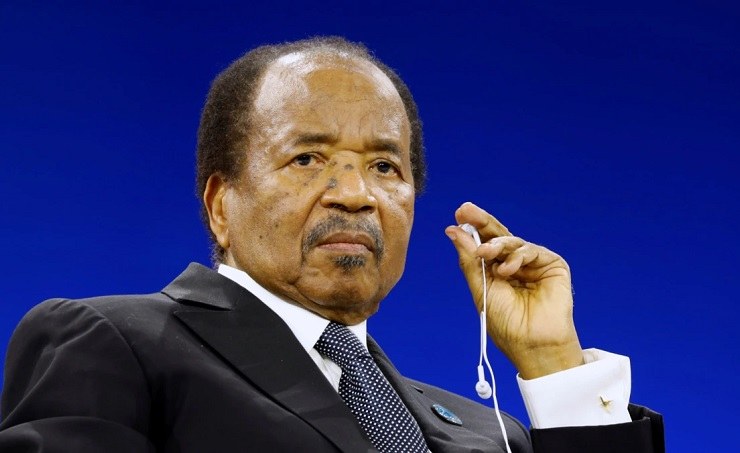
The 56-day absence of Cameroon’s president has finally been addressed by the government, which confirmed that Paul Biya is alive and set to return soon. Yet, uncertainties linger.
Government breaks silence after prolonged uncertainty
For 56 days, the nation held its breath, waiting for any sign of life from its president. That wait ended this past Sunday when government spokesperson René Emmanuel Sadi addressed the nation, declaring, « The president is alive » and « There is no power vacuum ».
Paul Biya: Africa’s longest-serving leader at 93
Paul Biya, at 93 years old, is the world’s oldest serving head of state, having led Cameroon since 1982—a span of 43 uninterrupted years in power. His departure on June 7, 2026, for what was labeled a « brief private stay in Europe » has now stretched into an unprecedented absence.
During this time, official presidential activity remained minimal. A few military decrees were signed, and official telegrams were sent, including congratulatory messages to France on its national holiday. Yet, no public appearances, images, or statements from the president were released, leaving a void filled by speculation.
The media blackout fuels speculation
Leading newspapers like Le Messager questioned the prolonged absence, highlighting the government’s inability to provide clarity. Opposition figures, including deputy Jean-Michel Nintcheu, went further, demanding the Constitutional Council declare a power vacuum.
Opposition demands transparency amid constitutional debate
The opposition party UDC argued that « a republic’s stability cannot rest on silence or assumptions », pointing to the absence of a vice president since April 2026’s constitutional revision. Meanwhile, government officials insisted that no power vacuum exists, citing the lack of a formal declaration by the Constitutional Council.
Sadi added that opposition calls for recognizing a power vacuum reflected « a lack of rigorous and objective constitutional interpretation ». He reiterated Biya’s status: « President Paul Biya is alive. He has not resigned ».
When will Paul Biya return?
While the government confirmed Biya’s return is « very soon, » no exact date was provided. Sadi acknowledged that even if he knew, it wouldn’t be his place to announce it. This vagueness only deepened public skepticism.
Record-breaking absence raises questions
This 56-day absence surpasses Biya’s previous record of 42 days in 2024. Over his 43 years in power, he has spent approximately 2,600 days abroad—nearly seven years—setting a continental record for private travel by an African leader.
Rumors suggest parts of his inner circle, including family members, may currently be in Switzerland, though authorities have not confirmed this.
Constitutional loopholes and governance concerns
The prolonged absence has reignited debates over Cameroon’s constitutional framework. While some argue the Constitutional Council should intervene after 45 days, the constitution remains silent on presidential absences abroad.
The government has exploited this legal gray area, while the opposition condemns what it calls « institutional void ». The UDC has called for a structured process to manage future presidential absences, framing it as a matter of transparency rather than health speculation.
Public reaction: relief mixed with doubt
Social media erupted with mixed reactions. Some citizens expressed relief, while others voiced frustration over the lack of concrete information. Comments ranged from admiration for Biya’s freedom to travel to deep concern over his health and governance stability.
One user wrote: « Paul Biya is the luckiest president in the world—free to come and go as he pleases without consequence. »
The looming question: what comes after Biya?
Beyond the immediate uncertainty, a broader question looms: what happens when Africa’s oldest leader steps aside? At 93, Biya’s prolonged absences have intensified discussions about succession and governance.
The UDC warns that « a republic’s stability cannot rely on silence or assumptions », urging institutional reforms to address prolonged presidential absences. Such calls highlight growing unease about a future without Biya.
Unanswered questions remain
Despite the government’s announcement, key uncertainties persist:
- Location: Reports suggest Switzerland, but no official confirmation.
- Purpose: Described as a « private stay, » yet the duration raises concerns.
- Timing: « Very soon » remains the only clue.
- Health: Confirmed alive, but no details provided.
Can the government’s statement restore confidence?
The government’s delayed response has fueled distrust. While Sadi defended the constitutional stance and promised a return, critics argue that in a system where power is heavily personalized, words alone may not suffice.
As Cameroon waits, the nation hopes for clarity. Yet, the absence of a firm timeline and lingering doubts about this prolonged stay may keep the debate—and the rumors—alive.
What’s next for Cameroon?
With Biya’s return « imminent, » the immediate uncertainty may soon lift. However, the episode underscores deeper questions about governance, transparency, and the future of a country led by an octogenarian president whose absences defy precedent.
The nation watches, waits, and wonders: will the « Lion » roar again?

More Stories
Can Marseille stop the bleeding after yet another loss to PSG?
Mbappé’s move to PSG: was it a snap decision made on the pitch?
What price did Niger’s junta pay for survival after the August mutiny?