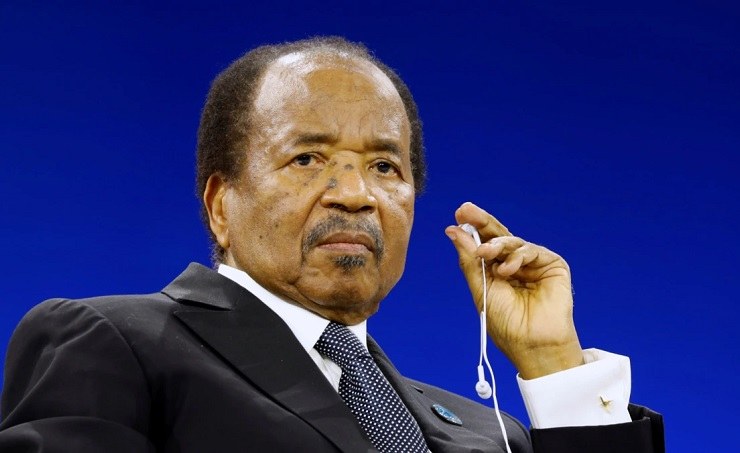
In a significant development, René Emmanuel Sadi, Cameroon’s Minister of Communication and government spokesperson, announced on August 2, 2026, the imminent return of President Paul Biya to the nation. No further specifics regarding his homecoming were provided at the time.
“The president is alive… There is no power vacuum!” Minister Sadi asserted, directly addressing growing speculations from opposition factions. The Head of State, born on February 13, 1933, making him 93 years old, has been conspicuously absent from Cameroon for nearly two months. This extended period away from the country has fueled considerable public debate and raised numerous questions.
From the opposition benches, calls for greater transparency regarding the President’s condition and the continuity of state institutions have grown louder. Since July 21, 2026, prominent figures like Jean-Michel Nintcheu and the Union démocratique du Cameroun (Udc) have voiced their concerns.
Notably, Nintcheu urged the Constitutional Council to officially acknowledge a power vacuum, emphasizing that the stability of the Republic cannot be founded on silence or mere conjecture. Other opposition leaders have echoed sentiments of an “institutional void,” criticizing what they perceive as governance from a distance, even as the presidential camp maintains that Paul Biya remains firmly in control.
Legally, Article 6, paragraph 4, of the Cameroonian Constitution outlines the procedure in the event of a power vacuum, whether due to death, resignation, or a permanent impediment as determined by the Constitutional Council. Should such a situation arise, the Constitution mandates that a new presidential election must be organized within a timeframe of no less than twenty (20) days and no more than one hundred and twenty (120) days following the declaration of the vacancy.
During this transitional phase, the President of the Senate, currently Aboubakary Abdoulaye, aged 64, automatically assumes the interim presidency. If the Senate President is unable to serve, the role passes to his designated successor according to the Senate’s order of precedence, which is currently First Vice-President Naomie Mikel Bégala épouse Akono, aged 63. The interim President is subject to specific limitations: they cannot amend the Constitution, alter the composition of the Government, initiate a referendum, or stand as a candidate in the subsequent presidential election triggered by the vacancy.


More Stories
Mbappé’s move to PSG: was it a snap decision made on the pitch?
What price did Niger’s junta pay for survival after the August mutiny?
Will Benin’s 6.6 billion FCFA CCI budget for 2027 actually deliver for small businesses?