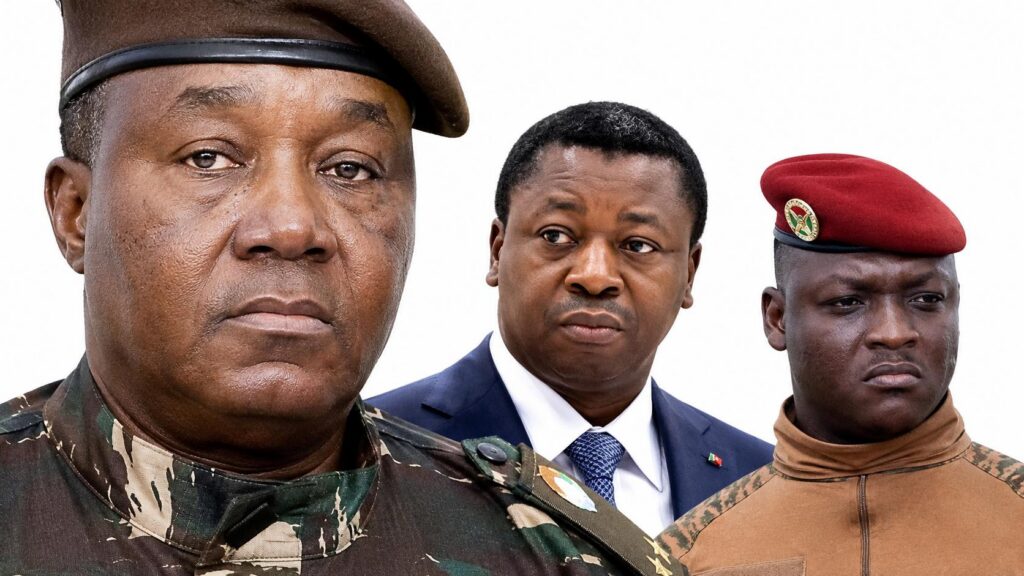
Recent events in Niamey have sent shockwaves across West Africa, exposing vulnerabilities in neighboring regimes. The heavy gunfire and upheaval that shook Niger’s capital were not just a domestic crisis—they served as a stark warning to leaders in Burkina Faso and Togo, who now face heightened risks of internal mutiny or even a coup.
Burkina Faso’s fragile stability under Ibrahim Traoré
For Captain Ibrahim Traoré, the threat is not hypothetical—it’s a daily reality. Burkina Faso’s government operates under constant suspicion, with multiple failed destabilization attempts already thwarted within its own military ranks, including high-profile incidents in early 2026 and late 2023. The balance of power in Ouagadougou remains precarious, and recent events in Niamey have only amplified those concerns.
Traoré now sees his own reflection in Niger’s turmoil. The same ingredients fueling instability in Niamey are present in Burkina Faso:
- Soldier fatigue: Despite nationalist rhetoric, frontline troops face relentless pressure, and the unfulfilled promises of better conditions fuel deep resentment among rank-and-file soldiers—the primary driver of military uprisings.
- Factional divisions: Repeated purges within Burkina Faso’s armed forces and the heavy reliance on the Volontaires pour la Défense de la Patrie (VDP) have widened the gap between loyalists and career officers. The risk of dissident factions taking up arms has never been higher.
Togo’s hidden turmoil under Faure Gnassingbé
While Togo’s situation appears calmer on the surface, the unease at the top of the state is undeniable. In August 2026, President Faure Gnassingbé carried out an urgent reshuffle of the military high command and intelligence services (ANR), placing trusted allies in critical positions.
This rapid turnover wasn’t a routine administrative move—it was a survival tactic:
- Garrison unrest: Togo’s involvement in regional geopolitical maneuvering, combined with worsening security in the North (particularly around the Koundjoaré operation), has created unprecedented tensions within the military command.
- Palace paranoia: When a leader hastily reshuffles the army and intelligence leadership, it signals a crisis of loyalty. Gnassingbé knows the contagion of coups doesn’t respect borders—and Togo’s historically influential military remains a wildcard.
The domino effect of instability
The Niamey-Ouagadougou-Lomé axis has gambled on military force to advance its agenda, but the recent unrest in Niger proves that when the military becomes a political tool, command chains fracture—and institutions become uncontrollable.
The lesson of August 29 in Niamey is clear: violence begets violence. Traoré and Gnassingbé now face an inescapable truth—the countdown has begun. Until legitimacy is rooted in institutional stability rather than gun control, each night in their capitals carries the bitter taste of a potential mutiny.