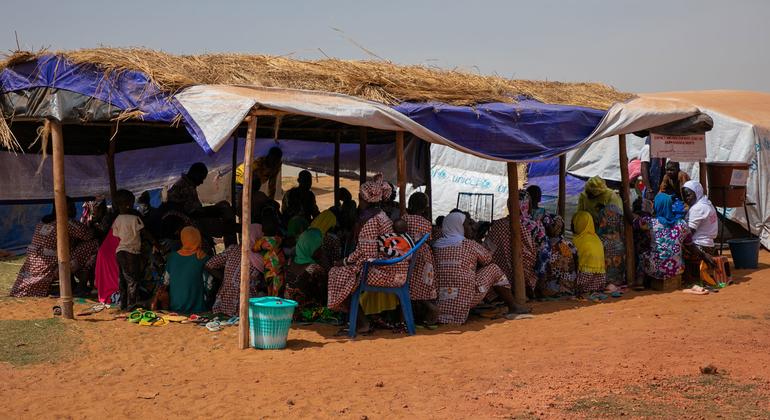
Amidst ongoing insecurity and forced displacement across central and northern Mali, women and girls face significantly heightened risks of gender-based violence, an urgent concern highlighted by a United Nations agency.
Following a comprehensive survey conducted last May, the United Nations Population Fund (UNFPA), the UN’s agency for sexual and reproductive health, has reported a marked increase in incidents of sexual violence within internally displaced persons (IDP) sites and active conflict areas. The report specifically details cases of sexual exploitation, harassment, and forced marriage.
This escalating vulnerability is unfolding within a critical humanitarian landscape in parts of the central Sahel, where women are not only more exposed to sexual violence but also deprived of adequate access to essential sexual and reproductive health (SRH) services.
According to the UN agency, May 2025 witnessed a surge in armed conflict, particularly in the regions of Timbuktu, Gao, Mopti, and Ménaka, characterized by an uptick in armed group attacks. These violent outbreaks have triggered new waves of mass displacement.
Access to vital health services severely restricted
The number of internally displaced persons has nearly reached 380,000, a substantial rise from 330,000 in May 2024, representing an increase of almost 15%. The UNFPA emphasized that “women and girls are at the core of these vulnerabilities and are disproportionately affected by this insecurity and humanitarian crisis.”
Out of the 6.4 million individuals requiring humanitarian assistance, over half are women and girls. Many reside in areas where access to protection and critical health services is extremely limited, the agency notes.
Currently, less than a quarter of health facilities in crisis-affected regions provide comprehensive sexual and reproductive healthcare or offer support to survivors of gender-based violence. Nearly half of all specialized SRH services nationwide remain non-operational. The most severely impacted regions include Gao (76%), Ménaka (77%), Mopti (56%), and Timbuktu (80%).
On the ground, UNFPA teams are intensifying their humanitarian efforts, providing support to 86 health facilities, establishing six safe spaces specifically for women and girls, and operating seven one-stop centers in the most affected central and northern regions, including Ségou, Mopti, Gao, Timbuktu, and Ménaka.
“Colossal” funding shortfall challenges response
In May alone, mobile health teams delivered sexual and reproductive health services and anti-gender-based violence programs to nearly 3,000 individuals in displaced persons camps, with 80% of beneficiaries being women and young girls.
Midwives provided crucial prenatal, postnatal, and delivery care, while dignity kits and reproductive health supplies were distributed in areas impacted by both floods and conflict.
Across Mali, approximately 900,000 women and girls are targeted for reproductive health services or sexual violence prevention programs.
However, the humanitarian response remains significantly underfunded. Out of this year’s appeal for $16.5 million, UNFPA has received only $2.9 million. This leaves the agency’s teams grappling with a “colossal deficit of $13.5 million” needed to assist thousands of vulnerable women and girls.
Without urgent additional funding, the scope and long-term viability of programs combating sexual violence and providing reproductive health services in Mali are severely jeopardized.