
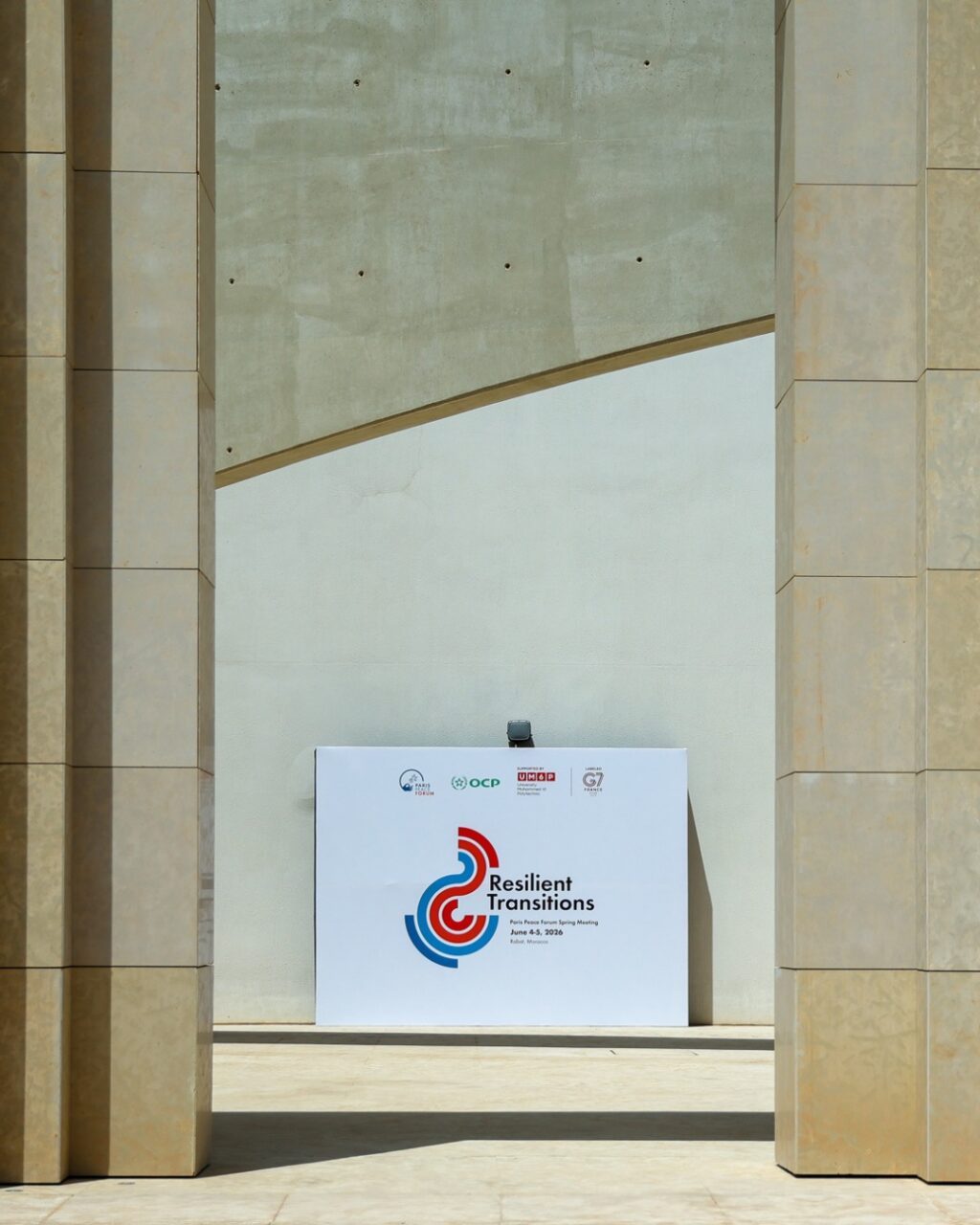
During his inaugural public appearance as the French Republic’s representative in Morocco, Philippe Lalliot addressed the spring session of the Paris Peace Forum. Held at the Mohammed VI Polytechnic University (UM6P) in Rabat on June 4 and 5, 2026, the event served as a platform for the diplomat just one day after he formally presented his credentials to the Sovereign.
Amidst a global landscape marked by persistent crises and widespread instability, Lalliot reaffirmed the vital importance of multilateral frameworks. He asserted that international law remains a cornerstone of global order, describing its core principles as just and essential. He characterized these regulations as a collective asset that serves as a protective barrier for those who lack other means of defense.
The diplomat emphasized that maintaining international law is the fundamental requirement for ensuring peace, security, and stability for the global population.
Lalliot suggested that the forum in Rabat provided the ideal environment to develop practical and realistic responses to modern transitions. He urged participants to move beyond mere aspirations and translate their shared ambitions into concrete projects and measurable actions.
According to the ambassador, the ongoing dialogue regarding global imbalances and their potential remedies is the defining feature of the deep-rooted partnership between France and Morocco. He referred to this approach as the “Franco-Moroccan method,” suggesting it should serve as a template for other international collaborations. He noted that both nations, linked by a shared history and a unified vision of the future, carry the responsibility to lead by example and foster broad coalitions ahead of upcoming diplomatic milestones.
To demonstrate the effectiveness of this partnership, Lalliot highlighted a major initiative launched at the start of his tenure. In collaboration with the Moroccan Minister of Equipment and Water, alongside representatives from Germany, Italy, and the European Union, a significant program worth nearly €350 million was introduced. This funding is dedicated to bolstering Morocco’s national water management strategy.
This strategic project focuses on securing Morocco’s water sovereignty by improving the monitoring of resources, such as groundwater, and establishing coordinated responses to climate-related events like floods. The initiative also covers critical areas like the recycling and reuse of wastewater.
As discussions in Rabat regarding food and energy security draw to a close—topics that will also headline the G7 summit in Évian from June 15 to 17—France and Morocco are finalizing a new framework for cooperation that is expected to be implemented shortly.
More Stories
Morocco’s quiet diplomacy secures french agent’s pardon in Mali
Canada establishes its first embassy in Benin
US reaffirms strategic partnership with Morocco at throne celebration