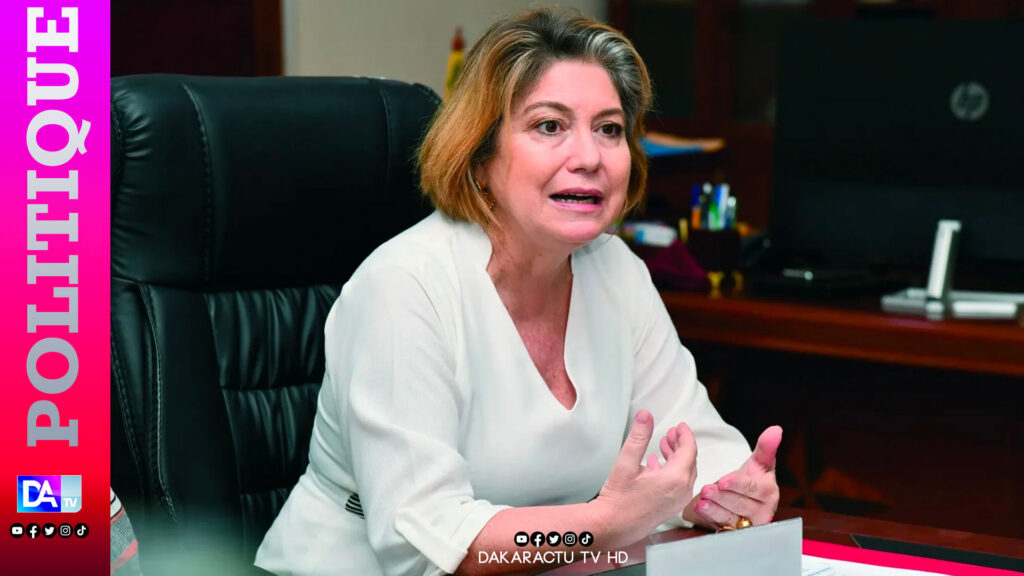
« The stronger Senegal’s sovereignty grows, the stronger the bilateral relationship will become, » declares Christine Fages, France’s Ambassador to Dakar, outlining her vision for a cooperative framework rooted in mutual respect and strategic alignment. In a candid interview, she emphasizes that both nations share institutional tools to navigate sensitive issues while preserving open dialogue, even amid Senegal’s political transition.
Addressing potential tensions, she dismisses the notion of a strained relationship, asserting that Senegal’s pursuit of sovereignty does not hinder collaboration. « A nation that clearly defines its strategic interests engages more effectively with its partners—regardless of differences in perspective, » she explains. « Sovereignty and partnership are not opposing forces; they reinforce each other. »
Visa procedures: combating fraud and misinformation
The Ambassador devotes significant attention to visa-related challenges, particularly the surge in demand and the role of unscrupulous intermediaries. France processes roughly 53,000 visa applications annually in Senegal—nearly half of all EU visa requests in the country. Fages warns of a persistent scam involving individuals demanding payment for expedited appointments or fictitious « guaranteed success » services. « No fee is required for scheduling an appointment, » she stresses. « Any request for payment is a red flag. » She urges applicants to verify official communications and report fraudulent practices to prevent financial exploitation.
Thiaroye 44 massacre: France acknowledges responsibility
Reflecting on historical reconciliation, Fages confirms that President Emmanuel Macron has formally recognized France’s role in the Thiaroye 44 massacre, where Senegalese soldiers were killed by colonial forces in 1944. She highlights ongoing efforts to deepen historical research, including the handover of archival documents to Senegalese authorities. « Transparency is key, » she notes. « We stand ready to support academic and archival work to illuminate this painful chapter. »
Cultural restitution: progress and challenges
The return of Senegalese artifacts held in France remains a priority. Fages highlights the 2021 restitution of El Hadj Oumar Foutiyou Tall’s sword as a milestone, while acknowledging the complex process of identifying, documenting, and verifying provenance for thousands of other objects. « Each case requires meticulous review, » she explains. « Our goal is to ensure restitution aligns with legal and ethical standards. »
UN leadership race: Paris maintains a cautious stance
On the possibility of former President Macky Sall’s candidacy for UN Secretary-General, Fages describes the decision as premature. « France is still evaluating all candidates, » she states. « A final position will emerge as the process advances. » She underscores that Paris will base its choice on merit and alignment with global priorities.
IMF partnership: France reaffirms economic solidarity
Regarding Senegal’s ongoing negotiations with the International Monetary Fund, the Ambassador reaffirms France’s commitment to supporting Dakar’s engagement with international financial institutions. « Cooperation between Senegal and the IMF is mutually beneficial, » she asserts. « Challenges in finalizing a new program do not diminish our shared commitment to sustainable economic growth. »
A cultural bridge: the Ambassador’s personal connection
As France’s first female Ambassador to Senegal, Fages shares her deep appreciation for the country’s traditions. She singles out ataya—the shared tea ritual—as a symbol of hospitality, patience, and community. « In Senegal, time is not measured; it is spent, » she observes. « The warmth of this tradition reflects the nation’s spirit of openness and connection. »