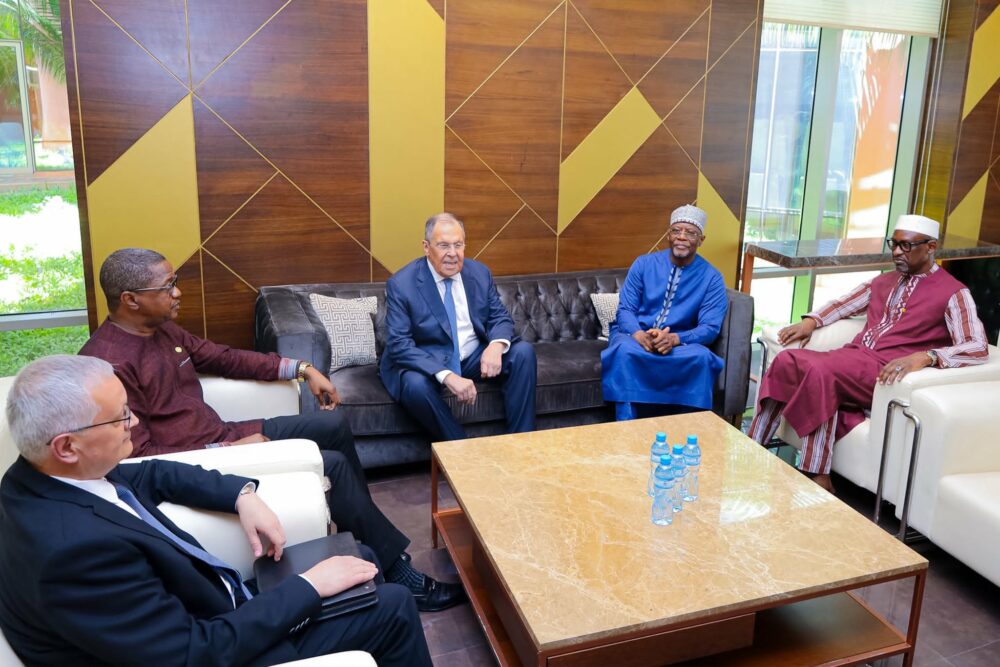
Strengthening bonds: AES and Russia advance shared strategic goals in Niamey
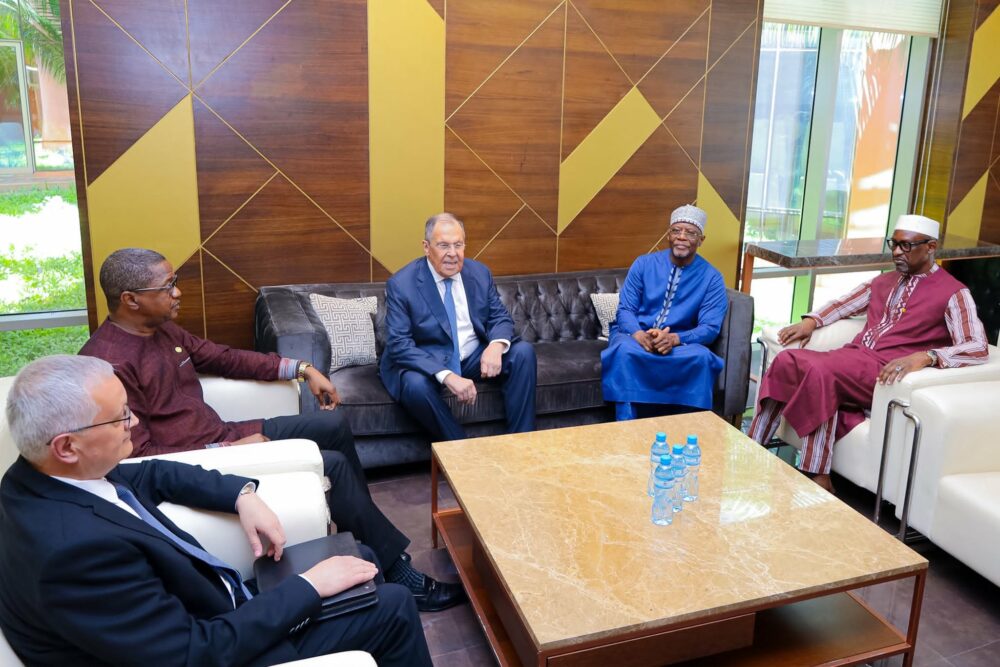
Niamey, Niger’s capital, played host this past Wednesday, July 8, to the second round of high-level consultations between foreign affairs ministers of the Sahel Alliance Confederation (AES) and Russia’s top diplomat, Sergey Lavrov.
The delegation from the AES—comprising Niger’s Bakary Yaou Sangaré, Mali’s Abdoulaye Diop, and Burkina Faso’s Karamoko Jean Marie Traoré—engaged in intensive discussions to identify fresh alignment points between their collective diplomatic strategies and Russia’s regional approach.
Mali’s Foreign Minister, Abdoulaye Diop, highlighted the “fruitful and steady exchanges” between AES and Russia, which have yielded tangible outcomes across both defense collaboration and socioeconomic initiatives. These sustained interactions, he noted, reflect a shared diplomatic vision that transcends security cooperation to embrace economic and commercial development.
Counterterrorism cooperation remained a central pillar of the talks. The AES ministers underscored the urgency of scaling up joint military efforts to bolster the operational readiness of the Confederation’s unified force. They also emphasized deepening economic partnerships as outlined in the AES’s Second Year Roadmap, aiming to consolidate stability through sustainable development.
In his address, Sergey Lavrov reaffirmed Russia’s commitment to a “mutually advantageous partnership” with the AES, vowing continued support for both security initiatives within the confederation and long-term development projects designed to improve living standards for local communities.
This meeting in Niamey follows the inaugural AES-Russia consultation session held in Moscow in April 2025, part of a broader African diplomatic tour by Lavrov that underscores Russia’s evolving engagement in the Sahel region.