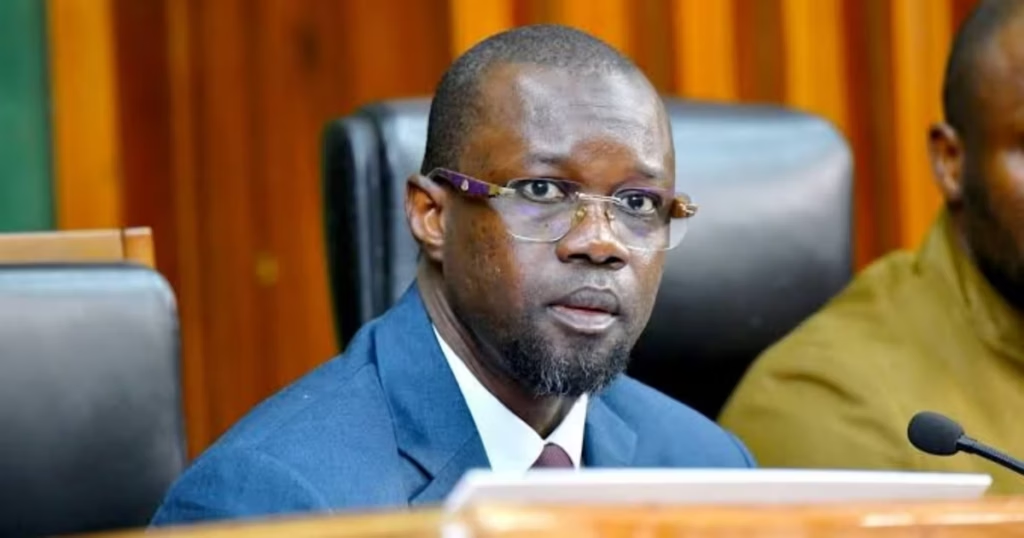
inside look at Ousmane Sonko’s legislative agenda in Senegal’s parliament
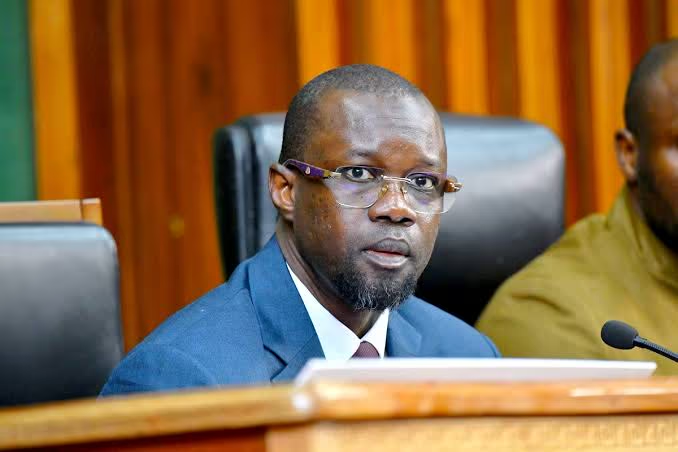
A landmark bill proposing mandatory asset declarations for outgoing presidents gains momentum, backed by key legal figures in Dakar.
Senegal’s National Assembly is gearing up for an intensive legislative session, with institutional reforms, parliamentary inquiries, and strategic bills taking center stage. At the heart of this agenda lies Deputy Ousmane Sonko’s determination to fast-track his governance priorities—rooted in transparency, accountability, and tighter public sector oversight.
The most anticipated legislative move involves a constitutional amendment targeting Article 37. The draft legislation seeks to enforce mandatory asset declarations for presidents at the end of their terms, ensuring public officials adhere to uniform standards. Justice sector leaders have already signaled their support for the proposal, emphasizing its role in combating corruption and reinforcing institutional credibility.
Another critical initiative focuses on the regulation of political funds, long plagued by opacity and weak oversight. New legal provisions are being crafted to bring these financial flows under stricter scrutiny, guaranteeing full traceability and compliance with public finance laws.
The Assembly’s leadership has also greenlit three parliamentary inquiry commissions to probe pressing public concerns. The first will examine the management of state-owned real estate assets, particularly after controversies surrounding the Cité Fayçal and Sogepa’s operations. A second commission will revisit the long-delayed TRS files, originally flagged by the Takku Wallu parliamentary group. Meanwhile, the government is prioritizing ratification of key agreements, including the long-awaited Petroleum Code—a move aligned with Senegal’s evolving energy ambitions.