In any functioning democracy, matters of national defense are inherently sensitive. Military operations, intelligence activities, and strategic partnerships often operate behind closed doors. Yet when secrecy becomes entrenched—particularly on issues central to public interest—it breeds suspicion rather than reassurance.
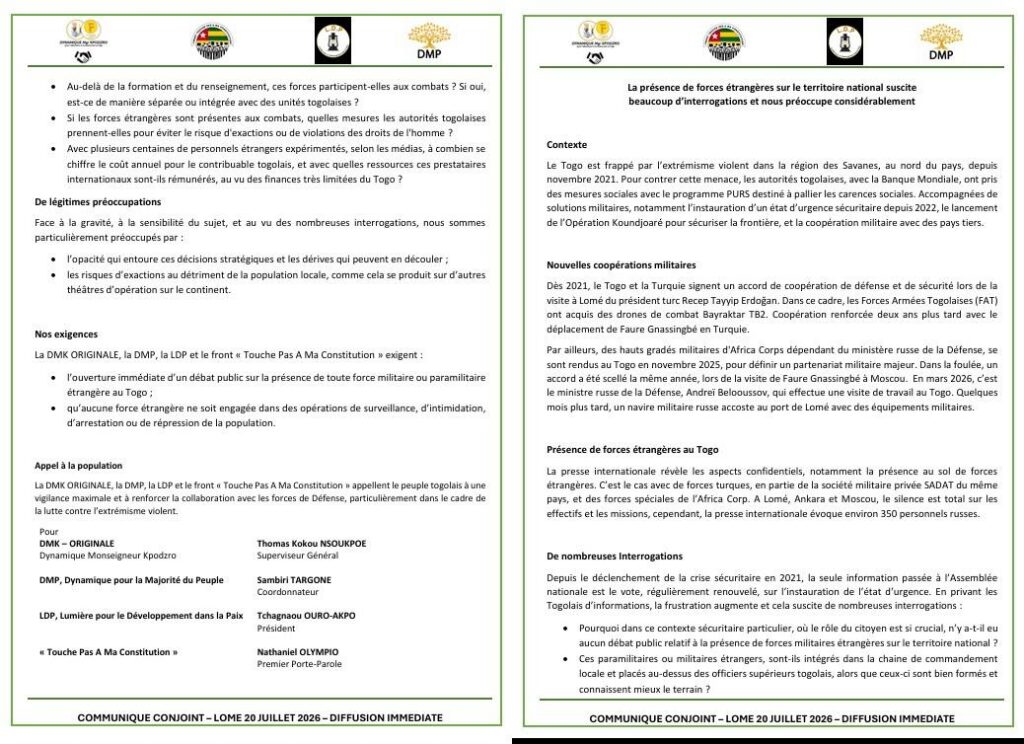
In Togo, reports from multiple observers and media outlets suggest the presence of foreign military personnel within the country’s borders, including individuals from Russia and Turkey. If confirmed, this situation raises pressing concerns that demand clear responses from the authorities.
Is foreign military support a shield against dissent?
Beyond the conventional justifications for defense cooperation, the opacity surrounding these arrangements has deepened skepticism about the government’s true intentions. Many critics argue that the involvement of foreign forces reflects the administration’s growing unease under President Faure Gnassingbé. With persistent accusations of poor governance—amid socio-economic unrest and institutional constraints—the regime may be seeking external assurances to consolidate its hold on power, regardless of the cost.
To detractors, this military partnership is not a safeguard for national territory but a survival strategy for a leadership determined to cling to authority by any means necessary.
Unanswered questions on roles and legal frameworks
The exact nature of these foreign personnel’s duties remains unclear. Are they involved in training Togo’s armed forces, intelligence gathering, strategic advisory roles, or equipment maintenance? Could they also be providing close protection for high-level officials? Without official clarification, speculation thrives, obscuring the true scope of these arrangements.
Another critical issue is their operational involvement. Are these foreign troops merely instructors, or do they participate in domestic security operations alongside Togolese forces? Are their activities limited to technical support, or do they engage in on-the-ground missions? The distinction is vital to understanding the terms of any agreements in place.
The matter of accountability also demands scrutiny. Countries hosting foreign military personnel typically establish legal frameworks defining their rights, obligations, and oversight mechanisms. What provisions has Togo put in place to regulate these forces? What safeguards exist to prevent abuses and ensure compliance with national laws and international commitments?
The price of secrecy
Financial transparency is another area of concern. How many foreign personnel are stationed in Togo? How long will their missions last? What financial burden does this cooperation place on public funds? Are these costs covered by Togo’s national budget, partner countries, or through specific cooperation agreements? Taxpayers, who fund public policies, have every right to demand clarity on these commitments.
It is important to note that opposition to military cooperation is not absolute. Many nations rely on foreign partners to bolster their armed forces against shared threats. Togo, too, faces a complex regional security landscape, particularly the persistent terrorist threat in the north, which could justify defense partnerships.
Transparency as a cornerstone of trust
Trust, however, hinges on openness. When a government provides clear explanations about the objectives, legal frameworks, and operational details of military cooperation, it diminishes the space for rumors, unfounded theories, and conflicting interpretations.
In a region marked by chronic political instability and shifting security alliances, the most effective response to public concerns is information. Without compromising national security imperatives, authorities can offer insights into the goals pursued, the safeguards implemented, and the responsibilities of all parties involved.
Transparency in defense matters is not a luxury—it is a pillar of legitimacy. When foreign military presence raises as many questions as it answers—and appears intertwined with efforts to preserve power at all costs—it falls upon the government to illuminate the debate. In a democracy, silence is never a sustainable communication strategy; it inevitably cedes ground to doubt.